

Keeping your home comfortable year-round while managing energy costs can be challenging without proper insulation. Thermal insulation contractors specialize in installing and upgrading insulation systems that help maintain consistent indoor temperatures and reduce heating and cooling expenses. These professionals assess your home's current insulation, identify problem areas, and recommend solutions that fit your needs and budget.
Thermal insulation contractors are trained experts who install various types of insulation materials to create barriers that prevent heat transfer, keeping your home warmer in winter and cooler in summer. They work with materials like spray foam, fiberglass, cellulose, and rockwool to seal air leaks and improve your home's energy efficiency. Many homeowners don't realize how much money they lose through poorly insulated walls, attics, and crawl spaces.
Finding the right contractor in Virginia means understanding what services they offer and how to evaluate their expertise. Here's what you need to know:
- What thermal insulation contractors do for homeowners
- Types of thermal insulation services offered
- Signs you need thermal insulation improvements
- Benefits of hiring professional insulation contractors
- How to choose the right insulation contractor in VA
Keep reading to learn how the right thermal insulation contractor in Virginia can lower your energy bills, eliminate drafts, and protect your home's comfort for years to come.
What thermal insulation contractors do for homeowners
Thermal insulation contractors handle everything from inspecting your home for energy loss to installing the right materials in your walls, attic, and crawl spaces. They work as residential insulation experts who identify problems and provide solutions that lower your energy bills and improve comfort.
Full home energy assessment and inspection
A thermal insulation contractor starts by examining your entire home to understand how energy moves through it. They check your attic, basement, crawl spaces, walls, and areas around windows and doors. This inspection tells them where your home loses heat in winter or gains it in summer.
Many contractors use special tools like thermal imaging cameras to see temperature differences in your walls and ceilings. These cameras show cold spots that indicate missing or damaged insulation. A home energy audit often forms the backbone of this process, giving contractors and homeowners a shared picture of where improvements will have the most impact.
The assessment includes checking for moisture problems that could damage new insulation. Contractors look at your ventilation system to make sure it works properly with any new insulation they install. This complete picture helps them create a plan specific to your home's needs.
Identifying heat loss and air leakage points
Contractors locate the exact spots where air escapes from your home. Common problem areas include gaps around recessed lights, plumbing penetrations, electrical outlets, and the edges where your walls meet the attic floor. These leaks make your heating and cooling system work harder than it should.
They perform blower door tests that pressurize your home to find air leaks you can't see or feel during normal conditions. The test shows how much air leaks out and where the biggest problems exist. Attic air sealing is one of the most impactful repairs that comes out of this process, since the attic is where most conditioned air escapes in a typical Virginia home.
Sealing these air leaks before adding insulation is critical. Adding insulation over leaky areas wastes money because the air movement carries heat away regardless of how much insulation you have. This is also why knowing if you have poor home insulation before calling a contractor helps you ask better questions during the assessment.
Recommending insulation solutions for efficiency
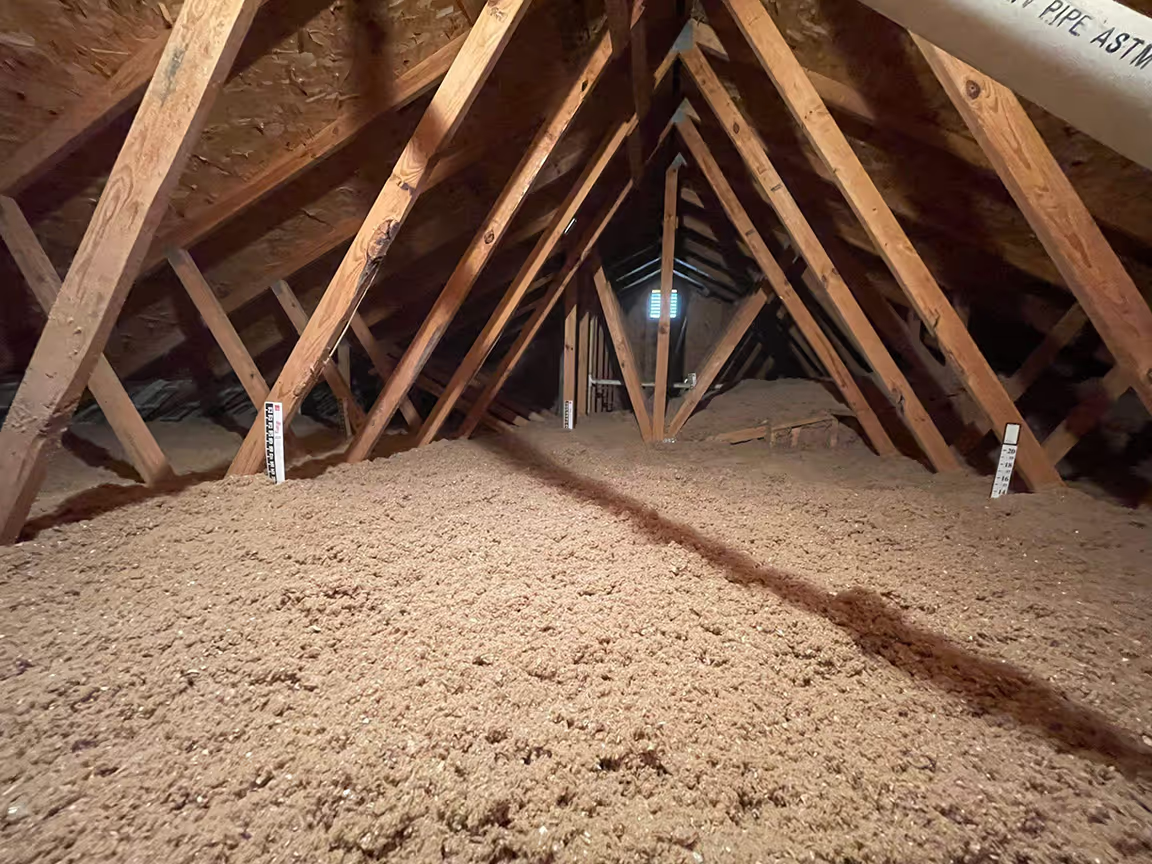
Based on what they find, contractors suggest specific insulation types and locations that give you the best results. They might recommend spray foam for sealing gaps and air leaks, blown-in insulation for attics, or rigid foam boards for basement walls. Each material works better in certain areas of your home.
They calculate how much insulation you need to reach recommended R-values for your climate zone. Contractors also tell you about available rebates and incentives that can significantly offset your insulation costs through utility programs. An attic insulation tax rebate is one example worth asking about before work begins.
The recommendations include a detailed quote that breaks down material costs, labor, and the expected energy savings you'll see each year. They explain how long it takes for the insulation to pay for itself through lower utility bills.
Types of thermal insulation services offered
Thermal insulation contractors offer several installation methods, each designed to meet different building needs and budgets. The three main service types include spray foam for superior air sealing, fiberglass for affordable upgrades, and rigid foam systems for specialized applications.
Spray foam insulation for maximum efficiency
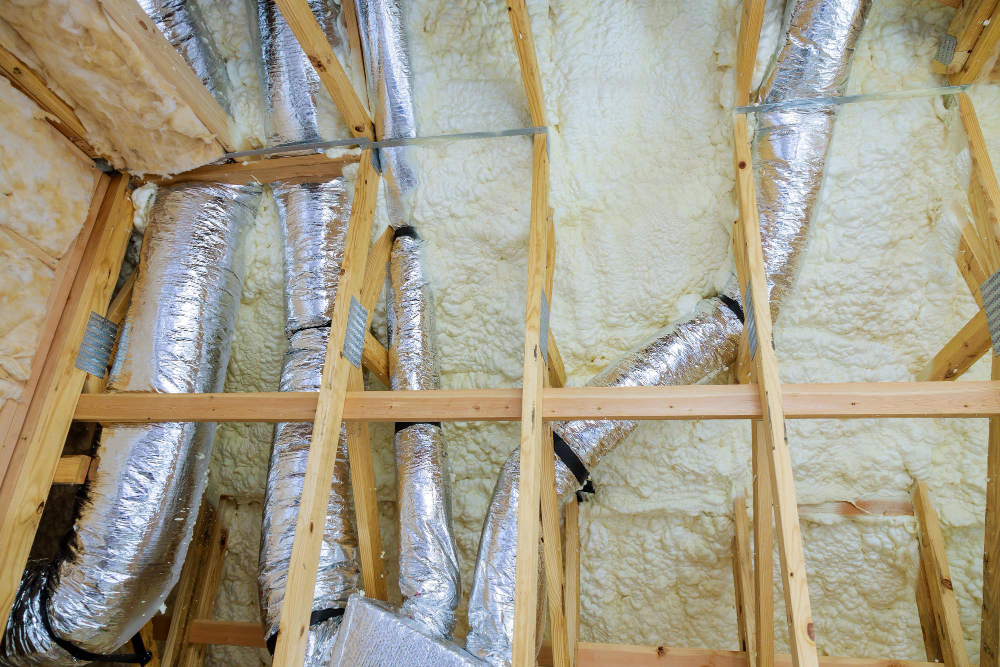
Spray foam insulation provides one of the most effective solutions for home thermal insulation services. This method uses liquid foam that expands to fill gaps, cracks, and irregular spaces in your walls, attics, and crawl spaces. The foam creates an airtight seal that stops air leaks better than most other materials.
You can choose between two types of spray foam. Open-cell vs closed-cell spray foam is a key decision: open-cell foam is lighter and less expensive at around R-3.5 per inch, while closed-cell foam is denser and offers roughly R-6.5 per inch plus added structural strength. Spray foam benefits in cold weather make it especially valuable for Virginia homes that face freezing winters.
Spray foam works well in hard-to-reach areas where other insulation types won't fit properly. Spray foam for crawl spaces is one of the most common applications, as these below-grade areas are prone to air leakage and moisture infiltration. While spray foam costs more upfront than other options, it typically provides the best long-term energy savings.
Fiberglass insulation for cost-effective upgrades
Fiberglass insulation remains the most common choice for residential and commercial buildings. Contractors install it as batts or blown-in loose fill material. This option costs less than spray foam while still providing solid thermal performance.
Batt insulation fits between wall studs, floor joists, and ceiling rafters. It's easy to install in new construction or exposed areas. Comparing spray foam insulation vs fiberglass is a useful exercise before committing to a material, since each has distinct advantages depending on your home's specific conditions.
Fiberglass offers R-values ranging from R-2.9 to R-3.8 per inch depending on density. You'll find it in most homes because it balances performance with affordability. The material doesn't settle over time like some other insulation types, and it resists fire naturally without added chemicals.
Rigid foam and specialized insulation systems
Rigid foam boards provide targeted insulation for specific building components. Contractors use these panels for foundation walls, exterior sheathing, and roof decking. The boards come in materials like polystyrene, polyisocyanurate, and extruded polystyrene, each with different R-values and moisture resistance properties.
Radiant barrier installation uses foil-faced materials to redirect radiant heat. These work especially well in hot climates where cooling costs are high. Choosing the best wall insulation material for your specific assembly often comes down to whether you need maximum R-value per inch or maximum moisture resistance.
Board insulation provides continuous coverage that reduces thermal bridging through wood studs and metal framing. You'll often see it combined with other insulation types for maximum performance in commercial buildings and high-efficiency homes.
Signs you need thermal insulation improvements
Your home often shows clear warning signs when insulation isn't working properly. These problems typically appear as temperature issues, rising utility bills, or uncomfortable drafts that make certain rooms hard to use.
Inconsistent indoor temperatures
Room-to-room temperature differences indicate failing insulation. You might notice your bedroom stays cold while your living room feels warm, even though your thermostat is set to one temperature. These variations happen when insulation has gaps, has settled over time, or was never installed properly in certain areas.
Upstairs rooms that feel much hotter in summer or colder in winter than downstairs spaces point to attic insulation problems. Understanding how insulation keeps your house cool in summer, and how it traps heat in winter, clarifies why a failing attic layer has such an outsized effect on the whole home.
Cold walls, floors, or ceilings signal missing or damaged insulation in those areas. Touch the interior walls in winter: if they feel cold to your hand, the insulation behind them isn't doing its job. When to schedule wall insulation replacement is worth knowing so you can act before conditions worsen.
High heating and cooling costs
Your energy bills climbing 10-15% or more compared to previous years suggests insulation failure. While energy rates do increase, a sudden spike or steady rise beyond normal rate changes means your system works harder to maintain indoor temperatures.
According to the U.S. Department of Energy, adding insulation to key areas like attics, crawl spaces, and walls is one of the fastest and most cost-effective ways to reduce energy waste in any home. If your bills keep rising without a change in usage, learning whether insulating your home can reduce your energy bills will help you make the case for an upgrade.
Old insulation loses R-value over time, especially if it's 15-20 years old or older. Fiberglass can compress, cellulose can settle, and moisture damage reduces effectiveness in any insulation type. Knowing how long attic insulation lasts gives you a baseline for when to start planning an upgrade.
Drafts and air leakage in rooms
Noticeable air movement near windows, doors, electrical outlets, or baseboards reveals insulation and air sealing failures. Hold your hand near these areas on a windy day: you shouldn't feel air moving indoors.
Dust accumulation around vents or ceiling fixtures indicates air leaking through gaps in your insulation. This air carries dust particles from attics or wall cavities into your living spaces. Attic humidity problems and condensation issues often develop alongside these air leaks when warm interior air finds its way into unventilated spaces.
Ice dams forming on your roof edges in winter show warm air escaping through your attic insulation. This heat melts snow on your roof, which refreezes at the colder eaves and creates damaging ice buildup. Tackling insulation mold growth causes early prevents the cascade of damage that follows when moisture and air leakage go unaddressed.
Benefits of hiring professional insulation contractors
Professional contractors deliver proper installation that directly impacts your home's performance. You'll see measurable improvements in energy use, lower bills, and consistent temperatures throughout your house.
Improved home energy efficiency
Professional insulation contractors know how to select and install the right materials for your specific home. They understand which insulation types work best in different areas, from attics to walls to crawl spaces. This expertise matters because poorly installed insulation creates gaps and compression that reduces its effectiveness.
Energy efficient insulation installation requires proper techniques that trained contractors use daily. They ensure complete coverage without gaps or thermal bridges where heat can escape. Your HVAC system won't have to work as hard when insulation is installed correctly. Understanding whether you still need insulation if you have HVAC is a common question professionals can answer clearly during the assessment phase.
Contractors also understand local building codes and climate requirements for your area. They know the recommended R-values for each part of your home. This knowledge helps them create a complete thermal barrier that keeps conditioned air inside where it belongs.
Reduced monthly utility bills
Lower energy bills are one of the most noticeable benefits you'll experience after professional insulation installation. When your home retains heat in winter and keeps it out in summer, your heating and cooling systems use less energy. According to the U.S. Environmental Protection Agency's ENERGY STAR program, homeowners can save an average of 15% on heating and cooling costs by air sealing and adding insulation in attics and accessible basement rim joists.
Professional contractors install insulation that maintains consistent indoor temperatures. Your furnace and air conditioner won't cycle on and off as frequently. How insulation can save you money even in summer is a point many homeowners overlook: the savings are year-round, not just in winter.
The savings add up month after month and year after year. Many homeowners see their insulation investment pay for itself through reduced energy costs over time. Reinsulating your home can also increase its value, adding another financial dimension to the return on investment.
Better indoor comfort year-round
Professional insulation eliminates cold spots and drafts that make rooms uncomfortable. You'll notice more consistent temperatures between different areas of your home. Rooms that were previously too hot in summer or too cold in winter become more livable. Home insulation solutions designed for year-round temperature control address both heating and cooling demands in a single upgrade.
Properly installed insulation also reduces noise transmission from outside and between rooms. This creates a quieter living environment throughout your home.
Your home will maintain stable humidity levels more easily with quality insulation in place. Moisture-resistant insulation in crawl spaces and basement walls prevents the condensation and vapor transmission that lead to mold and structural damage over time.
How to choose the right insulation contractor in VA
Selecting an insulation contractor in Virginia requires careful evaluation of their credentials, the methods they use, and their track record with past customers. These three factors will help you find a qualified professional who can improve your home's energy efficiency.
Checking experience and certifications
You should verify that any insulation contractor you consider has proper licensing for work in Virginia. Ask how many years they have been installing insulation and what types of projects they typically handle.
Request proof of insurance, including both liability coverage and workers' compensation. This protects you from financial responsibility if someone gets injured on your property or if damage occurs during installation. Hiring the right insulation contractor involves verifying these credentials before any work begins, not after.
Check if the contractor holds certifications from industry organizations or insulation manufacturers. These credentials show they have received specific training in proper installation techniques. Ask about their experience with your specific project type, whether that means insulation for old houses or newer high-performance construction.
Comparing insulation methods offered
Different insulation contractors in VA specialize in various materials and installation methods. Common options include spray foam, fiberglass batts, blown-in cellulose, and rigid foam boards.
Ask each contractor which insulation type they recommend for your space and why. What type of insulation is best depends on factors like your home's age, climate zone, existing insulation, and budget. A knowledgeable contractor will explain the R-value you need and how different materials achieve that thermal resistance.
Be cautious of contractors who only offer one type of insulation regardless of your situation. Green building insulation options and sustainable home insulation materials are also worth asking about if environmental performance matters to you alongside energy savings.
Request detailed quotes that specify the insulation type, R-value, areas to be insulated, and total square footage. This makes it easier to compare prices accurately between different contractors.
Evaluating customer reviews and warranties
Read reviews from multiple sources to get a complete picture of each contractor's reputation. Look for patterns in feedback about their work quality, punctuality, and communication. Expert tips for hiring insulation removal contractors also apply when vetting full-service insulation professionals: the same due diligence matters regardless of the scope of work.
Pay attention to how contractors responded to any complaints or problems. Check ratings with the Better Business Bureau and local consumer protection agencies.
Ask what warranty the contractor provides on their labor, separate from the manufacturer's product warranty. Labor warranties typically range from one to five years. Get all warranty terms in writing before work begins.
Request references from recent projects similar to yours. Contact these homeowners to ask about their experience and whether they noticed improved comfort and lower energy bills after installation. How to choose trusted local insulation contractors walks through this vetting process in detail and is worth reading before you make your final decision.
Conclusion
Thermal insulation contractors bring specialized skills that directly affect your building's performance. They work with materials like fiberglass, spray foam, and cellulose to create effective thermal barriers in your home or business.
When you hire qualified contractors, you get proper installation that reduces energy waste. This means lower utility bills and better temperature control throughout the year. The right insulation also helps your HVAC system work less, which extends its lifespan.
Your choice of insulation contractor matters for your property's value. Poor installation can lead to moisture problems, uneven temperatures, and wasted energy. Professional contractors assess your building correctly and recommend solutions that fit your budget and goals.
These specialists handle everything from initial assessment to final installation. They understand which insulation type works best for different areas like attics, walls, and crawl spaces. Their experience helps avoid common mistakes that reduce insulation effectiveness.
Working with trained professionals ensures your insulation project meets industry standards. This protects your investment and delivers the comfort and efficiency you expect from modern building materials. Contact Terra Insulation today to schedule your assessment and get expert insulation installed the right way.