
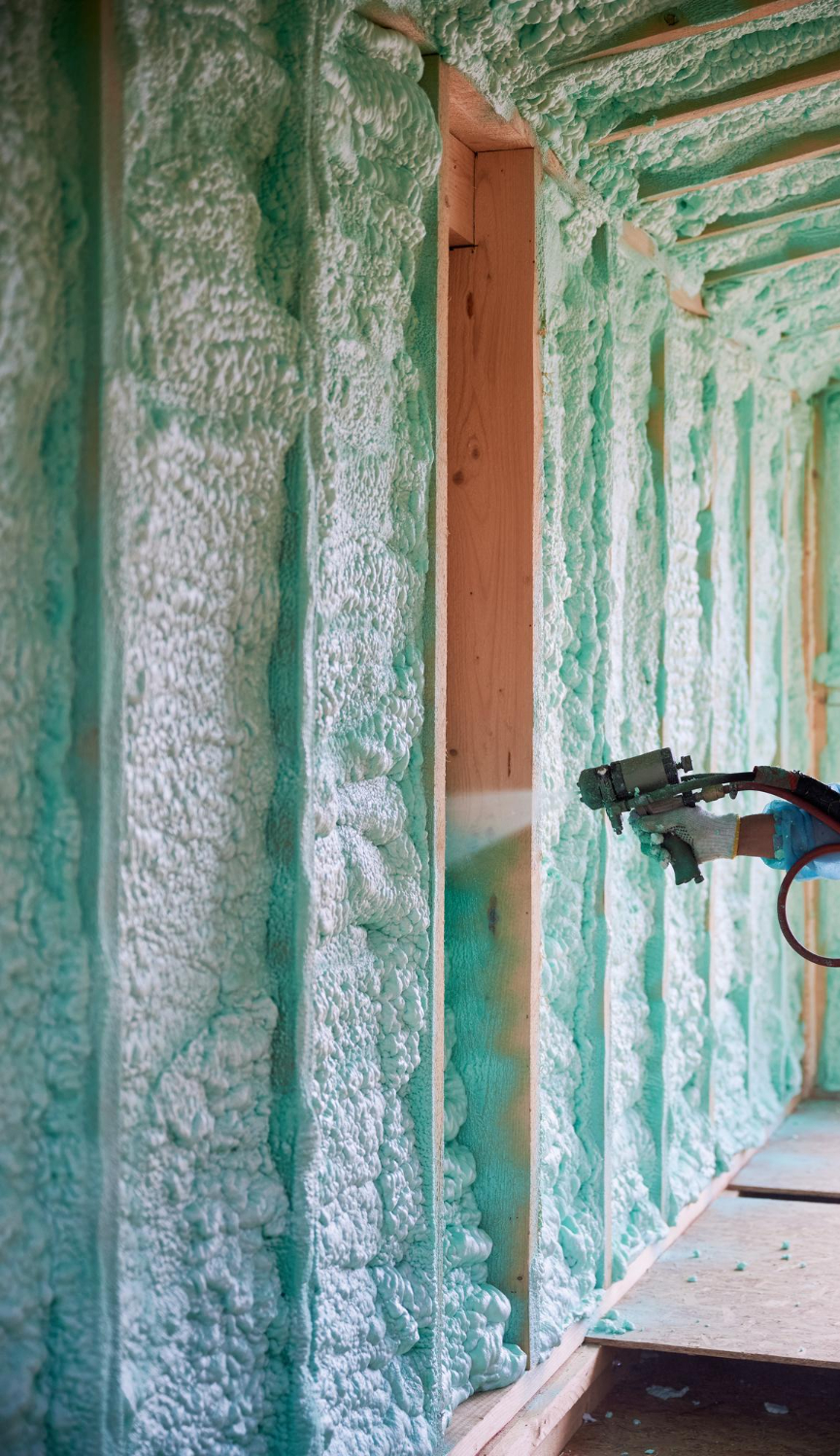
Spray foam insulation has become one of the most effective ways to improve your home's energy performance and overall comfort. Unlike traditional insulation materials, spray foam expands to fill gaps and cracks while creating an air-tight seal that keeps conditioned air inside your home.
Spray foam insulation can reduce your energy bills by up to 50% while preventing moisture problems, improving indoor air quality, and strengthening your building's structure. The material comes in two main types—open-cell and closed-cell—each offering specific advantages depending on where you plan to use it. Both types work by expanding after application to create a continuous barrier against air leaks and heat transfer.
This guide covers everything from energy savings and moisture control to how spray foam compares with fiberglass and other traditional insulation options.
Here's what you need to know:
- Spray foam insulation benefits for homes and businesses
- How spray foam works in walls, attics, and crawl spaces
- Types of spray foam: open-cell vs closed-cell
- Energy efficiency benefits of spray foam insulation
- Moisture and air sealing advantages
- Comfort and indoor air quality improvements
- Structural and long-term benefits
- Spray foam insulation vs traditional insulation materials
- Signs your home can benefit from spray foam insulation
- Why choose Terra Insulation for spray foam installation
Keep reading! Understanding how spray foam works and whether it's right for your property requires looking at the different benefits it provides.
Spray foam insulation benefits for homes and businesses
Spray foam insulation provides energy savings, air sealing, and long-term durability that benefits both residential and commercial properties. This insulation type creates an effective barrier against air leaks and moisture while strengthening your building's structure.
What is spray foam insulation?
Spray foam insulation is a material made from two chemical components: isocyanate and polyol resin. When these chemicals mix during application, they react and expand to fill gaps, cracks, and voids in your walls, attic, or crawl spaces.
The foam expands up to 100 times its original size after spraying. This expansion allows it to reach tight spaces that other insulation types cannot access.
You can choose between two main types for your property:
- Open cell spray foam: Lighter and less expensive, with a spongy texture that provides sound dampening
- Closed cell spray foam: Denser and more rigid, offering higher insulation value and moisture resistance
Both types create an air seal that stops drafts and temperature loss. The closed cell option adds structural strength to your walls and roof, while residential spray foam installations typically use open cell for interior spaces due to its cost-effectiveness and breathing properties.
How spray foam works in walls, attics, and crawl spaces
Spray foam insulation starts as a two-part liquid mixture that expands when applied to surfaces. The material quickly fills gaps, cracks, and irregular spaces that other insulation types cannot reach. Once it hardens, spray foam creates an air-tight seal that blocks heat transfer and moisture.
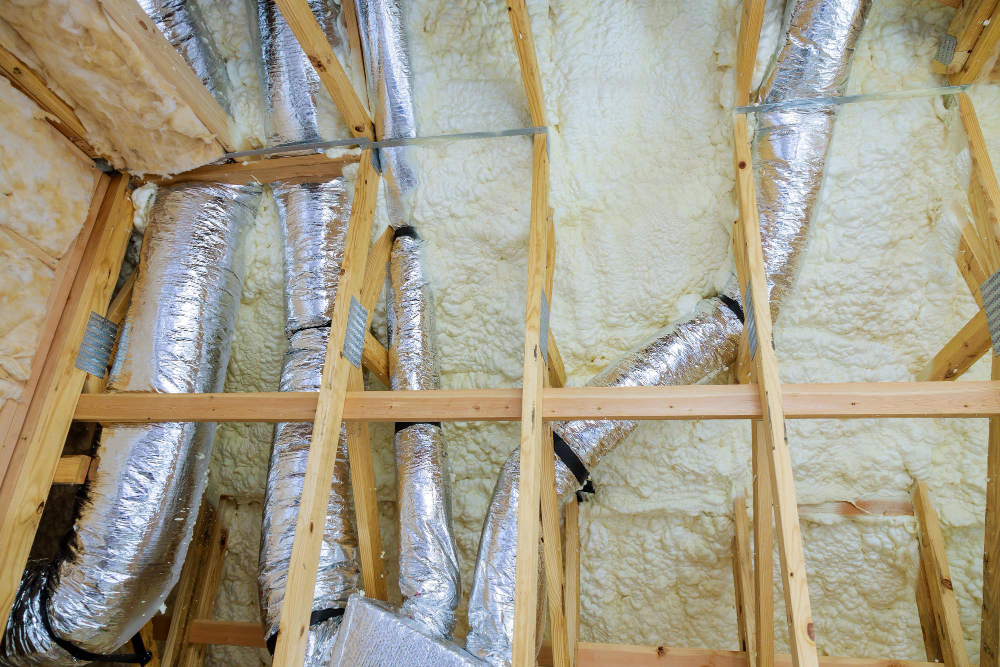
In walls, spray foam fills the entire cavity between studs and blocks air leaks around electrical outlets and pipes. This complete coverage improves your home's thermal performance and keeps conditioned air from escaping. The sealed barrier also helps maintain better indoor air quality.
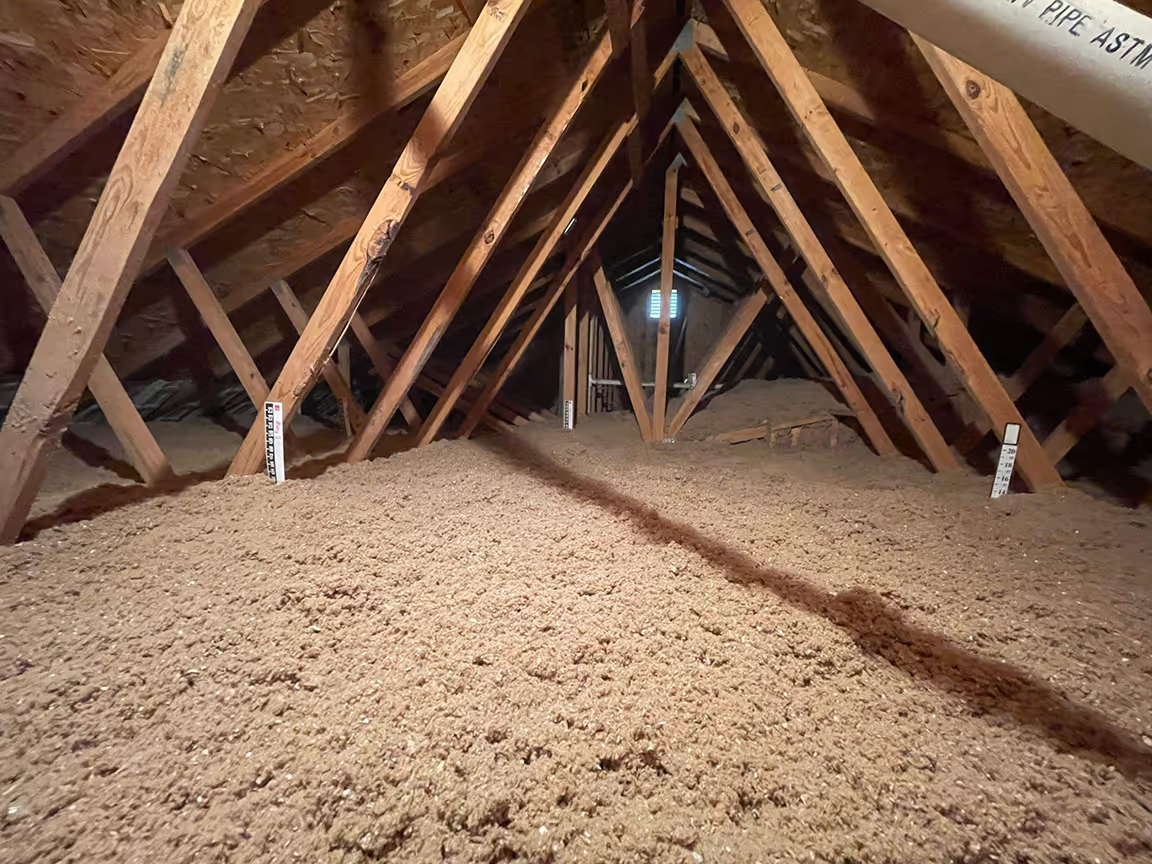
In attics, the foam prevents heat loss during winter and keeps hot air out during summer. You get protection against ice dams in cold climates because the foam stops warm air from reaching your roof deck. The air-sealing properties reduce drafts and temperature fluctuations throughout your home.
In crawl spaces, spray foam addresses unique challenges like ground moisture and limited airflow. The foam blocks moisture from entering your home while creating a thermal barrier between your living space and the cold ground below. This prevents traditional insulation problems like sagging, mold growth, and deterioration.
Key application areas
- Wall cavities (interior and exterior)
- Attic floors and roof decks
- Crawl space walls and ceilings
- Rim joists and band boards
- Around windows and doors
The foam's expansion properties let it reach hard-to-access areas where you cannot install other insulation materials. This comprehensive coverage is one of spray foam's main advantages over traditional insulation options.
Types of spray foam: open-cell vs closed-cell
Spray foam insulation comes in two main types. Each has different properties that make it better for certain jobs.
Open-cell spray foam has tiny cells that are not completely closed. Air fills these open spaces, which makes the foam softer and lighter. This type costs less than closed-cell foam. It expands more when you spray it, so it fills gaps and cracks well. Open-cell foam works well for soundproofing inside your home.
Closed-cell spray foam has cells that are completely sealed. This makes it denser and harder than open-cell foam. It provides better insulation per inch and acts as a moisture barrier. Closed-cell foam adds strength to walls and can help protect against water damage.
Feature
Open-Cell
Closed-Cell
Density
Lighter, softer
Heavier, harder
Cost
Lower
Higher
R-value per inch
3.5-3.8
6.0-7.0
Moisture barrier
No
Yes
Expansion rate
High
Lower
Your choice depends on what you need. Open-cell foam makes sense when you want to save money or need sound control inside. Closed-cell foam works better in areas with moisture or where you need maximum insulation in less space. Some projects use both types in different areas to get the best results for each location.
Energy efficiency benefits of spray foam insulation
Spray foam insulation delivers measurable energy savings by creating an airtight seal that stops heat transfer and reduces the workload on your heating and cooling systems. Buildings can lose up to 40% of their energy through air leaks and gaps, but spray foam addresses this problem by acting as both insulation and an air barrier.
Reducing heat loss and improving HVAC efficiency
Spray foam insulation stops air infiltration by sealing cracks, gaps, and holes throughout your home. When you eliminate these air leaks, your HVAC system doesn't have to work as hard to maintain your desired temperature.
The foam expands to fill spaces that traditional insulation materials can't reach. This creates a continuous barrier that prevents conditioned air from escaping and outdoor air from entering. Your heating and cooling equipment runs less frequently as a result.
This reduced runtime extends the life of your HVAC system. You'll also notice more consistent temperatures from room to room since the airtight seal prevents hot or cold spots. The foam maintains its effectiveness over time without sagging or settling like some other insulation types.
Lower energy bills through superior thermal insulation
You can reduce your energy costs by up to 18% after installing spray foam insulation. This translates to hundreds of dollars in annual savings on your utility bills.
The high R-value of spray foam means it resists heat flow better than most other insulation options. Closed-cell spray foam provides approximately R-6 to R-7 per inch, while open-cell spray foam offers around R-3.5 to R-4 per inch.
Your savings start immediately after installation. Many utility companies and regional programs offer rebates or tax incentives for choosing energy-efficient insulation, which helps offset the initial installation cost.
The long-term value extends beyond monthly savings. Your home becomes more valuable with improved energy efficiency, and you reduce your reliance on heating and cooling systems throughout the year.
Moisture and air sealing advantages
Spray foam insulation creates a complete barrier that stops unwanted air movement and protects your home from moisture problems. These two functions work together to keep your home comfortable and prevent costly damage.
Preventing air leaks and drafts
Spray foam expands to fill cracks, gaps, and hard-to-reach spaces in your walls, attic, and crawl spaces. This expansion creates an airtight seal that traditional insulation materials cannot match. Fiberglass batts and loose-fill insulation leave gaps that allow air to pass through, but spray foam eliminates these pathways completely.
The airtight seal reduces your heating and cooling costs by keeping conditioned air inside your home. You won't feel cold drafts near windows, doors, or electrical outlets anymore. Your HVAC system won't have to work as hard to maintain comfortable temperatures.
Air leaks account for 25-40% of your home's heating and cooling energy use. When you seal these leaks with spray foam, you stop paying to heat or cool the outdoors. Your energy bills drop because your home maintains temperature more efficiently throughout the year.
Per the U.S. Department of Energy (DOE), air infiltration can account for 30% or more of a home’s heating and cooling costs, which is why residential spray foam is often used as part of a home insulation improvement strategy to reduce drafts and uncontrolled air exchange.
Protecting against mold and water damage
Spray foam acts as both an air barrier and a moisture barrier in your home. The material doesn't absorb water like fiberglass insulation does. When moisture contacts spray foam, it cannot penetrate through to reach wood framing or drywall.
Water vapor often enters homes through small cracks in walls and roofs. Spray foam seals these entry points and prevents moisture from getting inside your wall cavities. This protection stops mold growth before it starts since mold needs moisture to survive.
According to the U.S. EPA, if possible, keep indoor relative humidity below 60% and ideally between 30% and 50% to help limit conditions that support mold growth—supporting spray foam insulation advantages in moisture-prone areas when paired with proper ventilation and moisture control.
Unlike other insulation types that lose their effectiveness when wet, spray foam maintains its insulating properties even in humid conditions. The closed-cell variety provides the strongest moisture protection and can help prevent structural damage from water infiltration over time.
Comfort and indoor air quality improvements
Spray foam insulation creates an airtight seal that stabilizes your home's temperature while blocking outdoor pollutants, allergens, and moisture from entering your living space.
Maintaining consistent indoor temperatures
Spray foam insulation eliminates air leaks and drafts that cause hot and cold spots throughout your home. The material expands to fill gaps and cracks in walls, ceilings, and floors, creating a continuous thermal barrier. This seal prevents outside air from entering and conditioned air from escaping.
Your HVAC system works less to maintain your desired temperature because the insulation reduces heat transfer. In summer, spray foam keeps hot air out and cool air in. During winter, it traps warm air inside and blocks cold drafts.
The result is stable temperatures in every room of your home. You won't experience cold corners in winter or warm spots in summer. Your thermostat readings will match the actual temperature you feel, making your living space more comfortable year-round.
Reducing allergens and dust infiltration
Spray foam insulation blocks the entry points where pollen, dust, and outdoor pollutants typically enter your home. Traditional insulation materials like fiberglass allow air movement through small gaps, carrying airborne particles with it. Spray foam seals these openings completely.
The airtight barrier prevents mold spores, pollen, and dust from penetrating your walls and entering your indoor air. It also stops moisture infiltration, which eliminates the damp conditions where mold and mildew grow.
Indoor air can be 2-5 times more polluted than outdoor air when homes have poor sealing. By creating an effective barrier, spray foam insulation helps maintain cleaner indoor air. You'll notice reduced dust accumulation on surfaces and fewer allergens circulating through your HVAC system.
Structural and long-term benefits
Spray foam insulation adds physical strength to your home while maintaining its performance for decades without needing replacement or significant maintenance.
Strengthening walls and roof assemblies
Closed-cell spray foam acts as a rigid material that bonds directly to your walls and roof deck. This creates added structural support that can help your home withstand wind pressure and external forces better than homes with traditional insulation.
The foam's rigid nature helps prevent racking and shifting in wall assemblies. When applied, it expands and adheres to studs, sheathing, and framing members to create a single unified structure. This bonding effect can increase your wall's resistance to lateral movement during storms or high winds.
Your roof assembly gains similar benefits. The spray foam creates a strong connection between roof decking and rafters, which adds rigidity to the entire roof structure. This extra strength can be valuable in areas prone to severe weather events.
Closed-cell foam also provides a water barrier that protects your structural components from moisture damage. This impermeability prevents water infiltration that could weaken framing members, cause rot, or lead to mold growth over time.
Extending the lifespan of home insulation improvement
Spray foam maintains its thermal performance and air sealing properties for 20 to 30 years without degradation. Unlike fiberglass or cellulose that can settle, compress, or absorb moisture, spray foam stays in place and retains its insulating value throughout its lifespan.
You won't need to replace or add more insulation during this period. Traditional insulation materials often lose effectiveness as they settle or get damaged by moisture, requiring homeowners to top off or completely replace the material every 10 to 15 years.
The material doesn't sag or leave gaps that reduce energy efficiency. Once cured, spray foam remains stable and continues providing consistent R-value and air sealing without maintenance. This durability translates to decades of reliable performance and sustained energy savings averaging 30 to 50 percent annually compared to conventional insulation options.
Spray foam insulation vs traditional insulation materials
Spray foam delivers superior air sealing and moisture control compared to fiberglass and cellulose, though traditional materials cost less upfront.
Comparing fiberglass, cellulose, and spray foam performance
Fiberglass batts are the most common traditional insulation material. They're affordable and easy to install, but they don't stop air leaks. Air can pass through and around fiberglass, which reduces its effectiveness.
Cellulose is made from recycled paper and works well for attics. It settles over time and can absorb moisture if your home has leaks. When cellulose gets wet, it loses its insulating ability and can develop mold.
Spray foam expands to fill gaps and cracks that other materials miss. Closed-cell spray foam provides an R-value of 6-7 per inch, while fiberglass offers only R-3 to R-4 per inch. This means you need less thickness to achieve the same insulation level.
Per the U.S. Department of Energy (DOE), sprayed or foamed-in-place polyurethane insulation applications can perform better than some other insulation approaches because the liquid foam molds itself to surfaces—supporting one of the practical spray foam vs fiberglass advantages in irregular cavities and around penetrations.
The key difference is air sealing. Spray foam creates an airtight barrier that stops drafts and moisture. Traditional materials like fiberglass and cellulose don't seal air leaks on their own. You'll need additional weather stripping and caulking to get similar results.
Why spray foam is a long-term investment
Spray foam costs more upfront than fiberglass or cellulose. You might pay two to three times more per square foot for professional installation.
The energy savings add up over time. Your heating and cooling bills can drop by 30-50% because conditioned air stays inside your home. Most homeowners recover the extra cost within 5-10 years through lower utility bills.
Spray foam lasts the lifetime of your home without settling or degrading. Fiberglass can compress and lose effectiveness after 15-20 years. Cellulose needs replacement or top-up every 20-30 years.
Closed-cell spray foam adds structural strength to your walls and roof. It resists moisture damage better than traditional materials, which helps prevent mold growth and wood rot.
Signs your home can benefit from spray foam insulation
Your home may need better insulation if you notice temperature differences between rooms, rising utility costs, or water droplets forming on windows and walls. These issues point to air leaks and poor insulation that spray foam can fix.
Uneven heating or cooling
Some rooms in your home feel too hot in summer or too cold in winter. This happens when air escapes through gaps in your walls, attic, or crawl spaces. Your HVAC system runs constantly but can't maintain a steady temperature throughout the house.
You might notice that upstairs bedrooms are always warmer than downstairs rooms. Or your living room stays comfortable while your home office feels drafty. These temperature swings waste energy and make your home uncomfortable.
Spray foam insulation fills all the small cracks and gaps that let air escape. It creates an air-tight seal that stops hot or cold air from leaking out. This helps every room stay at the same comfortable temperature.
Your heating and cooling system won't have to work as hard to maintain the temperature you want. The foam expands to reach tight spaces that traditional insulation can't cover.
High energy bills
Your monthly utility bills keep going up even though you haven't changed how you use energy. This often means conditioned air is escaping through your walls, roof, or foundation. Your HVAC system uses more electricity or gas to replace the air that leaks out.
Compare your current bills to what you paid a year or two ago. If they've increased by 15% or more without a rate hike, you likely have an insulation problem. Check if your system runs more often than it should to keep your home at the right temperature.
Spray foam insulation can cut your energy bills by 30% to 50%. It stops air leaks better than fiberglass or cellulose insulation. The upfront cost pays for itself through lower monthly bills over time.
Moisture or condensation issues
Water droplets form on your windows during cold weather. You see damp spots on walls or ceilings. Your attic or basement smells musty or shows signs of mold growth.
These problems happen when warm, moist air meets cold surfaces in your home. Poor insulation lets outside temperatures affect your interior walls and windows. The temperature difference causes condensation that leads to water damage and mold.
Spray foam insulation blocks moisture from entering your home. It creates a vapor barrier that stops humid air from reaching cold surfaces. This keeps your walls dry and prevents mold from growing in hidden spaces.
You'll notice less condensation on windows and no more damp spots on walls. Your indoor air quality improves when moisture stays under control.
Why choose Terra Insulation for spray foam installation
Terra Insulation stands out through trained professionals, quality products, and a focus on making your home more comfortable while reducing energy costs.
Experienced and certified insulation contractors
Terra Insulation employs contractors who have completed formal training in spray foam application. These technicians understand the specific requirements for both open-cell and closed-cell foam installation.
Proper installation makes the difference between foam that performs well and foam that fails early. The team knows how to prepare surfaces, mix materials correctly, and apply foam at the right thickness. They also understand building codes and safety requirements for your area.
Each crew member has worked on different types of homes, from new construction to older properties needing upgrades. This experience helps them identify problem areas like air leaks around windows, doors, and attic spaces. They can recommend the best approach for your specific situation.
High-quality materials and professional installation
Terra Insulation uses spray foam products from established manufacturers. These materials meet industry standards for R-value and expansion rates.
The company invests in proper equipment for mixing and applying foam. This equipment keeps materials at the correct temperature and pressure during installation. Good equipment leads to better foam coverage and fewer gaps in your insulation.
Key installation practices include:
- Pre-installation inspection of work areas
- Protection of surfaces not being insulated
- Proper ventilation during application
- Thickness verification to meet R-value targets
- Post-installation cleanup and inspection
Commitment to home comfort and energy efficiency
Terra Insulation focuses on results that lower your utility bills. Spray foam creates an air barrier that stops drafts and heat transfer. This means your heating and cooling systems work less to maintain comfortable temperatures.
The company evaluates your home's specific needs before recommending a solution. They consider your climate, existing insulation, and budget. You get a detailed estimate that breaks down costs and expected energy savings.
After installation, you should notice more consistent temperatures between rooms. Your HVAC system will run fewer cycles, which extends its lifespan. These improvements add up to real savings over time.
Conclusion
Spray foam insulation delivers real advantages for your home. You get better energy efficiency because it creates an airtight seal that stops heat transfer. Your heating and cooling costs can drop significantly over time.
The material expands when applied, which means it fills gaps and cracks that other insulation types miss. This creates a continuous barrier throughout your walls and attic. You won't have to worry about air leaks or drafts.
Spray foam also helps control moisture, which protects your home from mold and mildew growth. The insulation can last for decades without settling or losing effectiveness.
You should consider your budget and specific needs before deciding. Spray foam costs more upfront than traditional insulation materials. However, the long-term energy savings and durability often make up for the higher initial investment.
Talk to insulation professionals about your home's unique requirements. They can help you determine if spray foam fits your situation. The right choice depends on your climate, budget, and how long you plan to stay in your home.
Request a written estimate from Terra Insulation for residential spray foam insulation so a trained crew can confirm the right foam type (open-cell vs. closed-cell), target R-values, and air-sealing scope for your attic, walls, or crawl space.