
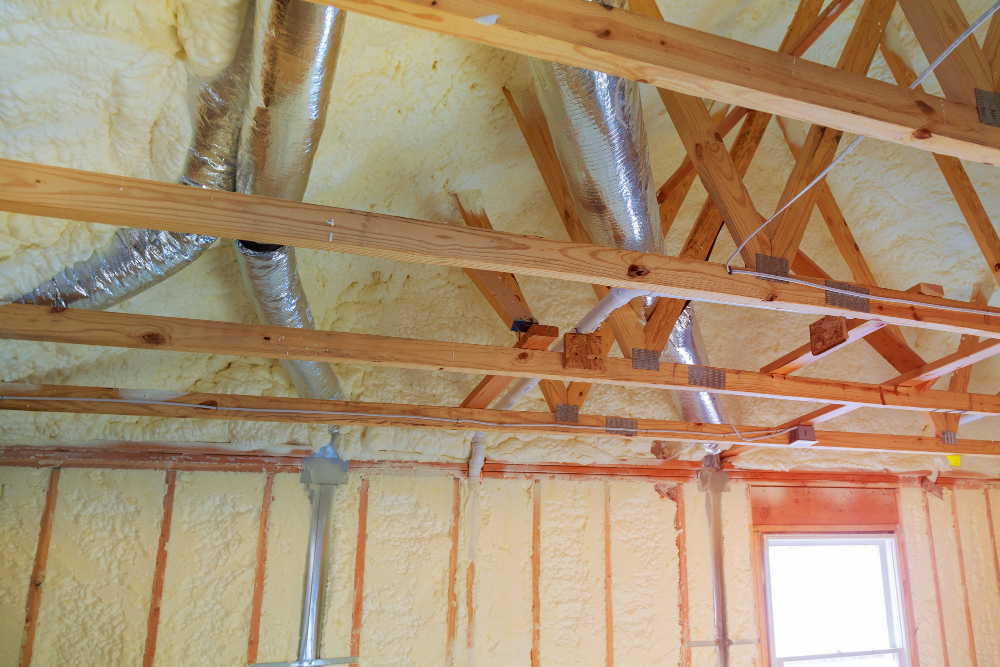
Blown-in vs spray foam insulation attic options in MD
When weighing blown in vs spray foam attic insulation for a Maryland home, the right answer depends on your attic's condition, your energy goals, and how long you plan to stay in the property. Both materials deliver real comfort and savings, but they perform very differently once installed.
Choosing the right attic insulation affects your energy bills, home comfort, and long-term expenses. Two popular options stand out: blown-in insulation and spray foam. Both work well in attics, but they perform differently based on your home's specific needs.
Blown-in insulation costs less and works well for adding to existing insulation, while spray foam provides better air sealing and longer-lasting performance but comes with a higher price tag. Understanding how each type handles your attic's layout, ventilation, and problem areas helps you pick the option that fits your goals and budget.
This attic insulation comparison breaks down when each choice makes sense for your home.
In this article, we cover:
- Common reasons attic insulation choices feel overwhelming
- Situations where blown-in insulation excels
- How spray foam transforms attic performance
- Attic and home factors that impact insulation results
- Improvements homeowners experience after upgrading
Keep reading to find out which insulation type fits your Maryland attic, your budget, and your long-term comfort goals.
Common reasons attic insulation choices feel overwhelming
Choosing between blown-in and spray foam insulation gets complicated when you factor in different R-values per dollar, hidden problems in your existing attic space, and the gap between what you pay now versus what you save later.
Energy savings vary by insulation type
Blown-in insulation and spray foam deliver different levels of energy savings based on how they stop heat transfer. Spray foam creates an air seal that blocks heat movement and prevents air leakage. According to the U.S. Department of Energy, reducing air leakage can yield significant savings on heating and cooling costs, since uncontrolled airflow through gaps and cracks accounts for a major share of energy loss in most homes. Blown-in insulation adds thermal resistance but doesn't seal air gaps on its own.
Your actual savings depend on your climate zone and current insulation levels. A home in a cold climate might save $400-600 per year with spray foam compared to $200-300 with blown-in cellulose or fiberglass. The R-value per inch matters too: spray foam provides R-6 to R-7 per inch, while blown-in fiberglass offers R-2.5 and cellulose gives R-3.5.
The performance gap widens in extreme temperatures. Spray foam maintains its R-value regardless of weather conditions, while blown-in materials can settle over time and lose up to 20% of their insulating power.
Hidden airflow and moisture problems in older attics
Older attics often have ventilation issues and moisture problems that affect which insulation type works best. Spray foam applied directly to roof decking changes your attic from vented to unvented, which requires proper planning and may need additional ventilation solutions in other areas.
Blown-in insulation works with existing attic ventilation but won't fix air leaks around pipes, wires, or ceiling fixtures. These gaps let conditioned air escape even with thick insulation coverage.
Moisture becomes trapped differently with each type. Spray foam acts as a vapor barrier that can trap moisture in wood if not installed correctly. Blown-in cellulose can absorb moisture and lose insulating ability, while fiberglass allows moisture to pass through but can grow mold if the attic stays damp.
Mistaking upfront cost for lifetime value
Spray foam costs $1.50-$3.50 per square foot installed, while blown-in insulation runs $0.75-$1.50 per square foot. That price difference makes blown-in seem like the obvious choice until you calculate energy savings over 20-30 years.
A typical 1,500 square foot attic might cost $2,200 for blown-in cellulose versus $4,500 for spray foam. The spray foam could save an extra $250 per year on energy bills, meaning it pays for itself in about 9 years. After that point, you gain more value from the higher-performing option.
Lifespan affects value too. Spray foam lasts 80+ years without settling or losing R-value. Blown-in insulation may need topping off after 15-20 years as it settles and compacts, adding another cost cycle to your long-term planning.
Situations where blown-in insulation excels
Blown-in attic insulation works best when you need to cover irregular spaces, add material to what's already there, or insulate a large area without spending too much money. These advantages make it a practical choice for many attic projects.
Adapting to irregular attic shapes
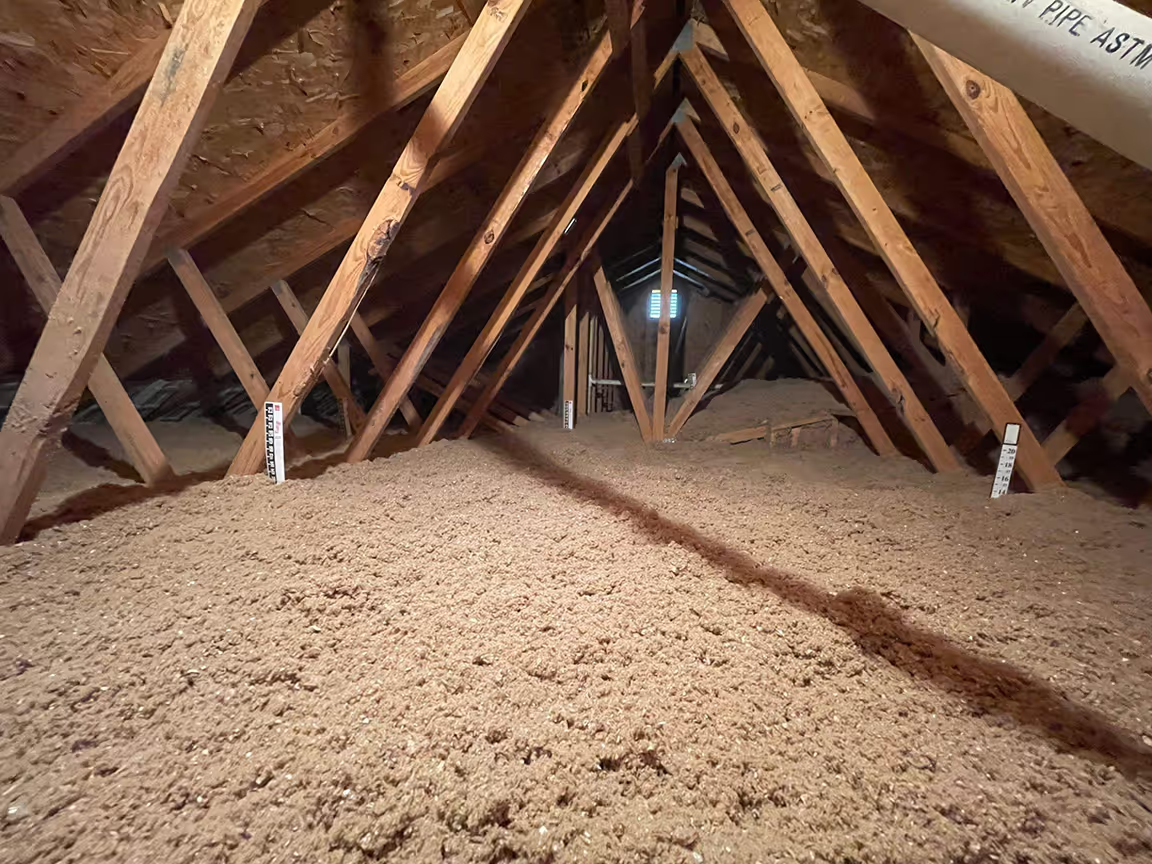
Blown-in insulation fills every corner and gap in your attic without leaving empty spaces. The loose material flows around pipes, wiring, and structural supports that would be hard to cover with other types of insulation. This matters because attics often have odd angles, tight spots, and obstacles that make installation difficult.
The blowing process lets the material settle into areas you couldn't reach by hand. Corners where roof lines meet floor joists get full coverage. Spaces around vent pipes and electrical boxes fill completely.
Your attic likely has trusses, cross beams, and other framing that creates an uneven surface. Blown-in material adapts to these features naturally as it's sprayed into place. You get consistent coverage across the entire attic floor, even in sections with unusual shapes or limited access points.
Upgrading without removing all existing material
You can add blown-in attic insulation directly on top of what's already there. This saves you time and money because you don't need to tear out the old material first. Your existing insulation might be thin or compressed, but it can still provide some value as a base layer.
The new material increases your attic's total R-value by building up the insulation depth. You just need to make sure the existing insulation is dry and free from mold before adding more.
This approach works well when your current insulation has settled over time and lost some effectiveness. Adding a fresh layer brings your attic back to proper insulation levels without the mess and expense of a complete removal.
Lower installation costs for large spaces
Blown-in insulation costs less to install in big attics compared to other options. The process goes quickly because contractors use machines to distribute the material across wide areas. Labor time stays relatively short, which keeps your total project cost down.
The material itself is less expensive per square foot than spray foam. You get good coverage without the higher price tag. This makes blown-in insulation a budget-friendly choice when you need to insulate hundreds of square feet.
Large attic spaces benefit from the speed of installation. A crew can typically complete the job in a few hours rather than multiple days. You pay for less labor while still getting full coverage across your entire attic floor.
How spray foam transforms attic performance
Spray foam attic insulation creates an airtight barrier that blocks both heat transfer and air movement while protecting against moisture problems that traditional insulation can't address.
Air sealing combined with thermal insulation
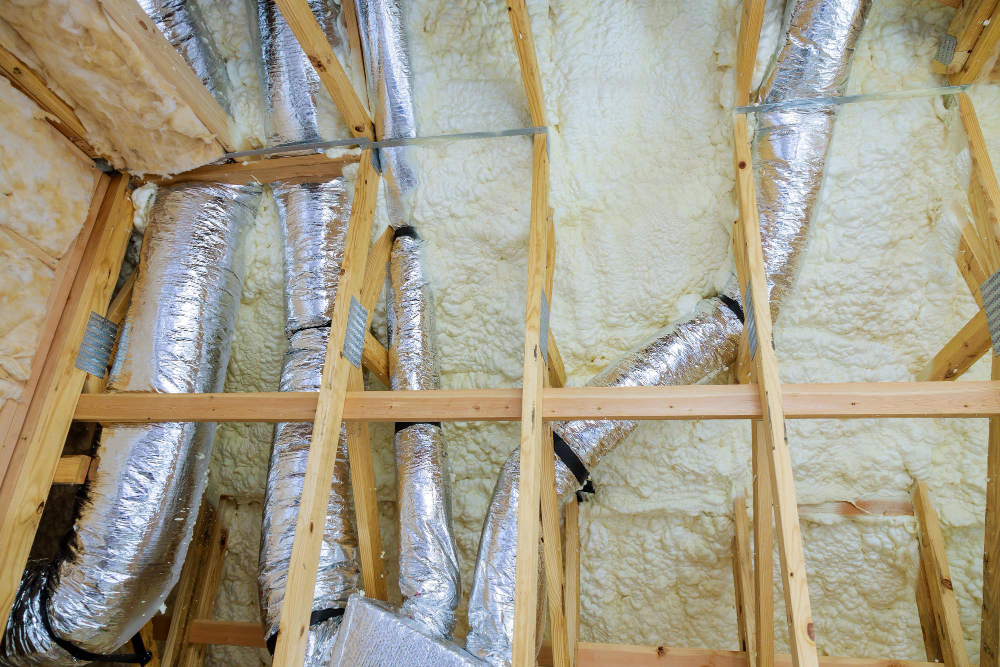
Spray foam attic insulation expands after application to fill every crack and gap in your attic space. This expansion creates a continuous barrier that stops air leaks at their source. Traditional insulation materials sit in place without sealing the gaps around them.
The dual action of spray foam gives you two benefits in one application. You get thermal resistance that slows heat transfer through your roof. You also get an air barrier that prevents conditioned air from escaping through small openings.
Air sealing makes a bigger difference in your energy bills than insulation value alone. According to ENERGY STAR, homeowners can save an average of around 15% on heating and cooling costs by air sealing their homes and adding insulation in attics, floors over crawl spaces, and accessible basement rim joists. Spray foam eliminates these leaks while insulating at the same time.
Enhanced moisture protection in leaky areas
Closed-cell spray foam blocks water vapor from moving through your attic structure. This protection matters most in areas where roof leaks or condensation create moisture problems. The foam's rigid structure won't sag or compress when it gets wet.
Traditional blown-in insulation absorbs moisture and loses its insulating power. Wet cellulose or fiberglass can promote mold growth and wood rot in your attic framing. Spray foam resists moisture absorption and maintains its performance even in damp conditions.
The vapor barrier created by closed-cell foam stops humid air from reaching cold surfaces where condensation forms. This protection extends the life of your roof structure and prevents costly moisture damage.
Higher investment yields greater efficiency
Spray foam costs more upfront than blown-in options but delivers better long-term value through energy savings. The material lasts 80 to 100 years without settling or losing effectiveness. Your initial investment continues paying returns for decades.
You'll see lower monthly utility bills because spray foam reduces your heating and cooling loads more than other insulation types. The superior air sealing cuts energy waste that standard insulation can't prevent.
The increased efficiency also means your HVAC system works less to maintain comfortable temperatures. This reduced workload extends equipment life and lowers maintenance costs over time.
Attic and home factors that impact insulation results
Your attic's existing condition and your home's design affect how well blown-in or spray foam insulation will perform. The amount of air leakage, ventilation setup, and roof structure all play a role in which material works best for your space.
Drafty spaces benefit from air sealing
Gaps and cracks in your attic let conditioned air escape and outdoor air enter your home. Spray foam creates an air barrier as it expands into these openings. This makes it a strong choice if your attic has many leaks around pipes, wires, or wall joints.
Blown-in insulation settles into spaces but doesn't seal air gaps on its own. You need to seal major leaks with caulk or foam before adding blown-in material. Otherwise, air will keep moving through the insulation and reduce its effectiveness.
Maryland home insulation projects often deal with older homes that have significant air leakage. These homes may see better results from spray foam's air-sealing properties. Newer homes with fewer gaps can perform well with blown-in insulation if you address any obvious air leaks first.
Ventilation needs in older structures
Older attics typically use passive ventilation through soffit and ridge vents. This system needs air to flow freely through the attic space. Blown-in insulation works with this setup since it sits on the attic floor and doesn't block vents.
Spray foam changes your attic's ventilation requirements. Closed-cell spray foam creates a sealed attic when applied to the roof deck. This eliminates the need for attic ventilation but changes how your roof manages moisture and heat.
You should check local building codes before switching to a sealed attic approach. Some areas require specific moisture management strategies when you seal the attic space.
Roof architecture influences long-term effectiveness
Complex roof designs with multiple angles, dormers, or low slopes create installation challenges. Spray foam adapts to irregular surfaces and hard-to-reach areas without leaving gaps. The material sticks to roof decking and fills odd-shaped spaces completely.
Cathedral ceilings and tight attic spaces limit access for blown-in equipment. These areas often work better with spray foam since installers can spray the material from below the roof deck. Flat or simple pitched roofs with good attic access suit either insulation type.
Metal roofs and certain roof materials affect how insulation performs over time. Temperature changes cause some roofing materials to expand and contract more than others. Your roof type may influence which insulation material maintains contact with the roof deck as your home ages.
Improvements homeowners experience after upgrading
Better attic insulation creates noticeable changes in how your home feels and performs. You'll see improvements in temperature control, energy use, and monthly costs.
More consistent indoor temperatures
Your home will maintain steady temperatures throughout the day after an energy efficient attic upgrade. Hot and cold spots that once made certain rooms uncomfortable will disappear.
During summer, upstairs bedrooms stay cooler because proper insulation blocks heat from entering through the roof. In winter, warm air stays inside instead of escaping through gaps in old insulation.
Both spray foam and blown-in insulation reduce temperature swings between rooms. You won't need to adjust your thermostat as often to stay comfortable. The difference is especially clear in rooms directly below the attic, which previously felt too hot or too cold compared to the rest of your home.
Reduced heating and cooling load
Your HVAC system works less after upgrading attic insulation. The system runs for shorter periods because your home holds temperature better.
This reduced workload extends the life of your heating and cooling equipment. Fewer operating hours means less wear on components like compressors, blowers, and heat exchangers.
Your HVAC system will cycle on and off less frequently throughout the day. This matters because constant cycling puts more stress on equipment than steady operation. You'll also notice your system reaches your desired temperature faster than before.
Lower utility costs and enhanced comfort
Energy bills drop after installing quality attic insulation. According to research from the Oak Ridge National Laboratory, upgrading attic insulation to recommended R-values in many U.S. climate zones can produce substantial reductions in annual heating and cooling energy use, with the magnitude of savings tied to the difference between existing and target R-values.
The exact savings depend on your climate, existing insulation levels, and energy prices in your area. Homes in regions with extreme temperatures typically see the largest bill reductions.
Monthly savings breakdown:
- Moderate climates: $20-40 per month
- Hot or cold climates: $40-80 per month
- Extreme climates: $80-150 per month
Beyond cost savings, your home becomes more comfortable year-round. Drafts disappear, humidity levels stabilize, and indoor air quality often improves. You'll spend less time fiddling with the thermostat trying to find a comfortable setting.
Conclusion
Your choice between blown-in and spray foam insulation depends on your specific needs and budget. Neither option is wrong, but each serves different purposes.
Blown-in insulation works well when you need a cost-effective solution. It fills irregular spaces easily and improves existing insulation without major work. The materials cost between $0.50 and $2.30 per square foot, making it budget-friendly for most homeowners.
Spray foam insulation costs more but delivers better performance. It creates an air seal while insulating, which blown-in materials cannot match. You can expect to pay $0.60 to $3.10 per square foot depending on the type you choose.
Both types require professional installation with special equipment. Your attic's design, your energy goals, and your available budget will guide your decision. To get a side-by-side recommendation tailored to your Maryland home and budget, contact Terra Insulation for an in-person attic assessment.