
Water damage in your home can lead to mold growth, higher energy bills, and expensive repairs. Moisture resistant insulation protects your home by blocking water vapor and preventing dampness from building up inside your walls, attic, and crawl spaces. This type of insulation works differently than standard materials because it either resists water absorption or manages moisture in a way that allows structures to dry properly.
Choosing the right insulation for areas exposed to humidity makes a big difference in your home's comfort and safety. You'll learn about different types of moisture resistant materials, from spray foam to treated cellulose, and understand which options work best for your specific needs.
This guide walks you through everything you need to know about moisture resistant insulation, including how it works, what benefits it offers, and how to pick the best option for your home.
Here’s what you’ll find below:
- What is moisture resistant insulation?
- Why moisture control matters in insulation
- Types of moisture resistant insulation
- Benefits of installing moisture resistant insulation
- How to choose the best moisture resistant insulation
- Why choose Terra Insulation for moisture resistant insulation
Keep reading! Whether you live in a humid climate or just want to protect problem areas like your basement, the right insulation can save you from costly moisture problems down the road.
What is moisture resistant insulation?
Moisture resistant insulation keeps water and humidity from reducing your home's thermal protection while preventing damage like mold growth and structural decay. These specialized materials maintain their insulating power even when exposed to dampness, making them essential for areas prone to moisture problems.
Designed to repel moisture and resist water absorption
Moisture resistant insulation uses materials that naturally push away water instead of soaking it up like a sponge. Closed-cell spray foam, extruded polystyrene (XPS), and foil-faced polyisocyanurate panels create barriers that liquid water cannot penetrate. These materials have special properties built into their structure that stop water molecules from getting inside.
Standard insulation like fiberglass loses most of its insulating ability when it gets wet. The water fills the tiny air pockets that normally trap heat, turning your insulation into a cold, soggy mass. Moisture resistant options maintain their structure and performance even in humid conditions.
Some materials also include vapor retarders or facing that blocks water vapor from passing through. This dual protection handles both liquid water and moisture in the air. The result is insulation that stays dry and effective year after year.
Helps prevent mold and mildew growth
Mold needs three things to grow: moisture, food, and the right temperature. Your home provides the last two, so controlling moisture becomes the main way to stop mold problems. Moisture resistant insulation cuts off the water supply that mold spores need to take hold and spread.
Materials like closed-cell spray foam don't absorb water, which means they don't create the damp environment mold loves. Some products include EPA-registered fungicides that actively resist mold and mildew growth. Cellulose insulation treated with these compounds can absorb moisture temporarily but redistributes it and dries out in a controlled way.
By keeping your walls, attic, and other spaces dry, this insulation protects your indoor air quality. You avoid the health problems and musty smells that come with mold infestations. Your home stays healthier for everyone living there.
Maintains thermal efficiency even in damp conditions
Regular insulation loses its R-value (thermal resistance rating) when moisture gets inside. Water conducts heat much better than air, so wet insulation lets heat escape in winter and enter in summer. Your heating and cooling bills go up while your comfort goes down.
Moisture resistant insulation keeps its thermal performance stable regardless of humidity levels. Closed-cell foam maintains 95% or more of its insulating power even with moisture exposure. The material's density and structure prevent water from displacing the insulating properties.
This consistent performance means your energy costs stay predictable. You get the insulation value you paid for throughout the year, not just during dry seasons. Your HVAC system doesn't have to work overtime to make up for degraded insulation.
Suitable for attics, basements, and crawl spaces
Attics face temperature extremes and potential roof leaks that create moisture problems. Moisture resistant insulation provides attic moisture protection by handling condensation from hot summer days and cold winter nights. It keeps your upper level comfortable while protecting stored items from humidity damage.
Basements sit below ground level where groundwater and foundation seepage are constant threats. Damp-proof insulation in basement walls stops moisture from entering your living space while maintaining temperature control. This protection prevents that characteristic basement dampness and cold feeling.
Crawl spaces trap moisture from the ground and often have poor ventilation. These tight areas need insulation that won't deteriorate in high humidity. Moisture resistant materials keep your floors warm and your home's foundation dry without creating breeding grounds for mold.
Long-lasting protection for your home's structure
Water damage costs homeowners thousands of dollars in repairs and can compromise your home's structural integrity. Moisture resistant insulation acts as a long-term shield against these problems. It protects wooden framing, drywall, and other building materials from rot and decay.
When insulation keeps moisture out of wall cavities and other enclosed spaces, your home's bones stay strong. You avoid replacing damaged studs, joists, and sheathing that would otherwise rot from constant dampness. The initial investment in moisture resistant materials pays for itself by preventing expensive repairs.
This insulation also maintains its effectiveness for decades without needing replacement. Standard insulation that gets wet often needs to be torn out and replaced, costing you money and causing disruption. Quality moisture resistant products installed correctly can last the lifetime of your home.
Why moisture control matters in insulation
Wet insulation loses its ability to regulate temperature, creates health risks, and causes expensive damage to your home. Proper moisture management protects both your insulation investment and the structural integrity of your building.
Prevent structural damage from prolonged dampness
Water trapped in your walls or attic leads to serious structural problems. Wood framing absorbs moisture from wet insulation, which causes rot and weakens the support beams that hold up your home. Metal fasteners and brackets corrode when exposed to continuous dampness, compromising their strength.
The damage spreads slowly but steadily. You might not notice the deterioration until you see sagging ceilings or cracks in your walls. By that point, repairs become extensive and costly.
Drywall also breaks down when moisture seeps through from behind. The paper facing peels away, and the gypsum core crumbles. Replacing damaged drywall requires cutting out entire sections, which often reveals even more water damage in the framing and insulation.
Reduce the risk of mold and health hazards
Mold grows rapidly in damp insulation, often within 24 to 48 hours of water exposure. Spores spread through your air ducts and ventilation system, circulating throughout your home. You breathe in these spores without realizing it.
Common health problems from mold exposure include respiratory issues, allergic reactions, and asthma attacks. Some people experience headaches, fatigue, and skin irritation. Children and people with existing respiratory conditions face greater risks.
Mold remediation costs thousands of dollars because professionals must remove contaminated materials while containing the affected area. Your insurance might not cover the damage if moisture problems resulted from poor maintenance.
Maintain energy efficiency and reduce heating/cooling costs
Standard insulation loses up to 70% of its thermal resistance when it gains just 4% moisture. Your heating and cooling systems work harder to compensate for this loss, driving up your energy bills each month.
Energy-efficient insulation depends on dry conditions to trap air pockets that slow heat transfer. Water fills these air spaces and conducts heat rapidly, turning your insulation into a poor performer. Your HVAC system runs longer cycles to maintain comfortable temperatures.
The financial impact adds up quickly. A home with wet insulation can see energy costs increase by 30% or more during peak seasons. Proper moisture control keeps your insulation working at full capacity year-round.
Protect walls, ceilings, and flooring from water intrusion
Moisture travels through building materials in unexpected ways. Water vapor passes through porous surfaces and condenses on cold areas, creating wet spots inside your walls. These hidden moisture pockets damage paint, wallpaper, and interior finishes.
Ceilings develop stains and bubbling paint when moisture accumulates above them. The damage often appears far from the actual source of water intrusion. You might see ceiling stains in your living room from roof moisture that traveled through the attic insulation.
Floors suffer when moisture seeps down from wet wall cavities. Hardwood floors cup and warp, while carpet develops musty odors and padding deteriorates. Tile grout loosens and subfloors rot when exposed to persistent dampness from above.
Extend the lifespan of insulation materials
Dry insulation maintains its performance for decades, while wet insulation fails within years. Fiberglass batts sag and compress when saturated, creating gaps that allow air leakage. Cellulose insulation clumps together and loses its fluffy structure.
Moisture-resistant materials and proper vapor barriers protect your insulation investment. Spray foam insulation creates an air-tight seal that blocks water vapor from entering wall cavities. This protection keeps the insulation functioning as designed.
You avoid the expense of premature replacement when moisture stays controlled. Quality insulation installed with proper moisture management can last 80 years or more. Without moisture control, you might need to replace insulation every 10 to 15 years.
Types of moisture resistant insulation
Different insulation materials handle moisture in distinct ways, with some creating complete water barriers while others rely on protective facings or strategic placement. The right choice depends on your specific moisture exposure level and installation location.
Spray foam insulation for airtight and water-resistant sealing
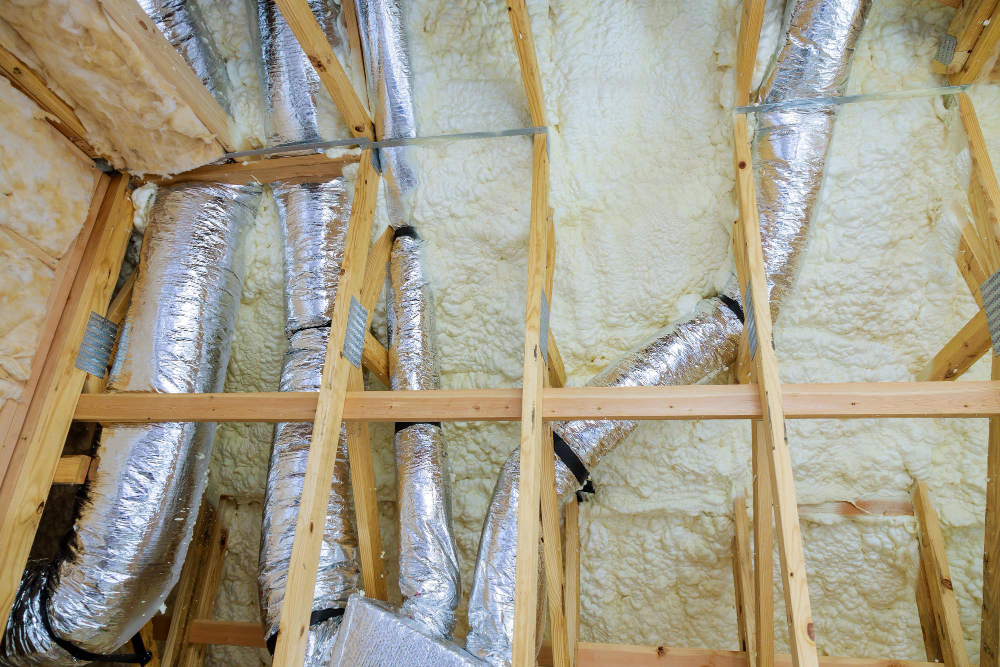
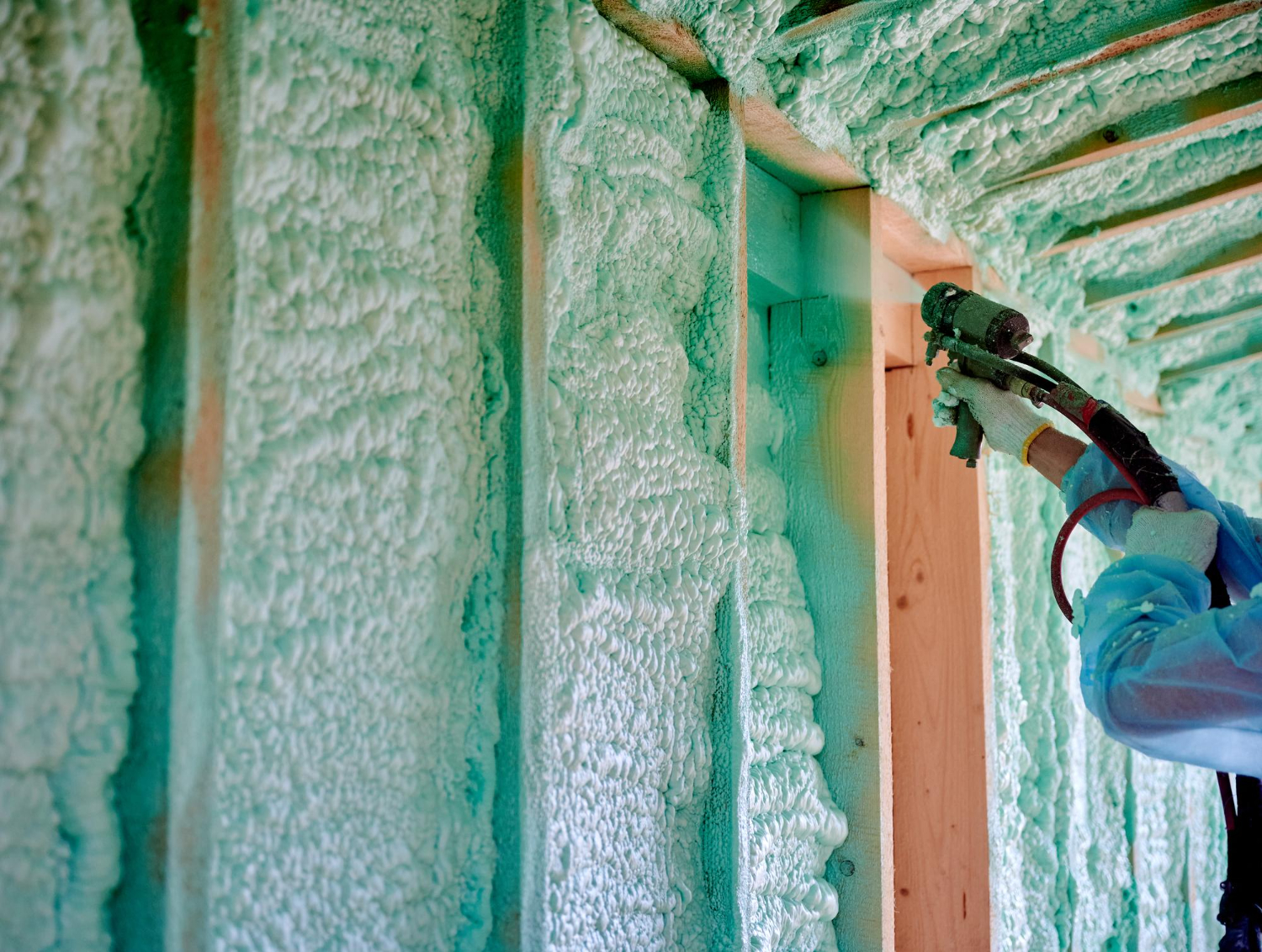
Spray foam creates an effective barrier against both air and moisture when applied correctly. This type of insulation expands to fill gaps and cracks, preventing water vapor from penetrating your walls or ceilings.
The material bonds directly to surfaces and forms a seamless layer. You get dual protection because spray foam blocks air movement while resisting moisture infiltration.
Key benefits include:
- Complete coverage without gaps or seams
- Built-in air sealing properties
- No need for separate vapor barriers in most cases
- Works well in irregular spaces
Spray foam maintains its insulating properties even in damp conditions. The material doesn't absorb water like traditional insulation, which means it won't sag or lose effectiveness over time.
Closed-cell foam insulation for high moisture areas
Closed-cell foam stands as the most moisture-resistant option available for residential and commercial buildings. Each tiny cell remains completely sealed, preventing water molecules from passing through the material.
This dense insulation type offers the highest R-value per inch compared to other options. Your basement, crawl space, or bathroom benefits most from closed-cell foam because these areas face constant moisture exposure.
The material acts as its own vapor barrier when installed at proper thickness. You don't need additional moisture protection layers in most applications.
Closed-cell foam costs more than open-cell varieties but delivers superior waterproof insulation performance. The investment pays off in areas where moisture damage could compromise your building's structure or create mold problems.
Rigid foam board insulation for basement walls
Rigid foam boards provide reliable moisture resistance for below-grade applications. These panels come in three main types: expanded polystyrene (EPS), extruded polystyrene (XPS), and polyisocyanurate (polyiso).
XPS boards offer the best moisture resistance among foam board options. The closed-cell structure prevents water absorption even during direct contact.
Board Type
Moisture Resistance
Best Use
XPS
Excellent
Below-grade walls
EPS
Good
Above-grade applications
Polyiso
Moderate
Interior walls with drainage
EPS boards absorb slightly more moisture but still perform well with proper drainage systems. Polyiso provides high R-values but needs protection from prolonged water exposure.
You should install rigid foam boards with sealed joints to prevent moisture migration between panels. The boards don't require additional vapor barriers when installed correctly against concrete foundation walls.
Fiberglass insulation with moisture barrier facing
Standard fiberglass insulation absorbs water readily, but kraft paper or foil facing adds necessary moisture protection. The facing acts as a vapor retarder that slows moisture movement into the insulation layer.
You must install faced fiberglass with the barrier toward the warm side of your wall. This positioning prevents warm, moist air from reaching the cold surface where condensation forms.
Kraft-faced fiberglass works well in walls and attics with moderate moisture levels. Foil-faced versions provide stronger vapor protection for higher humidity areas.
Installation requirements:
- Face the barrier toward heated spaces
- Staple flanges properly to framing
- Seal all seams and penetrations
- Never compress the material
The facing only protects against vapor, not liquid water. You need separate waterproofing in areas with potential water leaks or flooding.
Hybrid solutions for mixed conditions
Some situations require combining different insulation types to handle varying moisture conditions. You might use closed-cell foam on lower walls where water contact occurs, then switch to faced fiberglass higher up.
Basement applications often benefit from rigid foam against concrete walls plus fiberglass batts in framed sections. This approach balances moisture protection with cost effectiveness.
Your climate zone and specific moisture sources determine the best combination. Coastal areas need more aggressive waterproof insulation strategies than dry inland regions.
Hybrid systems let you allocate your budget to areas with the greatest moisture risk. You achieve complete protection without overspending on premium materials where standard options work fine.
Benefits of installing moisture resistant insulation
Moisture resistant insulation protects your home from water-related problems while maintaining energy efficiency and structural integrity. These specialized materials offer multiple advantages that impact your health, comfort, and long-term costs.
Mold and mildew prevention
Mold-resistant insulation stops harmful growth before it starts by keeping moisture away from vulnerable areas. Standard insulation loses effectiveness when wet and creates the perfect environment for mold spores to multiply. Your walls, attic, and crawl spaces stay dry with materials that repel water and resist vapor passage.
Traditional insulation materials absorb moisture like a sponge. When this happens, mold colonies develop within days and spread throughout your home. Moisture resistant options contain EPA-registered fungicides that actively prevent mildew and mold growth.
The health benefits are immediate. You avoid respiratory issues, allergic reactions, and other problems linked to mold exposure. Your family breathes cleaner air without the musty odors that signal hidden mold problems.
Energy cost savings through maintained thermal efficiency
Your heating and cooling bills drop when insulation maintains its R-value in humid conditions. Wet insulation loses up to 50% of its ability to slow heat transfer. This forces your HVAC system to work harder and run longer to maintain comfortable temperatures.
Moisture resistant materials keep performing at peak efficiency year-round. They don't compress or sag when exposed to humidity or occasional water contact. Your energy costs stay predictable instead of spiking during humid summer months or rainy seasons.
The savings add up quickly. Most homeowners recover their investment within a few years through reduced utility bills. You also extend the lifespan of your heating and cooling equipment because it doesn't strain to compensate for failed insulation.
Reduced risk of water damage to home structure
Water infiltration causes wood rot, metal corrosion, and structural weakening that costs thousands to repair. Moisture resistant insulation acts as a protective barrier that shields your home's framework from these threats. The materials don't absorb water that could seep into adjoining structural components.
Your wooden studs, joists, and beams stay dry and strong. Metal fasteners and supports avoid rust and degradation. The building envelope maintains its integrity for decades instead of deteriorating within years.
You also avoid emergency repairs from sudden failures. Moisture problems develop slowly but cause catastrophic damage once they reach critical levels. Prevention through proper insulation eliminates this risk entirely.
Improved indoor air quality
The air inside your home stays fresh and healthy when moisture levels remain controlled. Excess humidity creates stuffiness and allows dust mites to thrive. These microscopic pests trigger asthma and allergy symptoms in sensitive individuals.
Moisture resistant insulation works with proper ventilation to regulate humidity levels. You maintain the ideal range of 30-50% relative humidity that feels comfortable and prevents biological growth. Your HVAC system filters air more effectively when it's not fighting constant moisture problems.
You'll notice the difference immediately. Rooms feel fresher without that damp, heavy feeling. Windows don't fog up or develop condensation. Your home smells clean instead of musty or stale.
Increased property value and durability
Buyers pay premium prices for homes with quality insulation that won't need replacement. A professional home inspection reveals moisture resistant materials as a major selling point. You document lower utility bills and maintenance costs that make your property more attractive.
Your home's lifespan extends significantly with proper moisture management. Building materials last longer when protected from water damage. Paint doesn't peel, drywall doesn't crumble, and flooring stays intact for years beyond typical expectations.
The investment protects your largest asset from depreciation. You avoid the cycle of repairs that drain equity from properties with moisture problems. Insurance claims decrease when water damage risks are minimized through quality insulation choices.
How to choose the best moisture resistant insulation
Selecting the right moisture resistant insulation requires evaluating your home's specific conditions, comparing material performance, and understanding installation requirements. Focus on areas most vulnerable to moisture and match insulation types to their R-values and moisture-handling capabilities.
Assess your home's moisture risk areas
Your basement and crawl spaces face the highest moisture exposure since they contact soil and groundwater. These areas need closed-cell spray foam or foam board insulation that won't absorb water or support mold growth.
Attics in humid climates also need attention. Even with proper ventilation, moisture can accumulate from rising indoor air. Check for signs of existing moisture problems like water stains, musty odors, or visible mold before selecting insulation.
Exterior walls facing prevailing winds or lacking proper drainage require moisture-resistant materials. Look at your home's construction type, age, and any history of water intrusion. Homes built on concrete slabs have different moisture patterns than those with raised foundations.
Consider insulation R-value and type
R-value measures how well insulation resists heat flow. Higher numbers mean better insulation performance. Closed-cell spray foam offers R-6 to R-7 per inch and blocks moisture completely. Foam board insulation provides R-5 per inch and maintains its R-value even when damp.
Mineral wool gives R-3 to R-4 per inch and resists moisture without absorbing it. It won't support mold growth and maintains performance in humid conditions. Open-cell spray foam has R-3.5 per inch but allows some moisture passage, making it less suitable for high-humidity areas.
Fiberglass and cellulose lose effectiveness when wet. Fiberglass compresses and cellulose can decay or grow mold. These materials work better in climate-controlled spaces with minimal moisture exposure.
Evaluate installation method and accessibility
Spray foam requires professional installation with specialized equipment. It expands to fill gaps but needs proper temperature conditions during application. You can't reuse or adjust spray foam once it cures.
Foam board installs easier as rigid panels you can cut to fit. You need to seal seams with tape or caulk to prevent air and moisture passage. These panels work well for basement walls and foundations where you can access flat surfaces.
Batt and loose-fill insulation allow DIY installation but provide less moisture protection. They require careful fitting around obstacles and proper vapor barrier installation. Consider whether you can access tight spaces like rim joists or behind existing walls. Some areas need removal of finished surfaces for proper installation.
Compare cost versus long-term benefits
Closed-cell spray foam costs $1.50 to $3.00 per square foot installed. This higher upfront expense delivers superior moisture blocking and air sealing. You avoid future costs from mold remediation or insulation replacement.
Foam board runs $0.50 to $1.50 per square foot for materials. Add installation labor if you hire professionals. The material lasts decades without degrading from moisture exposure.
Mineral wool costs $1.00 to $2.00 per square foot. It resists moisture naturally and doesn't require replacement in humid conditions. Factor in energy savings from maintaining consistent R-values. Cheaper options like fiberglass might need replacement if moisture problems develop, costing more over time.
Work with licensed insulation professionals
Licensed contractors assess moisture issues you might miss. They identify air leaks, inadequate ventilation, and drainage problems affecting insulation performance. Request multiple quotes and compare their moisture assessment findings.
Ask contractors about their experience with your specific moisture conditions. Verify they carry proper insurance and workers' compensation coverage. Check references from jobs in similar climate conditions.
Professional installation ensures proper vapor barrier placement and air sealing. Contractors know building codes for your area and insulation requirements. They use moisture meters to test conditions before installation and can recommend additional waterproofing measures if needed.
Why choose Terra Insulation for moisture resistant insulation
Terra Insulation delivers expert moisture control solutions through experienced installation teams, quality materials, and reliable service backed by guarantees. You get access to professionals who understand how water and humidity affect insulation performance in your specific climate.
Experienced team with moisture control expertise
You work with trained professionals who understand moisture dynamics in building systems. Our team knows how to identify problem areas where water infiltration typically occurs, including basements, crawl spaces, attics, and exterior walls.
We assess your property's specific moisture challenges before recommending solutions. This includes checking for existing water damage, measuring humidity levels, and identifying potential condensation zones.
Our installers understand the science behind vapor barriers and air sealing. They know where to place moisture barriers and how to create proper ventilation paths. This expertise prevents common mistakes that lead to trapped moisture and mold growth.
You benefit from our knowledge of local building codes and climate conditions. We understand which materials and techniques work best in your area's humidity levels and temperature ranges.
Wide range of water-resistant insulation materials
You can choose from multiple moisture-resistant options suited to different applications. We provide closed-cell spray foam, which creates a water-impermeable barrier and prevents moisture penetration. This material works well in basements and crawl spaces where water exposure is likely.
We offer mineral wool insulation that resists water absorption and doesn't support mold growth. This option maintains its insulating properties even when exposed to moisture.
Our inventory includes rigid foam boards like XPS and polyiso that repel water. These boards work effectively in below-grade applications and as exterior sheathing.
Material comparison:
- Closed-cell spray foam: Waterproof, air sealing, highest R-value per inch
- Mineral wool: Water-resistant, fire-resistant, maintains performance when wet
- Rigid foam boards: Moisture-resistant, versatile installation, durable
Professional installation for optimal performance
You receive proper installation that maximizes moisture protection. Our team seals all gaps and joints to prevent air leakage and condensation. We install vapor barriers on the correct side of the insulation based on your climate zone.
We ensure complete coverage without compression or gaps. Compressed insulation loses R-value and creates pathways for moisture movement.
Our installers follow manufacturer specifications for thickness and application. This matters because improper installation voids warranties and reduces effectiveness.
You get integrated moisture management systems. We coordinate insulation installation with drainage solutions, ventilation systems, and dehumidification when needed.
Local service with guaranteed results
You work with a local company that responds quickly to your needs. We provide estimates, answer questions, and complete installations without lengthy delays.
Our guarantees protect your investment. We warranty both materials and workmanship, so you're covered if moisture problems develop due to installation issues.
You receive ongoing support after installation. We check back to ensure the insulation performs as expected and address any concerns.
We stand behind our moisture control solutions with documented performance standards. If your insulation doesn't maintain proper moisture resistance, we make it right.
Conclusion
Moisture resistant insulation protects your building from water damage while maintaining thermal performance. When standard insulation gets wet, it can lose up to 70% of its effectiveness with just 4% moisture gain. This makes choosing the right materials critical for your project's success.
You need insulation that includes moisture barriers or uses materials that naturally repel water. These products maintain their R-value even in humid conditions. They prevent mold growth and extend the life of your insulation system.
Your choice of insulation depends on your specific environment. High humidity areas, outdoor installations, and industrial settings all require materials that can handle moisture exposure. Options like XPS, EPS, and polyiso foam boards offer reliable protection against water intrusion.
Proper installation matters as much as material selection. You must ensure vapor barriers are correctly placed and all seams are sealed. This prevents moisture from entering your insulation system in the first place.
Investing in moisture resistant insulation saves you money on future repairs and energy bills. It protects your building's structure and keeps your space comfortable year-round. The upfront cost pays off through improved performance and reduced maintenance needs.
Schedule a residential insulation service with Terra Insulation to evaluate high-humidity areas and provide an estimate for installing moisture resistant insulation that improves attic moisture protection, reduces mold risk, and limits water-related energy loss.