
If you live in Virginia and notice cold drafts or high energy bills, your rim joists might be the problem. These box-like spaces where your floor meets the foundation are common trouble spots in homes across the state. Many homeowners don't realize these areas exist or that they need attention.
Properly insulating and sealing your rim joists can reduce your home's heat loss by 15% to 25%, which means lower energy bills and a more comfortable house year-round. The issue affects homes throughout Virginia, from the humid coast near Norfolk to the colder winters in Northern Virginia. Without the right insulation and air sealing, these gaps let outside air flow freely into your home.
Rim joist insulation in Virginia is one of the most cost-effective upgrades available because it targets a concentrated area of energy loss that affects your entire home's comfort and efficiency. Addressing air leaks, moisture buildup, and thermal gaps at the rim joist delivers results homeowners can feel immediately.
In this article, we cover:
- Unexpected sources of drafts
- Energy loss from rim joist gaps
- Limitations of insulation without air sealing
- Moisture issues related to air leaks
- Enhancing whole-home performance
Keep reading to learn how sealing and insulating your rim joists can lower your utility costs, prevent moisture damage, and improve comfort in every room of your Virginia home.
Unexpected sources of drafts
Many homes lose significant amounts of heated and cooled air through gaps that homeowners never notice. The rim joist area is one of the biggest culprits, where wood framing meets the foundation and creates natural pathways for air movement.
Rim joists as overlooked air leakage areas
The rim joist sits where your foundation meets the wood framing of your home. This box-like cavity runs along the entire perimeter of your house at the basement or crawl space level.
Most homes built in Virginia have this area completely unsealed. The connection point between concrete and wood creates natural gaps that allow outside air to flow freely into your home.
Common problem areas include:
- The sill plate where wood meets concrete
- Gaps between floor joists and the rim joist board
- Spaces where different building materials meet
- Corners and intersections in the framing
These areas can account for 15% to 25% of your home's total heat loss. That's a substantial amount of energy waste from a relatively small section of your house.
How outside air enters through perimeter gaps
Air leaks through rim joists happen because different building materials expand and contract at different rates. Wood and concrete move differently with temperature changes, creating small openings over time.
Cold air from outside enters through these gaps in winter. In summer, hot humid air seeps in and causes problems with moisture and comfort.
The gaps form at several key locations. Where the foundation wall meets the sill plate is often the worst spot. The joints between individual rim joist boards also leak air. Even the spaces around floor joists create pathways for air movement.
What makes these leaks worse:
- Original construction methods that didn't prioritize air sealing
- Settlement of the foundation over time
- Missing or deteriorated caulking
- Poorly fitted lumber connections
Detecting hidden openings in the home
You can find rim joist leaks by looking for specific signs in your basement or crawl space. Check the area where the foundation meets the wood framing above it.
Look for daylight coming through gaps. Run your hand along the rim joist on a cold or hot day to feel air movement. Check for dust marks or cobwebs, which collect where air flows through openings.
A blower door test provides the most accurate assessment. This test pressurizes your home to reveal exactly where air leaks occur. Professional energy auditors in Virginia use infrared cameras during these tests to see temperature differences that indicate air leakage.
You might notice drafts near basement walls or cold floors above the basement. These symptoms often point directly to unsealed rim joists.
Energy loss from rim joist gaps
Gaps in rim joists create direct pathways for outdoor air to enter your home, which forces your heating and cooling systems to work harder year-round. These openings also cause cold spots along exterior walls and can lead to moisture problems that damage your home's structure over time.
Impact of air leakage on heating and cooling costs
When your rim joists have gaps, cold air flows into your home during winter and hot air enters during summer. Your HVAC system runs longer cycles to maintain comfortable temperatures, which increases your monthly energy bills. Studies show that sealing rim joists and adding insulation can reduce your heating and cooling costs by about 15%.
The issue gets worse when you consider that rim joists run along the entire perimeter of your home. Each small gap adds up to create a significant opening that allows conditioned air to escape. In Virginia, where summers reach the 90s and winters drop below freezing, this constant air exchange makes your heating and cooling equipment work overtime.
Air leakage prevention Virginia building codes require proper sealing, but many older homes were built before these standards existed. Even homes built in the past 20 years may have rim joist gaps if the builder didn't prioritize air sealing during construction.
Temperature fluctuations near exterior walls
You'll notice cold drafts near your exterior walls when rim joists aren't properly sealed. The floor above your basement or crawl space feels noticeably colder in winter because cold air enters through the gaps and settles near the floor surface. This creates uncomfortable temperature differences between the center of your rooms and the areas near outside walls.
These cold spots make certain areas of your home difficult to use during winter months. Your basement stays chilly even when you run the heat, and rooms above uninsulated rim joists require extra blankets or space heaters. The temperature difference between sealed and unsealed areas can be 5 to 10 degrees, which affects how comfortable your living spaces feel throughout the year.
Long-term effects of untreated gaps
Moisture accumulates when warm indoor air meets cold surfaces around uninsulated rim joists. This condensation creates ideal conditions for mold growth and wood rot, which weakens the structural elements that support your floors. The moisture also damages any nearby insulation, making it less effective at preventing heat transfer.
Wood decay from moisture exposure can compromise the strength of your rim joists over time. You may need expensive structural repairs if the problem continues for several years. The gaps also provide entry points for insects and pests that seek shelter in your home's framing.
Your home's resale value decreases when inspectors find moisture damage or inadequate insulation around rim joists. Buyers often request repairs or price reductions when these issues appear in inspection reports.
Limitations of insulation without air sealing
Insulation and air sealing serve different purposes in your home's thermal envelope. Without proper air sealing, even thick insulation performs poorly because air leaks bypass the insulation entirely.
Distinguishing insulation from air sealing
Insulation slows heat transfer through building materials, while air sealing stops air movement through gaps and cracks. Your rim joist area contains multiple building components that meet at different angles, creating natural pathways for air to escape.
According to a Lawrence Berkeley National Laboratory scientist working with the U.S. Department of Energy, air leaks account for approximately 25% to 30% of the heating and cooling load in a typical home, which is why air sealing remains one of the most impactful and affordable upgrades available.
When you add insulation without sealing gaps first, warm or cool air simply flows around the insulation material through cracks between the rim joist, sill plate, subfloor, and foundation wall.
The R-value of rim joist lumber ranges from R-1.4 to R-2.5 per inch depending on thickness. This provides almost no thermal resistance on its own. But adding insulation alone doesn't address the air gaps where multiple building materials connect.
Benefits of spray foam for perimeter insulation
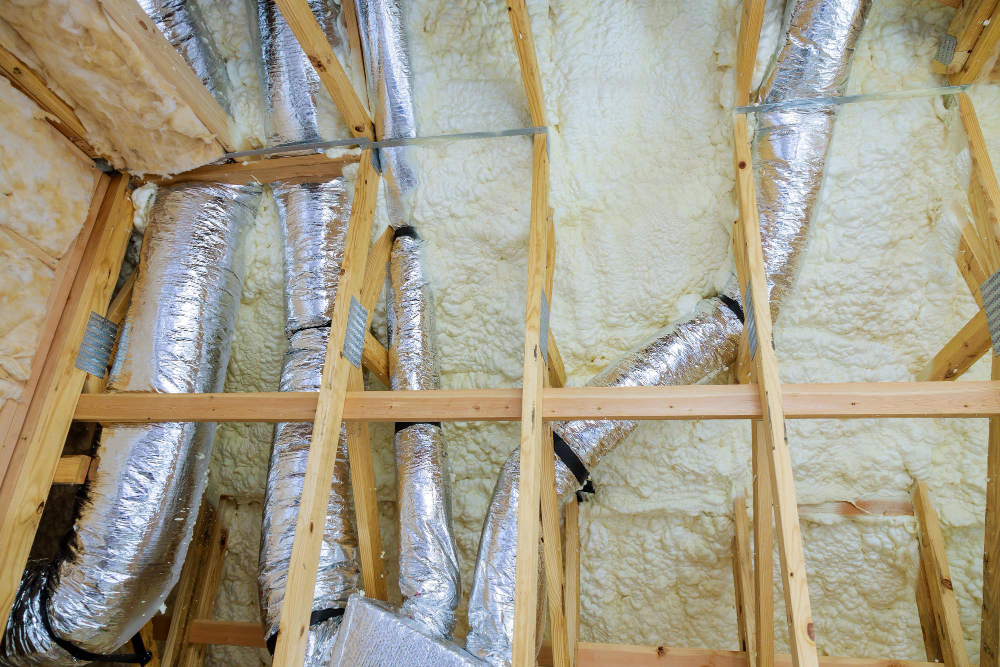
Spray foam rim joist insulation in Virginia homes provides both insulation and air sealing in a single application. Closed-cell spray foam expands to fill gaps and adheres directly to wood and concrete surfaces, creating an airtight barrier.
This dual function makes spray foam particularly effective for rim joists. The foam blocks air infiltration while adding R-6 to R-7 per inch of insulation value.
Key advantages of spray foam:
- Seals irregular gaps and penetrations
- Prevents moisture from reaching wood framing
- Stops pest infiltration through cracks
- Creates a vapor barrier when applied at proper thickness
Homes built between the 1950s and 1980s in Northern Virginia often have the worst rim joist air leakage because builders didn't use sill seals or modern air sealing techniques during construction.
Shortcomings of conventional insulation methods
Fiberglass batts and mineral wool allow air to pass freely through the material. When you stuff these products into rim joist cavities, air continues flowing through gaps around the edges and through the insulation fibers themselves.
These materials also fail to seal the joints where the rim joist meets the sill plate or where floor joists connect to the rim. Gaps greater than 1/4 inch remain completely open unless you fill them separately with caulk or foam sealant.
Rigid foam boards offer better performance than batts but require careful cutting and multiple steps. You need to cut each board to fit precisely, then seal all edges with caulk or expanding foam to prevent air leakage around the perimeter.
Moisture issues related to air leaks
Air leaks in rim joists create pathways for humid outdoor air to enter your home, which leads to condensation, mold growth, and structural damage. The combination of temperature differences and moisture infiltration puts your basement and crawl space at risk for serious problems.
Moist air entry in crawl spaces and basements
Humid Virginia air enters through unsealed rim joists and creates immediate moisture problems in your lower levels. During summer months, when outdoor humidity reaches 70-90%, this warm moisture-laden air contacts the cooler surfaces inside your basement or crawl space.
The temperature difference causes water vapor to condense on wood framing, metal fasteners, and concrete surfaces. Your rim joist area becomes a direct entry point because gaps exist between the sill plate, floor joists, and exterior sheathing.
Crawl space insulation Virginia homes need must address both air sealing and moisture barriers. Without proper sealing, you'll notice musty odors, visible mold on floor joists, and increased pest activity. These insects and rodents use the same gaps that allow moisture to enter.
The stack effect makes this worse in winter. Warm indoor air rises and escapes through upper levels, which pulls cold outdoor air through your rim joists. This constant air movement brings moisture year-round.
Condensation's impact on energy efficiency
Condensation on rim joists forces your HVAC system to work harder to maintain comfortable temperatures. Water droplets on cold surfaces indicate your conditioned air is escaping while outdoor air replaces it.
Your heating and cooling costs increase by 15-25% when rim joists leak air. The moisture itself also reduces insulation performance. Fiberglass insulation loses up to 50% of its R-value when it absorbs just 2% moisture by volume.
Metal ductwork in your basement sweats more when humid air circulates freely. This creates additional condensation problems that spread beyond the rim joist area.
Building material protection through moisture control
Wood rot develops when moisture content exceeds 20% for extended periods. Your rim joists, floor joists, and subfloor are all vulnerable to decay fungi that thrive in damp conditions.
Metal joist hangers and fasteners corrode faster in moist environments. Rust weakens these structural connections and creates stains on surrounding wood. Foundation sills resting on concrete absorb moisture through capillary action when air leaks allow condensation to form.
Spray foam insulation stops both air movement and moisture infiltration at rim joists. Rigid foam boards with sealed edges provide similar protection when installed correctly with appropriate sealants.
Enhancing whole-home performance
Rim joist insulation works alongside other upgrades to create measurable improvements in comfort and energy use. The benefits extend beyond the rim joist itself to affect how your entire home maintains temperature and how hard your heating and cooling systems work throughout the year.
Maintaining stable indoor temperatures
Sealing and insulating rim joists eliminates one of the largest sources of air leakage in your home. This stops cold drafts from entering during winter and prevents conditioned air from escaping during summer.
Your first floor will feel noticeably warmer in cold months. Many Virginia homeowners report that rooms above basements or crawl spaces become more comfortable within days of completing rim joist insulation. The difference is especially clear in homes built between the 1950s and 1980s, which typically have minimal or no rim joist insulation.
Temperature swings between rooms decrease when rim joists are properly sealed. You won't need to adjust the thermostat as often to compensate for cold spots. This consistency improves comfort in bedrooms, living areas, and home offices that previously felt drafty or uneven.
Reducing HVAC system demands
Your heating and cooling equipment runs less frequently when conditioned air stays inside your home. Rim joist insulation reduces the workload on furnaces, heat pumps, and air conditioners by preventing thermal losses at the foundation level.
According to the U.S. Department of Energy, heating and cooling account for 50% to 70% of the energy used in the average American home, and proper insulation combined with air sealing techniques can achieve whole-house energy savings of 10% to 20% over pre-retrofit usage.
Lower system demands translate to reduced energy bills. Most Virginia homes see decreases in heating and cooling costs after addressing rim joist air leaks. The exact savings depend on your home's age, existing insulation levels, and current energy rates.
Equipment lifespan extends when systems cycle less often. Furnaces and air conditioners experience less wear when they don't need to compensate for continuous air infiltration. This means fewer repairs and delayed replacement costs over time.
Role of air sealing in long-term comfort
Air sealing at rim joists prevents moisture from entering wall cavities and insulation. This protects your home from mold growth, wood rot, and structural damage that occurs when warm, humid air meets cold surfaces.
According to the U.S. Department of Energy, reducing air leakage is one of the most cost-effective ways to cut heating and cooling costs while also improving durability, comfort, and indoor air quality throughout the home.
The sealed barrier maintains home energy efficiency Virginia homeowners need year-round. Unlike insulation alone, proper air sealing stops air movement completely. Even high-quality insulation performs poorly if air can flow around or through it.
Indoor air quality improves when outdoor pollutants, allergens, and dust can't enter through foundation gaps. Your home stays cleaner and healthier when rim joists are sealed with spray foam or rigid foam boards combined with caulk or expanding foam at all seams.
Conclusion
Rim joist insulation stands out as one of the smartest investments you can make for your Virginia home. The benefits go beyond just lower energy bills. You'll notice better comfort in rooms above your basement or crawl space, and you'll reduce the chance of moisture problems that can damage your home over time.
Spray foam insulation gives you the best results for rim joists in Virginia homes. It seals air gaps while providing strong insulation value. If spray foam doesn't fit your budget, rigid foam boards or carefully installed batt insulation can still help.
The work pays for itself faster than most other home improvements. Your heating and cooling costs will drop, and your home will feel more comfortable in both summer and winter.
Virginia's climate makes rim joist insulation especially valuable. Cold winters and humid summers create conditions where unsealed rim joists waste energy and invite problems. Homes built between the 1950s and 1980s often need this upgrade the most since builders didn't focus on rim joist insulation back then.
Whether you hire a professional or tackle this project yourself, addressing your rim joists improves your home's performance and protects your investment. Contact Terra Insulation to schedule a rim joist assessment and find out how sealing and insulating these critical areas can improve your Virginia home's efficiency.