
Crawl space insulation moisture is one of the most overlooked problems in Maryland homes, and it quietly drives up energy bills while damaging the structure below your floors. Getting the right combination of moisture control and insulation is what separates a healthy crawl space from one that breeds mold and rot.
Moisture in your crawl space can destroy even the best insulation and create serious problems throughout your home. When water vapor enters this area under your house, it reduces how well insulation works, encourages mold growth, and leads to wood rot that weakens your home's structure. Many homeowners in Maryland and elsewhere don't realize that insulation alone won't solve moisture problems.
The key to protecting your crawl space is controlling moisture first, then adding the right insulation materials that can handle below-grade conditions. Without proper moisture barriers and ventilation or encapsulation, any insulation you install will eventually fail. You might notice cold floors, higher energy bills, or musty smells that signal your crawl space has both insulation and moisture issues.
This guide will show you the moisture problems most people miss, how to tell when moisture has damaged your insulation, and the right way to handle both issues together.
In this article, we cover:
- Hidden moisture issues homeowners miss
- Evidence of insulation damage from moisture
- The limits of insulation as a standalone solution
- Best practices for moisture and insulation control
- Benefits homeowners experience after improvements
Keep reading to learn exactly how to dry out, seal, and insulate your crawl space so you can stop recurring damage and start saving on energy costs.
Hidden moisture issues homeowners miss
Crawl space moisture problems often develop in areas you can't easily see or don't think to check. Humid air, ground dampness, and subtle odors create serious insulation damage before visible signs appear.
Humid air entry through unsealed openings
Your crawl space draws in moisture-laden air through cracks, vents, and gaps you might not notice during a quick inspection. Foundation wall cracks, rim joist gaps, and poorly sealed access doors let warm, humid air flow into cooler crawl spaces. When this humid air meets cold surfaces, it creates condensation that soaks into your insulation.
Unsealed HVAC penetrations and plumbing entry points act as direct channels for moisture. These small openings seem minor but they allow constant airflow that deposits moisture throughout your crawl space. Traditional vented crawl spaces worsen this problem by pulling in humid outdoor air during summer months.
The temperature difference between outside air and your crawl space creates a continuous moisture cycle. Your insulation absorbs this moisture gradually, which means you won't see water damage until the material becomes saturated.
Ground moisture impacting insulation
Bare soil in your crawl space releases moisture through evaporation every day. According to the U.S. Department of Energy, uncovered earth floors in crawl spaces are a major source of moisture, and managing this ground vapor is one of the first steps in any successful crawl space insulation project. The moisture moves through gravity and capillary action, spreading throughout the space.
Floor insulation installed between joists acts like a sponge for this rising moisture. The insulation traps water vapor instead of blocking it, which leads to:
- Sagging and drooping insulation batts
- Reduced R-value and thermal performance
- Wet spots on insulation backing
- Material compression and deterioration
Damp soil stays hidden beneath vapor barriers that have tears or weren't sealed properly. Ground moisture also enters through concrete slab cracks and block foundation walls. Your insulation absorbs this moisture before you notice dampness on visible surfaces.
Musty odors as early warning signs
A musty smell in your home indicates moisture has already compromised your crawl space insulation. This odor comes from mold spores and bacteria growing on damp insulation materials. The smell travels upward through floor gaps and HVAC systems before you see any visible mold.
You'll notice these odors strongest in rooms directly above the crawl space. Bathrooms, kitchens, and laundry rooms often mask these smells, which delays detection. The musty scent intensifies during humid weather or after rain when moisture levels peak.
By the time you smell these odors, your insulation has absorbed significant moisture. The dampness supports mold growth on insulation facing, floor joists, and subfloors. This smell signals that moisture damage has progressed beyond surface-level issues.
Evidence of insulation damage from moisture
Moisture damage to crawl space insulation creates visible signs that tell you when problems exist. These indicators range from physical changes in the insulation material to effects you notice in your home's air quality and comfort levels.
Wet or sagging materials lose effectiveness
Water-damaged insulation shows clear physical changes that you can spot during an inspection. Fiberglass batts absorb moisture and become heavy, causing them to sag away from floor joists or fall completely. The material may appear discolored with brown or yellow stains where water has penetrated.
Wet insulation loses its ability to trap air pockets, which is how it provides thermal protection. When moisture fills these air spaces, the R-value drops significantly. Your insulation might look compressed or matted down instead of fluffy and intact.
Some insulation types react differently to water exposure. Cellulose insulation, made from plant-based materials, cannot recover after getting wet and requires replacement. If you notice any insulation material that feels damp to the touch or appears darker than surrounding areas, moisture has compromised it.
Mold growth in poorly ventilated spaces
Mold in crawl space insulation develops when moisture levels stay high and air circulation remains poor. You might see black, green, or white patches growing on the insulation surface or nearby wood structures. A persistent musty odor coming from your crawl space indicates mold presence even when you cannot see it directly.
Common conditions that promote mold:
- Humidity levels above 60%
- Temperatures between 40-100°F
- Poor ventilation or air movement
- Organic materials like paper-backed insulation
Mold spreads quickly once it establishes itself. According to the U.S. Environmental Protection Agency, indoor mold growth can begin within 24 to 48 hours on wet materials, which is why prompt drying and remediation of any water-damaged building materials is critical to protecting indoor air quality. This creates health concerns for your family and reduces the structural integrity of materials in your crawl space.
Higher humidity affects living spaces
Moisture problems in your crawl space insulation directly impact the air quality in rooms above. You may notice increased humidity levels on your main floor, causing windows to fog up or a clammy feeling in the air. This happens because air naturally moves upward from your crawl space into your home.
Your energy bills often increase when crawl space insulation holds moisture. The HVAC system works harder to maintain comfortable temperatures since wet insulation provides little thermal protection. You might see a sudden spike in heating or cooling costs compared to previous months.
The air quality changes become noticeable over time. Your home may develop that same musty smell present in the crawl space, indicating contaminated air circulation.
The limits of insulation as a standalone solution
Insulation works best when paired with proper air sealing, moisture barriers, and the right ventilation approach for your crawl space type. Without these supporting elements, even high-quality insulation can fail to protect your home.
Air sealing is essential for performance
Air leaks undermine insulation by allowing humid outdoor air and conditioned indoor air to move freely through your crawl space. These gaps around rim joists, pipes, and vents create pathways for moisture-laden air that reduces your insulation's effectiveness.
You need to seal these openings with spray foam or caulk before installing insulation. According to ENERGY STAR, homeowners can save an average of around 15% on heating and cooling costs by air sealing their homes and adding insulation in attics, floors over crawl spaces, and accessible basement rim joists. Without it, warm air rises through your floors in winter while humid air seeps in during summer.
Common air leak locations:
- Rim joist connections
- Plumbing penetrations
- HVAC ductwork openings
- Electrical wire entry points
- Crawl space access doors
Focus on the rim joist first since it typically accounts for the largest air leakage area in crawl spaces.
Vapor barriers prevent ground moisture entry
Ground moisture evaporates continuously from exposed soil and can release significant amounts of water vapor into your crawl space each day. This moisture travels upward and saturates insulation, wood framing, and creates conditions for mold growth.
A 6-mil polyethylene vapor barrier or thicker material blocks this moisture at the source. You should overlap seams by 6-12 inches and seal them with moisture-resistant tape. Extend the barrier up foundation walls by 6 inches and seal it to the wall.
The vapor barrier must cover 100% of the soil surface to work properly. Even small gaps allow significant moisture entry that compromises your insulation and creates humidity problems throughout the space.
Ventilation strategies vary by crawl space
Vented crawl spaces rely on outside air circulation to remove moisture, but this approach often fails in humid climates. The warm outdoor air actually introduces more moisture than it removes, leading to condensation and damp insulation.
Encapsulated crawl spaces seal all vents and treat the area as conditioned space. This approach requires a dehumidifier to maintain relative humidity below 60% and prevents the moisture problems common in vented designs.
Your climate determines which strategy works better. Humid regions like Maryland typically benefit from encapsulation, while dry climates may succeed with vented approaches when combined with proper ground cover.
Best practices for moisture and insulation control
Effective crawl space protection requires multiple layers of defense against moisture intrusion. Combining encapsulation, spray foam, and vapor barriers creates a complete system that addresses air leakage, temperature control, and water vapor movement.
Encapsulation systems for comprehensive protection
Encapsulation seals your entire crawl space from ground moisture and outside air. This method covers the floor, walls, and sometimes the ceiling with heavy-duty materials.
The process starts with cleaning out debris and leveling the ground. You install thick plastic sheeting across all surfaces, sealing seams with special tape. The material extends up the walls and attaches to the foundation.
Most encapsulation systems use 10-20 mil polyethylene sheeting. This thickness resists tears and punctures better than standard plastic. The sheets overlap by 6-12 inches at all seams.
You should also seal vents and other openings during encapsulation. This stops humid outside air from entering. A dehumidifier often runs continuously to control any remaining moisture.
Spray foam enhances air and thermal sealing
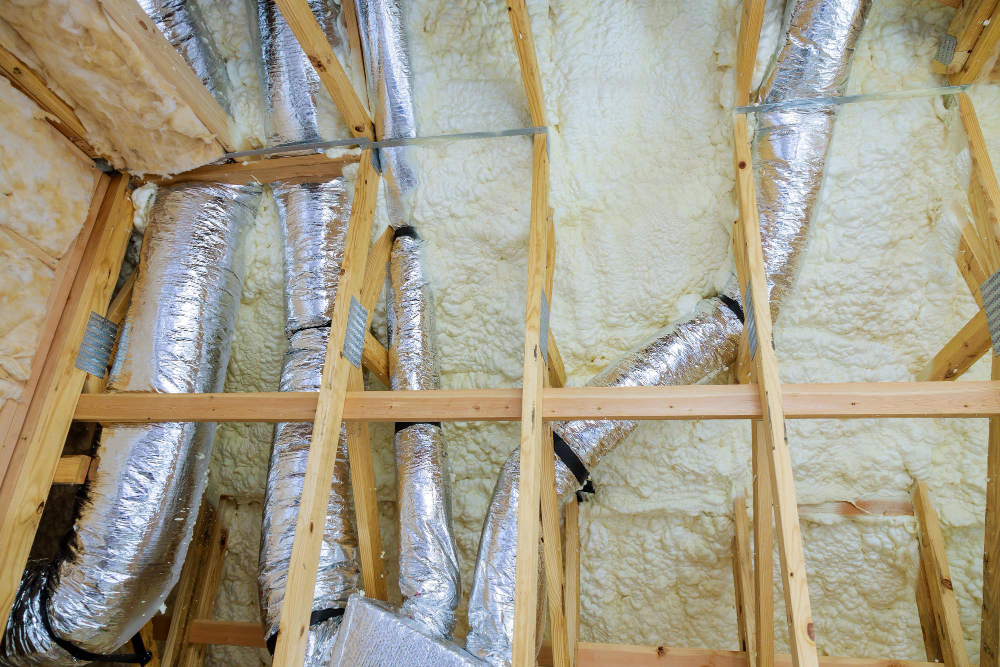
Spray foam insulation blocks both air movement and heat transfer in one application. It expands to fill gaps and creates an airtight barrier against your crawl space walls or rim joists.
Two types work for crawl spaces: open-cell and closed-cell foam. Closed-cell foam provides better moisture resistance with an R-value of 6-7 per inch. Open-cell foam costs less but absorbs water more easily.
Apply spray foam to the foundation walls rather than between floor joists. This keeps your crawl space within your home's thermal boundary. The foam sticks directly to concrete or block walls and stops air leaks at the foundation.
Professional installation ensures proper thickness and coverage. Most building codes require 2-3 inches of closed-cell foam for adequate performance.
Vapor barriers for long-term moisture reduction
Vapor barrier installation in your crawl space stops ground moisture from evaporating into the air. According to the Oak Ridge National Laboratory, controlling vapor transport with continuous ground covers and properly detailed barriers is one of the most effective ways to reduce humidity levels in below-grade spaces and prevent damage to insulation and framing.
A proper vapor barrier uses 6-10 mil polyethylene plastic at minimum. Thicker materials last longer and resist damage during installation. Roll out the plastic across your entire crawl space floor, overlapping edges by 6 inches.
Secure the barrier with landscape fabric pins or tape. Extend the plastic 6 inches up the foundation walls and attach it with adhesive or mechanical fasteners. Seal all seams and penetrations with contractor-grade tape.
The barrier should cover 100% of exposed soil. Any gaps allow moisture to escape into your crawl space. Check the barrier yearly for tears or separated seams that need repair.
Benefits homeowners experience after improvements
Insulating your crawl space brings measurable changes to daily comfort and home health. You'll notice warmer floors, lower humidity levels, and reduced risks of mold and structural damage.
Warmer floors and enhanced comfort
Your floors will feel noticeably warmer during cold months after crawl space insulation is installed. Cold air from the ground no longer seeps through your floors, which means you won't experience that uncomfortable chill when walking barefoot.
The insulation creates a barrier between your living space and the cold ground below. This keeps heat inside your home where it belongs instead of letting it escape through the floor.
Your heating system won't have to work as hard to maintain comfortable temperatures. This means more consistent warmth throughout your home and fewer cold spots near floor vents or exterior walls.
Lower humidity throughout the home
Crawl space sealing combined with insulation significantly reduces moisture levels in your entire home. You'll see less condensation on windows and feel less dampness in the air.
Common humidity improvements include:
- Reduced musty odors from below
- Less condensation on pipes and ductwork
- Fewer humidity-related issues in first-floor rooms
- Better control over indoor air quality
The moisture barrier prevents ground water vapor from rising into your home. When paired with proper crawl space sealing, this creates a drier environment that protects both your belongings and your health.
Decreased mold and structural risks
Your home's structural elements face less threat from moisture damage after proper insulation. Wood joists, beams, and subflooring stay drier, which prevents rot and decay.
Mold growth becomes much less likely when moisture levels drop. This protects your family from respiratory issues and allergic reactions caused by mold spores.
Protection benefits include:
- Longer lifespan for floor joists and support beams
- Reduced pest attraction to damp wood
- Lower risk of wood-destroying fungi
- Better preservation of HVAC ducts and plumbing
Energy efficiency improves as your HVAC system operates in a cleaner, drier environment. Sealed and insulated crawl spaces prevent air leakage that forces heating and cooling equipment to cycle more frequently.
Conclusion
Crawl space insulation needs proper moisture management to work well. Without it, you risk mold growth, structural damage, and wasted energy costs.
The right insulation material matters for your specific situation. Spray foam creates an air barrier that blocks moisture and drafts. Foam board resists water damage better than traditional options. Fiberglass can work if your crawl space stays dry, but it loses effectiveness when wet.
Your crawl space should be either fully vented or completely sealed. Mixing these approaches creates moisture problems that damage insulation and your home's structure.
Regular inspections help you catch moisture issues early. Check for wet insulation, standing water, and musty odors at least twice a year.
The investment in proper crawl space insulation and moisture control pays off through lower energy bills and better indoor air quality. Your home stays more comfortable year-round when the crawl space is properly insulated and dry.
Work with professionals if you're unsure about the best approach for your home. To get a tailored crawl space moisture and insulation plan for your Maryland property, schedule an assessment with Terra Insulation today.