
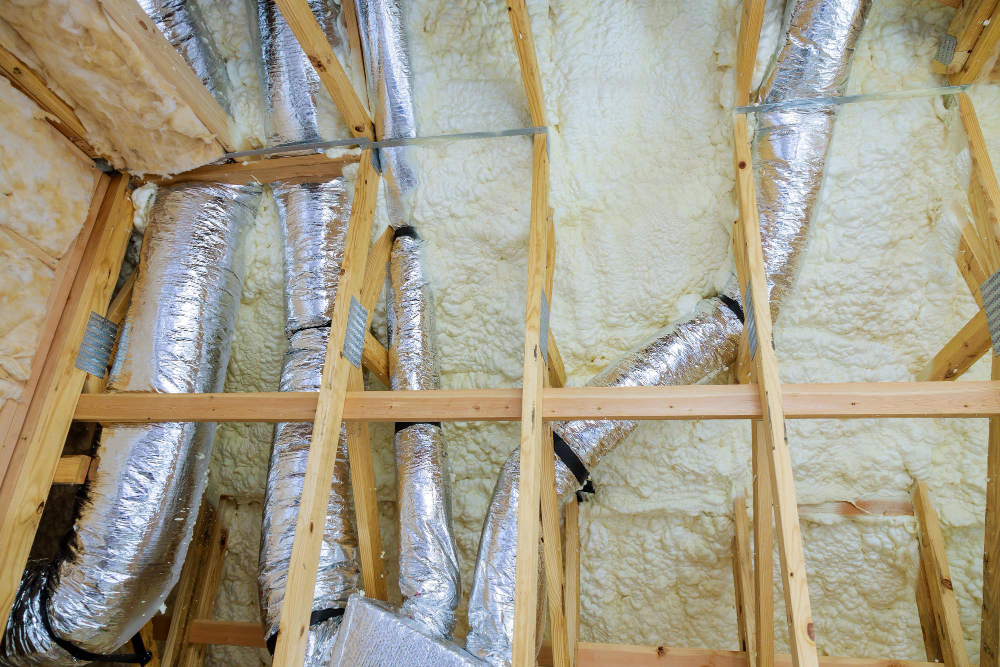
If your energy bills spike every summer and certain rooms never seem to cool down, the problem might not be your air conditioner. For many Virginia homeowners, the real source of wasted cooling energy is hiding in the attic or crawl space, running through uninsulated or poorly insulated ductwork.
Learning how to reduce cooling costs with duct insulation in Virginia starts with understanding just how much conditioned air your home may be losing before it ever reaches the rooms you are trying to cool.
Virginia sits in IECC Climate Zone 4A, a mixed-humid region where summer temperatures routinely hit the low 90s and humidity makes your HVAC system work even harder. That combination means your air conditioning runs for long stretches every day, and any weak point in the duct system turns into a direct path for energy waste.
When supply ducts pass through a 130-degree attic without adequate ductwork insulation, the cooled air inside those ducts can gain 15 to 20 degrees before it reaches a register. You pay for air at 55 degrees and get air at 70 or warmer.
The good news is that duct insulation is one of the most cost-effective upgrades a Virginia homeowner can make. It does not require replacing your HVAC equipment, it does not disrupt your living space for days, and the savings start the very first month.
Whether your ducts run through an attic in Arlington, a crawl space in Gaithersburg, or an unfinished basement in Fairfax, insulating them properly can cut cooling waste significantly and make your home more comfortable from the first floor to the second.
In this article, you will learn about:
- Why uninsulated ducts waste so much cooling energy in Virginia
- Where the biggest duct insulation problems hide in your home
- What R-values and materials actually work for Virginia's climate
- How duct insulation and duct sealing work together to cut costs
- When to call a professional instead of tackling it yourself
Keep reading to find out exactly where your cooling dollars are going and how insulating your ductwork can bring them back.
Why uninsulated ductwork is Virginia's hidden cooling problem
Most homeowners think about insulation in terms of walls and attics, and those areas matter. But the ductwork running through your home is part of the same system, and when it is exposed to extreme temperatures without protection, it quietly drains your cooling budget every hour your AC runs. In Virginia's hot, humid summers, this is not a minor issue.
The problem is straightforward. Your HVAC system cools air to roughly 55 degrees and pushes it through supply ducts to reach every room. If those ducts travel through an unconditioned attic where temperatures regularly climb past 130 degrees in July, the temperature difference between the air inside the duct and the air surrounding it can exceed 75 degrees.
Without insulation to slow that heat transfer, the cooled air absorbs heat through the thin metal walls of the duct before it arrives at the register. By the time it enters your bedroom or living room, it may be 15 to 20 degrees warmer than when it left the air handler.
The numbers behind duct energy loss
According to the U.S. Department of Energy, roughly 20 to 30 percent of the air moving through a typical home's duct system is lost due to leaks, holes, and poorly connected ducts. That figure combines both air leakage and thermal loss, and it means that for every dollar you spend cooling your home, as much as 30 cents may never reach a living space.
For Virginia homeowners specifically, this matters because cooling is not a luxury here. The EIA's 2020 Residential Energy Consumption Survey found that 93 percent of households in the South Census Region use air conditioning, and heating and cooling together account for the largest share of residential energy use. When your ducts are poorly insulated, your system compensates by running longer cycles, which increases electricity consumption and accelerates wear on compressors, blower motors, and other components.
The financial impact compounds over time. A system that runs 20 percent longer to overcome duct losses does not just cost 20 percent more in electricity. It also shortens the lifespan of your equipment and increases the likelihood of mid-summer breakdowns when HVAC technicians are hardest to schedule.
How Virginia's climate makes it worse
Virginia's Climate Zone 4A designation means the state experiences both meaningful heating demand in winter and sustained cooling demand in summer. The summer 1 percent design temperature for much of Virginia is 91 degrees Fahrenheit, but actual attic temperatures in a poorly ventilated space can reach 140 degrees or higher on peak days. That temperature gap between attic air and conditioned supply air is the engine driving thermal loss through uninsulated ducts.
Humidity amplifies the problem. Virginia summers routinely push outdoor relative humidity above 70 percent. When warm, moist attic air contacts the cold surface of an uninsulated supply duct, condensation forms on the outside of the duct. Over time, that moisture can drip onto ceiling drywall, saturate surrounding attic insulation, and create conditions for mold growth. What starts as an energy efficiency problem becomes a structural and indoor air quality concern.
Northern Virginia neighborhoods built in the 1970s through 1990s are especially vulnerable. Many of these homes were constructed with flex duct routed through attics and insulated to R-4 or less, well below the R-8 minimum that current codes require for ducts in unconditioned spaces. If your home falls into that age range, there is a strong chance your ductwork is underperforming.
The rooms that suffer most
The symptoms of uninsulated ductwork are predictable. Second-floor bedrooms are almost always the worst, because the supply ducts serving those rooms run the longest distance through the hottest part of the attic. Rooms at the end of long duct runs also struggle, since the air has more time to absorb heat before arriving.
If you have ever noticed that your thermostat reads 72 degrees while the upstairs bedroom feels like 78, uninsulated ducts in the attic are one of the most likely explanations. Closing vents in other rooms will not fix it. Turning the thermostat lower will not fix it either, because the problem is not how much cool air the system produces. The problem is how much of that cool air arrives at the register at the temperature it was designed to deliver.
- Rooms directly below an attic with exposed ductwork tend to run 5 to 10 degrees warmer than the thermostat setting
- Rooms farthest from the air handler receive the warmest supply air because the duct run is longest
- Bathrooms and bonus rooms above garages often share duct routes through the least insulated sections of the home
These patterns are consistent across Virginia homes from Alexandria to Rockville, and they almost always trace back to inadequate duct insulation rather than an undersized HVAC system.
Where duct insulation problems hide in Virginia homes
Duct insulation issues are not always obvious. You cannot see the inside of your attic from your living room, and most homeowners only enter their crawl space when something has already gone wrong. Understanding where your ducts are most exposed helps you identify the areas that will deliver the biggest return on an insulation upgrade.
Every home has a different layout, but Virginia construction patterns create a few common trouble spots. Knowing what to look for, and where, makes the difference between guessing and targeting the actual problem.
Attic ductwork in Northern Virginia homes
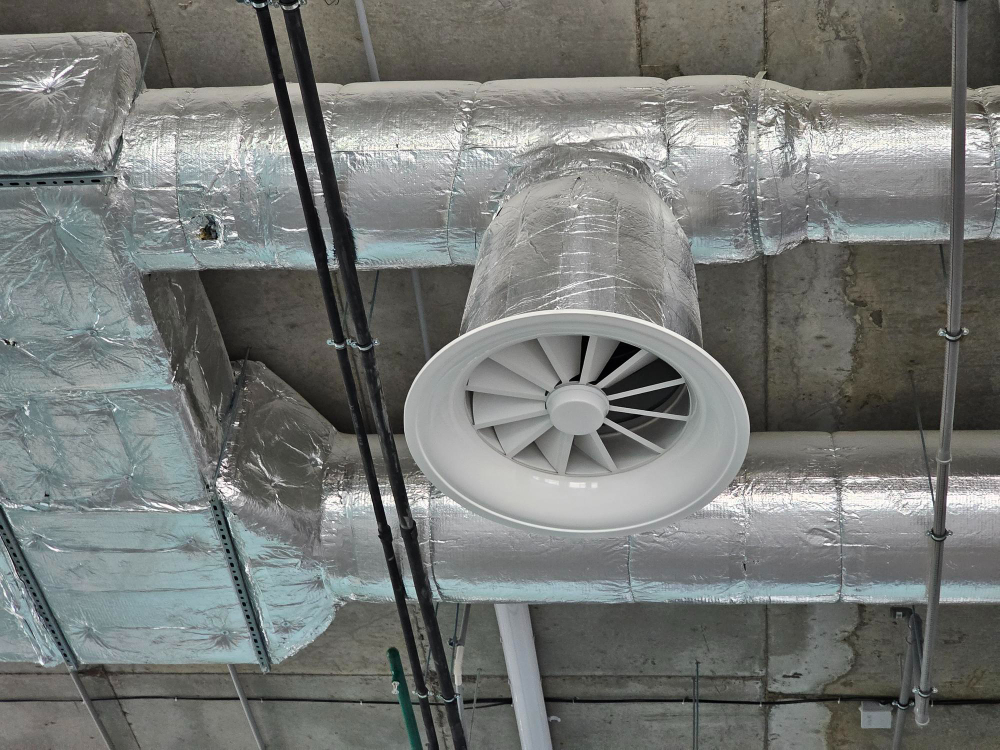
The attic is the single most common location for duct insulation failure in Virginia. In homes built before 2000, it is typical to find flex duct snaking across the attic floor with thin, compressed insulation wrap that has degraded over the years. Some ducts have no insulation at all at connection points, boots, or where they attach to the plenum.
During summer, an unventilated or under-ventilated attic in Northern Virginia can reach interior temperatures of 130 to 150 degrees. Improving attic ventilation can help reduce those peak temperatures, but even with better airflow, ducts still need insulation. At those temperatures, even R-6 insulation struggles to prevent significant heat gain through the duct walls. The junction between the supply plenum and the trunk line is a particular weak spot, because rigid metal connections often have no insulation wrap at all, and the surface area is large enough to allow substantial thermal transfer.
Signs to watch for include visible ductwork in the attic with thin or missing insulation wrap, flex duct that has been compressed or kinked (reducing both airflow and insulation effectiveness), and water staining on the attic side of ceiling drywall directly below duct runs.
Crawl space and basement duct runs
Virginia homes with crawl space foundations face a different version of the same problem. Crawl spaces are typically unconditioned, meaning they are closer to outdoor temperatures than indoor temperatures. In summer, a crawl space in Maryland or Virginia may sit around 75 to 85 degrees, which is cooler than an attic but still warm enough to cause meaningful thermal loss through uninsulated supply ducts carrying 55-degree air.
Crawl spaces also introduce moisture risk. Humidity levels in a poorly sealed crawl space can climb above 80 percent during Virginia summers. When cooled supply air passes through an uninsulated metal duct in that environment, condensation forms rapidly. Over weeks and months, that moisture drips onto the crawl space floor or onto nearby insulation, encouraging biological growth and degrading the materials around the duct.
Crawl space encapsulation can address the moisture component, but duct insulation is still necessary to reduce the thermal differential that causes condensation in the first place.
Garage and unfinished basement sections
If any portion of your ductwork runs through an attached garage or an unfinished section of basement, those ducts are in unconditioned space and need insulation. Garages in Virginia can reach extreme temperatures in both summer and winter, and even a partially finished basement with an uninsulated mechanical room exposes ductwork to temperatures well above or below your target indoor temperature.
- Walk your garage ceiling and look for exposed sheet metal or flex duct with no insulation wrap
- Check any unfinished rooms in the basement where the air handler or furnace is located, because the trunk lines leaving the unit often run several feet before entering conditioned walls or floors
- Inspect the transition points where ducts pass from conditioned space into unconditioned space, since insulation frequently stops at the boundary even though the duct continues. Pay special attention to rim joist areas where basement walls meet the framing, as these transitions are common weak spots.
These transition points are easy to miss during a quick visual inspection, but they can account for a meaningful share of total duct energy loss.
How to spot the warning signs without climbing into the attic
Not every homeowner is comfortable inspecting their attic or crawl space, and that is perfectly reasonable. Several symptoms visible from inside the home point to duct insulation problems without requiring a flashlight and a ladder.
- Rooms that are consistently warmer or cooler than the thermostat setting, especially on the second floor or above the garage
- Your HVAC system cycles frequently or runs for extended periods without reaching the set temperature
- Visible condensation or water staining on ceilings near supply registers
- Higher-than-expected summer electricity bills compared to neighbors with similar-sized homes
If two or more of these apply, a professional home energy audit can pinpoint exactly where the losses are occurring and quantify the potential savings from insulation upgrades.
What R-values and materials actually work for Virginia ductwork
Choosing the right insulation for your ductwork is not just a matter of wrapping something around the outside of a duct and hoping for the best. The material, thickness, and installation method all affect performance, and Virginia's building codes set a minimum standard that many older homes do not meet.
Understanding R-values and how they apply to ductwork helps you make informed decisions about what your home actually needs, rather than relying on a generic recommendation.
R-value requirements under Virginia's building code
Virginia follows the International Energy Conservation Code with state-specific amendments. Under the 2021 IECC, which Virginia adopted and put into effect in January 2024, supply and return ducts located in unconditioned spaces must be insulated to a minimum of R-8 for ducts 3 inches in diameter or larger. Ducts smaller than 3 inches require at least R-6.
That R-8 minimum is a code floor, not a performance ceiling. For ducts running through attics in Northern Virginia, where summertime attic temperatures can exceed 130 degrees, many energy performance experts recommend R-8 as a starting point and suggest R-12 or higher for long supply runs serving second-floor rooms. The greater the temperature difference between the air inside the duct and the space surrounding it, the more insulation thickness matters.
Virginia's code also requires duct systems to meet air leakage testing thresholds. According to the Virginia Residential Code, new duct systems must be tested to verify air leakage rates do not exceed specified limits when measured at 25 pascals of pressure. Existing homes undergoing renovation may trigger the same requirement depending on the scope of the project.
Fiberglass duct wrap
Fiberglass blanket wrap is the most common material used for duct insulation in residential applications. It comes in rolls with a foil-scrim-kraft (FSK) facing that serves as a vapor barrier, which is important in Virginia's humid climate because it helps prevent moisture from reaching the duct surface and forming condensation.
Standard fiberglass duct wrap is available in R-6 and R-8 thicknesses. For Virginia attics, R-8 is the practical minimum. The material is wrapped around the exterior of the duct with the facing side out, secured with outward-clinching staples or mechanical fasteners, and sealed at all seams with foil tape rated for HVAC use.
- R-6 fiberglass wrap provides roughly 2 inches of insulation thickness and works for ducts in semi-conditioned spaces like finished basements
- R-8 fiberglass wrap runs about 2.5 to 3 inches thick and meets code for unconditioned attics and crawl spaces
- Double-layering R-6 wrap is possible but adds labor cost and is generally less effective than a single R-8 layer due to compression at overlaps
Proper installation matters as much as the material. Compressed fiberglass loses R-value rapidly, so ducts routed through tight spaces need careful attention to ensure the wrap maintains its full loft.
Spray foam insulation for ductwork
Spray foam insulation offers a different approach. Closed-cell spray foam applied directly to the exterior of ductwork provides both insulation and an air seal in a single application. The difference between open-cell and closed-cell formulations matters here, because closed-cell foam is the stronger choice for ductwork applications where moisture resistance and structural rigidity are priorities.
Closed-cell spray foam typically delivers R-6 to R-7 per inch of thickness, meaning a 1.5-inch application can exceed R-8. It also resists moisture absorption, which makes it a strong choice for crawl space duct insulation in Virginia where humidity is a constant concern. If you are weighing options, understanding the differences between spray foam and fiberglass can help narrow the decision.
The tradeoff is cost and accessibility. Spray foam requires professional application equipment and training. It is also more difficult to inspect or modify after installation, so any duct repairs or modifications need to happen before the foam goes on. For ducts that are in good condition and unlikely to need reconfiguration, spray foam is one of the most durable options available.
Duct board and rigid foam
Duct board, made from fiberglass with a foil facing, is sometimes used to construct rectangular duct sections rather than as a wrap-on product. It provides built-in insulation and a finished interior surface. Rigid foam board (typically polyisocyanurate or extruded polystyrene) can also be cut and fitted around ductwork in accessible locations.
These options are less common in residential retrofit work because they are harder to fit around existing round or oval ductwork, but they can be effective in mechanical rooms or for short, straight duct sections where a rigid insulation method makes sense.
- Fiberglass duct wrap is the most widely used and cost-effective option for standard residential duct insulation in Virginia
- Spray foam is the best performer when moisture control and air sealing are priorities, especially in crawl spaces
- Duct board and rigid foam serve niche applications where duct geometry and access allow clean installation
Regardless of which material is used, the vapor barrier must face outward toward the unconditioned space, and all seams must be sealed to prevent moisture migration into the insulation layer.
How duct insulation and duct sealing work together
Insulating your ductwork without sealing the leaks is like putting a jacket on over a shirt full of holes. The insulation reduces thermal transfer through the duct walls, but if conditioned air is escaping through gaps at joints, connections, and boot fittings, you are still losing a substantial share of your cooling output before it reaches the room.
The most effective duct performance upgrade combines both sealing and insulation. Understanding how these two measures complement each other helps you prioritize the work and set realistic expectations for the results.
Why sealing comes first
According to ENERGY STAR, leaky ducts can reduce heating and cooling system efficiency by as much as 20 percent, and sealing and insulating ducts increases efficiency, lowers energy bills, and can often pay for itself in energy savings. ENERGY STAR also reports that 9 out of 10 homes in the United States are under-insulated, a figure that includes both building envelope and duct system deficiencies.
Sealing addresses air leakage, which is the more acute of the two loss mechanisms. A 1-inch gap at a duct connection can leak a surprising volume of conditioned air over the course of a cooling season, and that air goes directly into the attic or crawl space rather than into your living area. Mastic sealant, foil-backed tape rated for HVAC systems, and aerosol-based sealing technologies like Aeroseal are the standard methods for closing these leaks.
Once leaks are sealed, the remaining energy loss is thermal, which is where insulation does its job. Together, the two measures address both pathways of duct system energy waste.
The combined effect on cooling costs
When duct sealing and duct insulation are performed together, the energy savings are greater than either measure alone. Sealing eliminates the direct loss of conditioned air, and insulation slows the heat gain through the duct walls so that the sealed air arrives closer to its intended temperature.
For a Virginia home with ducts in the attic, a combined sealing and insulation project can meaningfully reduce summer cooling costs. The exact savings depend on the starting condition of the ductwork, the length and routing of the runs, and how well the existing HVAC system is sized for the home. Homes with extensive duct runs through hot attics and visible gaps at connections tend to see the largest improvements.
- Sealing alone addresses air loss but does nothing about thermal transfer through duct walls
- Insulation alone slows thermal transfer but does nothing about air escaping at joints and seams
- The combination addresses both loss pathways and produces a duct system that delivers cooled air efficiently
After a combined duct sealing and insulation upgrade, many homeowners notice that their system reaches the thermostat setpoint faster and cycles off sooner. That reduction in runtime translates directly into lower electricity consumption and reduced AC usage across the full cooling season.
Where Aeroseal fits into the picture
Traditional duct sealing involves applying mastic or tape by hand to accessible joints and connections. This works well for ducts you can reach, but much of a typical home's ductwork is hidden behind drywall, buried under existing insulation, or routed through spaces where physical access is limited.
Aeroseal duct sealing uses a different approach. It pressurizes the duct system and introduces aerosolized sealant particles that travel through the ducts and accumulate at leak points, sealing them from the inside. This technology can reach leaks that manual sealing cannot, including those in wall cavities and above finished ceilings.
For Virginia homes where ductwork passes through multiple areas of the home and manual access is limited, Aeroseal can be an effective first step before adding or upgrading ductwork insulation. The combination of interior sealing and exterior insulation produces a duct system that loses far less energy than either measure alone would achieve.
What about replacing ductwork entirely
In some cases, the ductwork itself is in poor enough condition that sealing and insulating it is not the most practical solution. Flex duct that has been severely compressed, rigid metal duct that has separated at joints, or duct systems that were improperly sized from the beginning may warrant partial or full replacement.
Replacement is a larger project and a bigger investment, but it allows for right-sized duct design, proper insulation from the start, and modern sealing standards. If your contractor recommends replacement, ask them to show you the specific sections that justify it and explain why sealing and insulating the existing system would not achieve the performance improvement you need.
When to call a professional instead of tackling it yourself
Some duct insulation work is within reach of a capable homeowner, and some is not. Knowing where the line falls helps you avoid wasted effort on tasks that require professional equipment or specialized knowledge, while still handling the straightforward improvements that do not require a contractor.
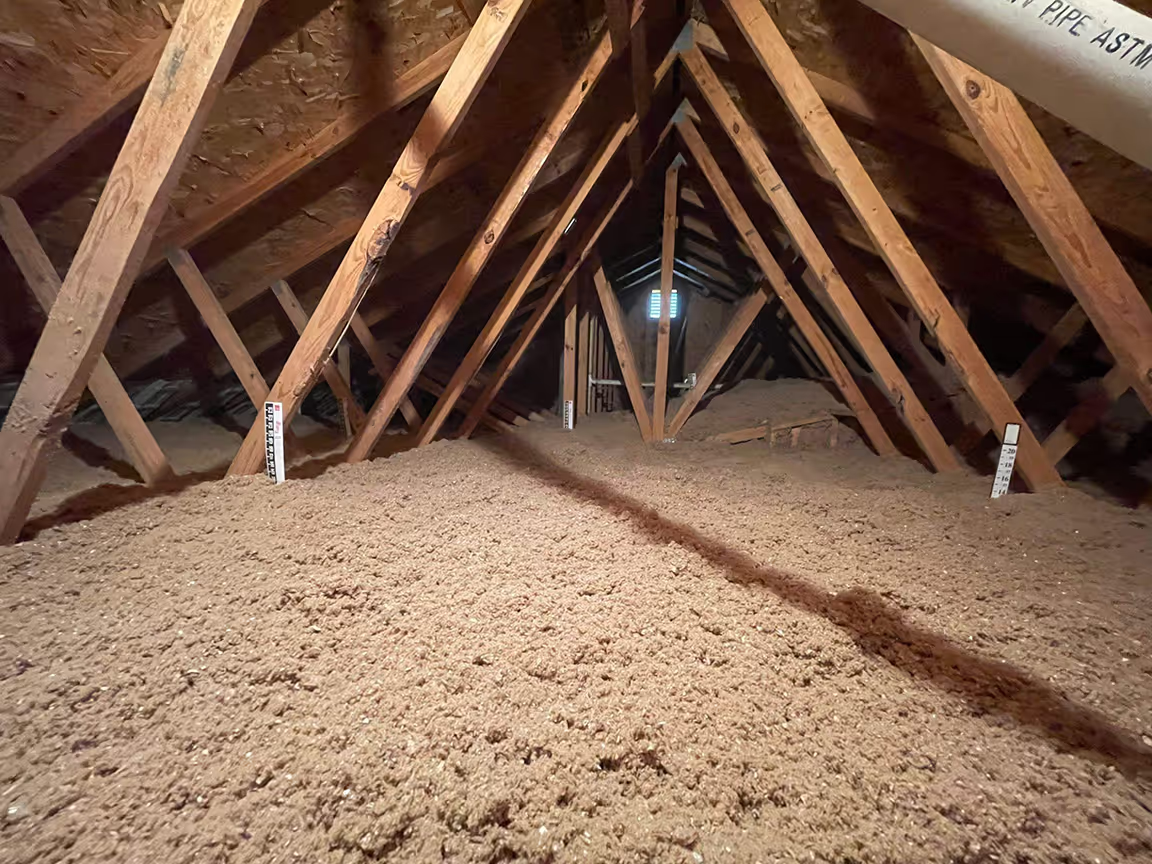
The distinction is usually about access, safety, and the quality of the outcome. A poorly insulated duct section in an accessible basement is a different challenge than a full attic duct system buried under blown-in cellulose.
What you can safely inspect and assess
Any homeowner can do a basic visual assessment of accessible ductwork. In an unfinished basement, a garage, or an attic with a walkable floor, you can check for obvious problems without specialized tools.
Look for sections of duct that have no insulation wrap at all. Check for insulation that has pulled away from the duct, leaving gaps. Feel the surface of supply ducts while the AC is running. If the outside of the duct feels cold or you see moisture droplets forming, the insulation is either missing or inadequate.
You can also check the condition of existing insulation wrap. If the foil facing is torn, if the fiberglass is compressed to less than an inch thick, or if you see signs of water damage or pest intrusion, the insulation is not performing as intended.
- Check exposed ductwork in basements and garages for missing or damaged insulation
- Run your hand along supply ducts during cooling operation to feel for cold spots or condensation
- Look for disconnected or sagging flex duct in the attic, which indicates both insulation and airflow problems
- Note any water stains or discoloration around duct connections, especially at register boots
This inspection gives you a starting point for conversations with a professional. You do not need to climb through your entire attic or crawl space to identify whether a problem exists.
When professional assessment is the right move
A full duct insulation project in a Virginia attic requires working in confined, extremely hot conditions during the season when the work matters most. Attic temperatures during summer installation windows routinely exceed 120 degrees, which creates genuine heat-related health risks for anyone spending extended time in that space.
Professional insulation contractors bring equipment and protocols for working safely in these environments, including fans, lighting, and staged work schedules. They also bring diagnostic tools like blower-door testing and infrared cameras that can identify duct leaks and insulation gaps that visual inspection alone will miss.
A professional home energy audit from a qualified contractor typically includes a duct leakage test, an insulation assessment, and a report showing where the highest-impact improvements are. For Virginia homeowners who qualify, utility rebate programs through PEPCO, BGE, and SMECO can offset a significant portion of the cost when the work is performed by an approved contractor.
The rebate and tax credit factor
Virginia homeowners considering duct insulation upgrades should be aware of available financial incentives. The federal Energy Efficient Home Improvement Credit under Section 25C allows homeowners to claim up to $1,200 per year for qualifying insulation and air sealing improvements through 2032. According to the Internal Revenue Service, insulation materials that meet or exceed the prescriptive criteria of the IECC qualify for this credit.
On the utility side, Maryland and Virginia homeowners served by PEPCO, BGE, or SMECO may qualify for additional rebates on insulation upgrades, duct sealing, and related energy efficiency work. These programs often require the work to be performed by a participating contractor and may require a pre-installation audit, so checking eligibility before starting the project is worth the effort.
- Contact a local insulation professional for an energy audit if you suspect duct insulation problems
- Ask specifically about duct leakage testing and whether combined sealing and insulation is recommended
- Verify rebate eligibility through your utility provider before signing a contract, because some programs require pre-approval
- Keep all receipts and contractor documentation for the federal tax credit filing
The combination of lower monthly energy bills, utility rebates, and the federal tax credit can make a duct insulation upgrade one of the most financially attractive home improvements available to Virginia homeowners today.
Conclusion
Uninsulated or poorly insulated ductwork is one of the most overlooked sources of wasted cooling energy in Virginia homes. When your HVAC system pushes cooled air through ducts running through a scorching attic or a humid crawl space without adequate protection, you pay for comfort that never reaches your living space. The result is higher electricity bills, rooms that never feel right, and a system that works harder than it should.
The fix is practical, proven, and available. Duct insulation paired with proper sealing addresses both thermal loss and air leakage, the two mechanisms responsible for most duct-related energy waste. Virginia's climate makes this upgrade especially impactful because the temperature extremes that drive cooling demand are the same conditions that punish uninsulated ductwork the hardest.
Whether your home needs new insulation on exposed attic duct runs, spray foam in the crawl space, or a full duct performance assessment to identify where the losses are, the first step is understanding what your current system looks like and where the opportunities are. Contact Terra Insulation to schedule a home energy audit and find out how much your ductwork may be costing you this summer.