

The ductwork insulation benefits during Maryland summers are immediate and measurable: cooled air that was being absorbed by a 150-degree attic actually reaches the rooms you are trying to cool. That single change is what separates an AC system that struggles all afternoon from one that keeps up with Maryland's most demanding July days.
Most Maryland homes route supply and return ducts through the attic. In summer, those ducts are surrounded by some of the hottest air in the building, and without proper insulation separating the cooled air inside the duct from the heat pressing in from outside, the system is losing a significant portion of what it produces before a single register delivers it.
According to the U.S. Department of Energy, ducts that leak or lose energy into unconditioned spaces can add hundreds of dollars annually to heating and cooling bills, and Maryland homeowners with attic-routed ductwork pay that penalty every summer.
The fix is not a new HVAC system. It is insulating and sealing the duct system so that the cooling your equipment produces actually travels intact from the air handler to the room. Understanding ductwork insulation in Maryland as a cooling performance upgrade rather than just an energy-efficiency measure changes how homeowners think about it. It is not about running the AC less. It is about making the AC you have do the job it was designed to do.
In this article, you will learn about:
- Why Maryland's summer attic conditions make duct insulation critical
- The specific cooling performance benefits insulated ductwork delivers
- How duct insulation and air sealing work together to stop energy loss
- The moisture and air quality risks that uninsulated ducts create in summer
- How duct insulation fits into a complete Maryland home efficiency plan
Keep reading to understand exactly what happens inside your attic ducts on a 95-degree Maryland afternoon, and what insulating them actually changes.
Why Maryland's summer attic conditions make duct insulation critical
Most home performance conversations focus on attic insulation as the primary summer concern, and that attention is well-placed. But Maryland homes where ducts run through the attic face a compounding problem: the attic is already failing as a thermal buffer, and the duct system is sitting inside that failure and absorbing it directly.
The connection between attic conditions and cooling performance is not abstract. It shows up as rooms that cannot reach setpoint, an AC that runs continuously without making progress, and electric bills that bear no relationship to how much you are asking from the system.
What Maryland attic temperatures do to duct performance
Attic air temperatures in Maryland homes during peak summer can reach 150 to 160 degrees Fahrenheit, according to certified energy auditors working across the state. That figure is not an edge case. It is what happens in a typical poorly ventilated Maryland attic on an 85-degree July afternoon when the sun has been heating the roof deck all day.
Supply ducts carrying 55-degree air from the air handler are sitting inside that 150-degree environment. The temperature differential between the cooled air inside the duct and the attic air pressing in from outside is close to 100 degrees. Without adequate insulation separating those two temperature zones, heat transfers rapidly through the duct wall into the conditioned air stream, and what arrives at the register is substantially warmer than what left the air handler.
The University of Maryland Extension confirms that hot, humid attic conditions make homes harder to cool and force HVAC systems to work significantly harder to maintain indoor temperatures. When the duct system is routing that cooled air through the hottest part of the building, the HVAC system is fighting itself.
How much cooling energy Maryland homes lose through uninsulated ducts
The numbers are significant. According to EPA research, HVAC ducts in a typical home can be leaky enough to account for up to 30 percent of a household's total energy loss. Uninsulated ducts in unconditioned spaces like a Maryland attic lose 20 to 30 percent of conditioned air temperature before it reaches the living area. That means for every dollar spent running the AC, somewhere between 20 and 30 cents is being absorbed by attic heat rather than delivered to the room you are cooling.
This loss does not just affect comfort in the immediate sense. It forces the air handler to run longer cycles to compensate, which increases wear on the compressor and blower, drives up electricity consumption, and shortens the service life of equipment that was never designed to work at that load continuously. The ways to reduce AC usage that actually produce meaningful reductions all address the root cause rather than the symptom, and the duct system is one of the most direct root causes available to Maryland homeowners.
Maryland's code requirement for duct insulation
Maryland's Climate Zone 4 designation carries specific minimum duct insulation requirements under the building code. Ducts installed in ventilated attics or unvented attics above an insulated ceiling require a minimum R-6 insulation value. Return ducts in the same locations require R-3.5.
Those minimums represent the floor, not the target. Maryland's summer attic conditions are severe enough that ducts meeting only the minimum R-6 value still lose meaningful cooling capacity on the hottest afternoons. A higher-performance installation that buries ducts in attic insulation or applies closed-cell foam encapsulation rather than standard duct wrap delivers substantially better results because it addresses both the R-value and the air leakage at the duct connections simultaneously.
The specific cooling performance benefits insulated ductwork delivers
When duct insulation is installed correctly alongside proper duct sealing, the improvements show up across several dimensions at once. Maryland homeowners who have had the work done consistently report the same pattern: the system reaches setpoint faster, rooms that were previously impossible to cool become comfortable, and the AC stops running the marathon cycles that characterized summer before the upgrade.
Consistent room temperatures throughout the house
The most immediately noticeable benefit is temperature consistency. Rooms furthest from the air handler, or those served by the longest duct runs through the hottest sections of the attic, are the ones that suffer most from duct heat gain. They receive air that has been warming since it left the equipment, and the thermostat reading in the central hallway bears no resemblance to what is happening in the back bedroom.
Insulating the duct system brings those remote rooms into alignment with the rest of the house. The cooled air that leaves the air handler at 55 degrees arrives at the register at something close to 55 degrees, which is what the system was designed to deliver. The home insulation solutions that address uneven room temperatures most effectively always include the duct system as a component, because attic insulation alone does not correct what is happening inside the ducts running through that attic.
The comfort complaints that duct insulation directly resolves in Maryland homes during summer include:
- Upper-floor rooms that cannot reach setpoint even when the AC runs all afternoon
- Second-floor bedrooms that are 5 to 10 degrees warmer than the thermostat reading on the main level
- Rooms at the end of long duct runs that always feel stuffy and inadequately cooled
- Supply registers delivering air that feels lukewarm rather than cold on the hottest days
- Thermostat behavior that makes no sense because the sensor reads one temperature while the occupied rooms are living in another
Lower cooling bills from reduced heat gain
The energy savings from duct insulation compound across every summer month. When the duct system stops absorbing attic heat, the air handler produces enough cooled air to satisfy the thermostat in fewer cycles. Shorter cycles mean less runtime, and less runtime means lower electricity consumption and less wear on the equipment.
ENERGY STAR estimates that homeowners can save an average of 15 percent on heating and cooling costs by air sealing homes and adding insulation, with ducts specifically called out as a high-priority upgrade location. Maryland homeowners with attic-routed ductwork see duct insulation as one of the faster-payback upgrades in that estimate because the summer cooling load is so significant and the heat gain penalty is so directly measurable. Understanding how attic insulation keeps energy bills down makes clear that duct insulation works as a companion to attic insulation rather than a substitute for it.
The energy bill reductions follow a consistent pattern after duct insulation work in Maryland:
- Lower monthly electric bills during June through September when the cooling load is heaviest
- Shorter AC cycles that reduce compressor run hours and extend equipment service life
- Reduced demand charges where applicable, since the system no longer needs to run at maximum capacity to compensate for duct losses
- A thermostat that is meaningful again because the cooled air is reaching the rooms where the occupants actually are
Reduced HVAC runtime and longer equipment life
Cooling equipment that is compensating for duct heat gain runs far more hours per day than equipment delivering conditioned air through an insulated system. Every hour of unnecessary runtime adds wear to the compressor, the blower motor, and the refrigerant circuit. Maryland homeowners who defer duct insulation are effectively accelerating the depreciation of an HVAC system that may have cost $10,000 or more to install.
Properly insulated ducts reduce that runtime in a way that a tune-up, a new filter, or a refrigerant charge cannot, because those maintenance items address system efficiency without changing the thermal environment the duct system is operating in. The role of insulation in an energy-efficient home includes the duct system specifically because reducing heat gain at the duct is functionally equivalent to reducing the cooling load on the equipment.
How duct insulation and air sealing work together to stop energy loss
Duct insulation and duct air sealing are closely related but distinct upgrades. Insulation addresses the heat transfer problem: it slows the rate at which attic heat moves through the duct wall into the cooled air stream. Air sealing addresses the leakage problem: it stops conditioned air from escaping through gaps and joints before it reaches the registers. Both problems are present in most Maryland attic duct systems, and addressing one without the other leaves the remaining loss pathway open.
What duct air leakage does during a Maryland summer
Duct leakage compounds the heat gain problem in two ways simultaneously. Supply duct leaks push cooled air directly into the attic rather than delivering it to the room. Return duct leaks pull hot, humid attic air into the duct system and mix it with the cooled air stream before it reaches the air handler. The first type wastes the cooled air you paid to produce. The second type actively introduces heat and humidity into the system you paid to keep cool.
According to the U.S. Department of Energy, sealing ducts in unconditioned spaces like attics is even more important than insulating them, because leakage forces conditioned air out of the system while drawing in unconditioned attic air through return-side gaps. An attic duct system with significant leakage and no insulation is performing at a small fraction of its rated efficiency on a hot Maryland afternoon.
The most common duct leakage points that a professional assessment finds in Maryland attics are:
- Joints between duct sections that were originally sealed with tape that has since failed and pulled away
- Connections between the main trunk and individual branch runs that were never properly mastic-sealed at installation
- Connections at register boots where the duct meets the ceiling or floor
- Return plenum connections at the air handler that allow unconditioned attic air to be drawn directly into the system
- Flex duct sections that have been kinked, compressed, or partially disconnected over time
The correct sequence: seal first, then insulate
Air sealing and insulation address different problems, but the sequence matters. Sealing the duct joints and connections with mastic sealant or foil tape before adding insulation ensures that the insulation is covering a sealed system rather than covering leaks that continue to operate beneath the new material. Insulating over unsealed joints traps the leakage pathways inside the insulation layer where they cannot be accessed later without removing the insulation.
Best practices for attic sealing and insulation apply to the duct system as directly as to the attic floor itself. The correct project scope for Maryland homeowners with attic-routed ductwork is:
- Inspect all visible duct joints, connections, and flex duct runs for leakage
- Apply mastic sealant at all joints and connections to close air leakage pathways
- Repair or replace any flex duct sections that are kinked, compressed, or disconnected
- Apply duct insulation wrap or foam encapsulation to the full accessible duct system
- Verify that supply and return duct insulation meets the R-6 minimum for Maryland's Climate Zone 4, targeting higher values where attic conditions are most severe
When attic insulation and duct insulation should be done together
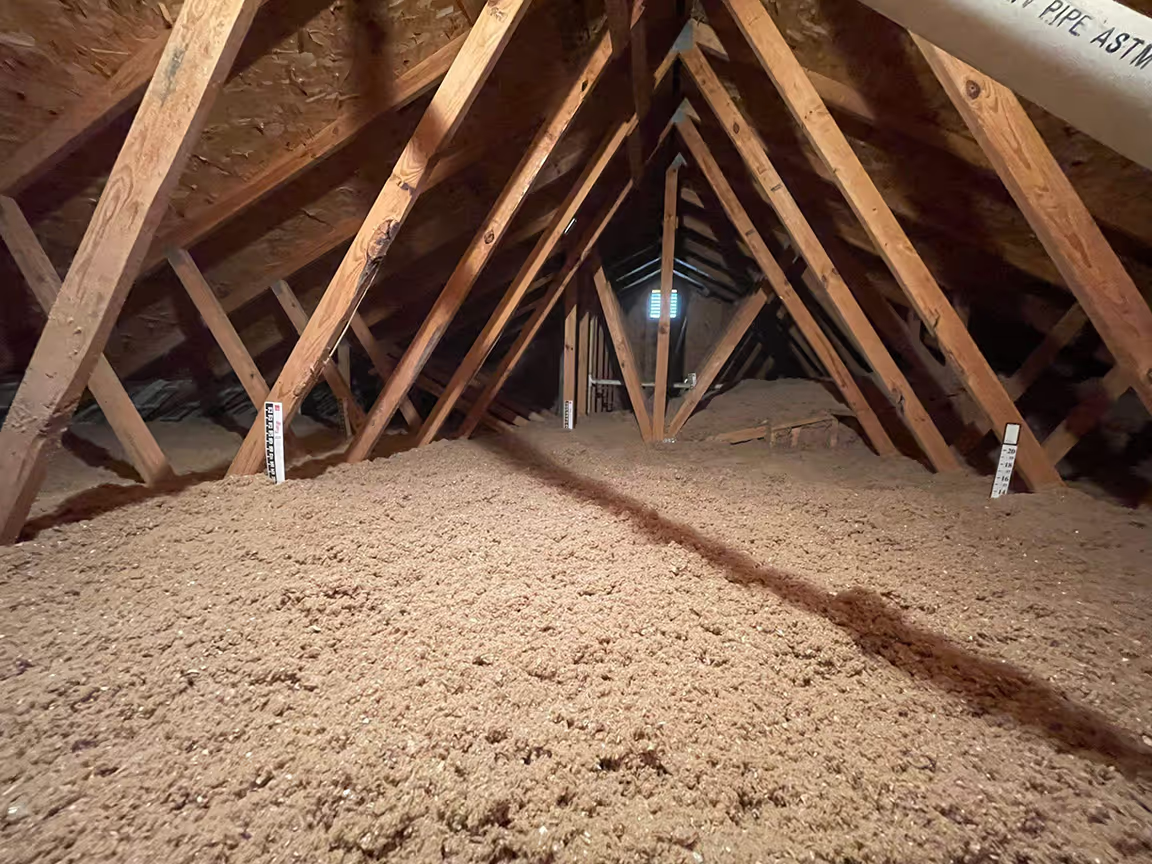
The most effective sequence for Maryland homeowners who have both inadequate attic insulation and uninsulated or poorly insulated ductwork is to address both in the same project. Upgrading the attic insulation to R-49 or R-60 lowers the attic air temperature, which reduces the thermal gradient that drives heat into the duct system. Insulating the ducts at the same time ensures that whatever heat gain remains in the attic space does not reach the cooled air stream.
Done separately and out of sequence, each upgrade delivers some improvement. Done together, they eliminate the heat gain pathway at both the room level (attic floor insulation) and the delivery system level (duct insulation), which produces results that are meaningfully larger than either upgrade alone. For Maryland homeowners pursuing BGE or Pepco Home Performance with ENERGY STAR rebates, a scope that includes both attic and duct work often qualifies for higher rebate tiers because the combined modeled energy savings are greater.
The moisture and air quality risks that uninsulated ducts create in summer
The cooling performance story is the most visible part of the duct insulation conversation, but it is not the complete picture. Maryland's humid summers create specific moisture and air quality risks in uninsulated attic duct systems that compound over time if left unaddressed. These risks affect the building structure, the duct system itself, and the quality of the air being distributed through the home.
Condensation on cold duct surfaces in a humid attic
When cold supply ducts run through a hot, humid attic without adequate insulation, the metal duct surface is cold enough to cause the surrounding humid attic air to condense on its exterior. That condensation deposits moisture on the duct surface and drips onto the attic insulation and structural framing below.
Over a Maryland summer with multiple high-humidity days, this condensation accumulates. It creates the moisture conditions that support insulation mold growth in the attic insulation adjacent to the duct runs, and it promotes rust and corrosion at metal duct connections that accelerates leakage over time. The moisture control insulation that addresses this problem at the duct level is part of the same moisture management strategy that applies to the crawl space, rim joist, and attic floor in a complete Maryland home performance plan.
Duct condensation shows up as:
- Rust streaks or water stains on attic insulation directly below duct runs
- Visible moisture or frost on duct connections on very humid mornings before the AC has been running
- A musty smell in supply air that develops as the attic insulation around the ducts begins supporting mold growth
- Premature deterioration of duct wrap insulation that has absorbed condensation moisture and lost its thermal performance
Air quality risks from return duct leakage into the attic
Return duct leakage pulls air from the attic into the supply stream. In a Maryland attic during summer, that air carries elevated concentrations of particulates, biological growth, fiberglass fibers from degraded insulation, and moisture. Every cubic foot of attic air drawn into the return system through a leaky connection is air that the filtration system did not filter and that the occupants of the home are breathing.
This risk is distinct from the comfort and energy efficiency story and worth addressing independently. Mold-resistant insulation installed as part of a duct insulation project prevents the attic insulation adjacent to the duct system from becoming a mold source that the return system then distributes through the house. Sealing the return duct connections eliminates the pathway entirely. Both steps contribute to the indoor air quality outcome that whole-house ventilation strategies require as a foundation: a duct system that distributes conditioned air rather than drawing unconditioned attic air into the living space.
Long-term structural risk from duct-driven moisture cycling
An attic duct system that is generating regular condensation during Maryland summers is creating a slow-cycle moisture problem in the surrounding framing and insulation. The insulation absorbs moisture, loses R-value, and begins supporting biological growth. Adjacent wood framing develops surface mold. Over enough seasons without correction, the accumulated damage requires not just duct work but also insulation removal and replacement of the compromised material in the duct corridor.
Catching attic humidity problems before they progress to structural damage is the economic argument for addressing duct insulation proactively rather than waiting until the comfort complaints are severe enough to force action. An attic inspection that includes a duct evaluation surfaces these moisture conditions before they escalate into a remediation project.
How duct insulation fits into a complete Maryland home efficiency plan
Duct insulation is a component of a whole-building approach, not a standalone fix. Its impact is maximized when it is sequenced correctly within a broader upgrade plan that addresses the attic, the building envelope, and the duct system together. Maryland homeowners who address ducts in isolation see improvement; those who address them as part of a comprehensive scope see the full benefit.
Starting with a home energy audit
A home energy audit establishes the baseline for every decision in this process. It includes a blower door test that quantifies total building air leakage, a duct pressurization test that measures leakage specifically from the duct system, thermal imaging that identifies where heat gain is entering the conditioned space, and an insulation assessment covering the attic floor, walls, and duct system.
Without an audit, homeowners often invest in duct insulation and discover afterward that the primary driver of their comfort problems was actually attic floor air sealing, or a disconnected return duct, or a section of flex duct that had collapsed in the attic. The audit identifies all of these conditions in a single visit and generates the documentation that BGE, Pepco, and SMECO require for Home Performance with ENERGY STAR rebate applications.
Combining duct insulation with attic floor work
The connection between attic floor insulation and duct performance is direct. A better-insulated attic floor reduces the peak attic air temperature, which reduces the thermal gradient driving heat into the ducts. Installing R-49 or better attic floor insulation at the same time as duct insulation means the duct system is operating in a cooler environment from day one, which amplifies the benefit of the duct insulation itself.
Maryland homeowners pursuing a seasonal insulation checkup before summer arrives often discover that both the attic floor and the duct system need attention. Scheduling both in the same project visit is efficient, avoids disrupting the attic space twice, and positions the homeowner to qualify for the highest available rebate tier. The attic insulation tax rebate programs available through Maryland utilities cover duct insulation as a qualifying envelope and distribution system improvement when documented correctly as part of the full project scope.
What duct insulation looks like in practice
A professional duct insulation project in a Maryland home with attic-routed ductwork follows a consistent set of steps:
- Visual inspection of all accessible duct runs, joints, and connections for leakage and insulation condition
- Duct leakage testing before work begins to establish a baseline measurement
- Mastic sealant application at all joints, register boots, and air handler connections
- Repair or replacement of any flex duct that is kinked, crushed, or disconnected
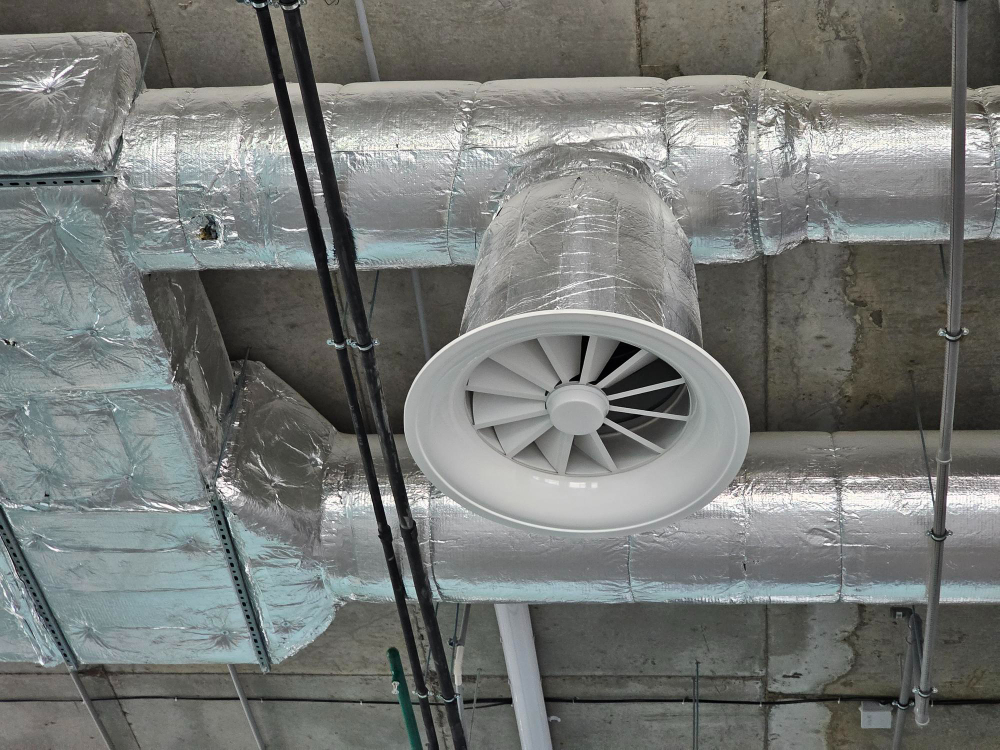
- Application of duct wrap insulation or foam encapsulation to all accessible supply and return runs
- Post-work leakage testing to verify the sealed system meets code and project performance targets
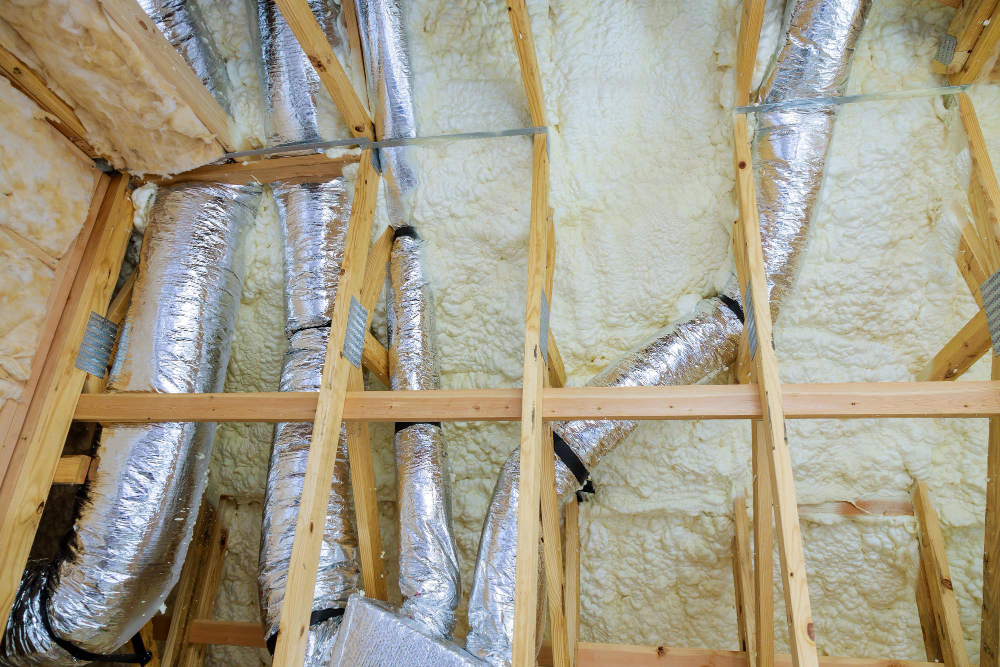
The materials used most commonly in Maryland attic duct systems are fiberglass duct wrap at R-6 for standard installations and closed-cell foam encapsulation for higher-performance upgrades. Spray foam insulation versus fiberglass carries real trade-offs at the duct level: fiberglass wrap is cost-effective and adequate for most applications, while foam encapsulation addresses both the R-value and the air leakage at the duct surface in one application and performs better when attic conditions are extreme.
For Maryland homeowners who want the full picture before scheduling work, a residential insulation service that handles assessment, duct sealing, duct insulation, and attic floor work as an integrated scope delivers the most comprehensive outcome, qualifies for the broadest range of incentives, and produces the energy bill savings that justify the investment in the first cooling season.
Conclusion
Duct insulation during Maryland summers is not a supplementary upgrade. It is a direct intervention in the most significant energy loss pathway in homes where supply and return ducts run through an attic that reaches 150 degrees or more for months at a time. The benefits are concrete: cooled air that reaches the rooms it was designed to cool, an AC system that runs fewer cycles because it is actually accomplishing its job, lower electric bills that reflect the reduced runtime, and a duct system that stops generating the condensation and moisture risks that compound over time in an uninsulated Maryland attic.
The upgrade is most effective when paired with attic floor insulation and completed as part of a project scope that starts with a professional energy audit and ends with the documentation needed to capture Maryland utility rebates. That combination produces summer performance that homeowners in older Maryland homes may not have experienced since the house was built.
When you are ready to stop losing cooling capacity to your attic and start getting the performance your HVAC system was designed to deliver, Terra Insulation is ready to help.