
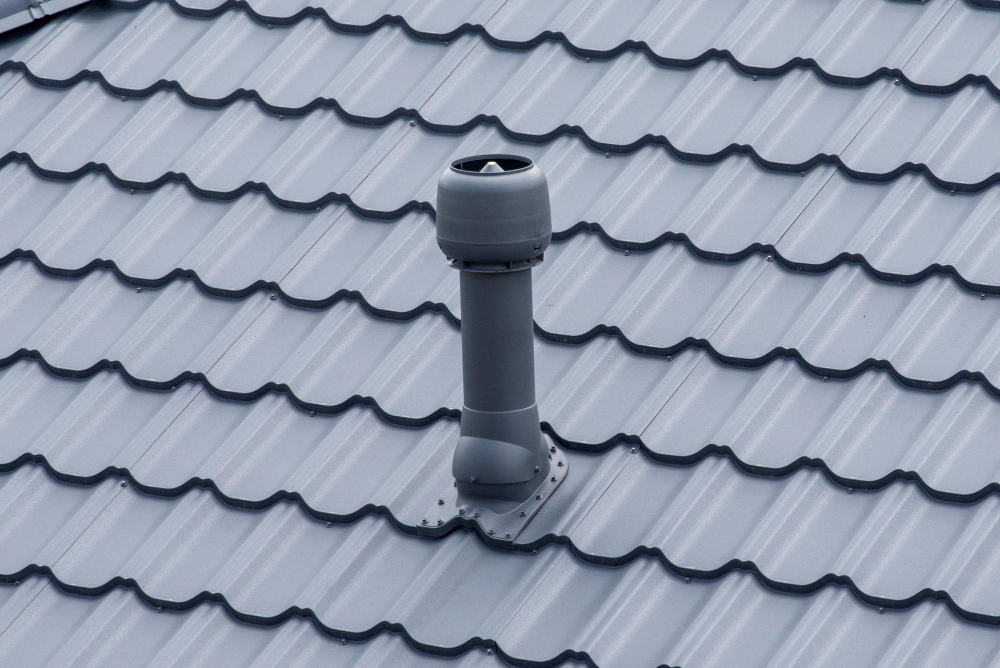
The tighter and better-insulated your Maryland home becomes, the more you need to think about where your fresh air is coming from. Energy upgrades like air sealing and insulation reduce drafts, cut heating and cooling costs, and make your home more comfortable. But they also reduce the natural air exchange that older, leakier homes relied on to dilute indoor pollutants. That tradeoff is where whole house ventilation benefits in Maryland become essential.
According to the EPA, Americans spend approximately 90 percent of their time indoors, where concentrations of some pollutants are often 2 to 5 times higher than typical outdoor levels. In a well-sealed Maryland home, those pollutants, including volatile organic compounds from cleaning products, off-gassing from furniture and building materials, cooking byproducts, and excess moisture, have fewer ways to escape.
A whole house ventilation system provides a controlled, continuous path for stale air to leave and filtered fresh air to enter, without opening windows or sacrificing the energy performance you invested in.
This is not about choosing between efficiency and air quality. A properly designed ventilation system delivers both. It keeps your indoor air clean and your energy bills under control, especially in Maryland's humid climate where managing moisture is just as important as managing temperature.
In this article, you will learn about:
- Why sealed Maryland homes need mechanical ventilation
- How whole house ventilation systems work and what types are available
- The specific benefits for indoor air quality, moisture control, and HVAC performance
- How ventilation fits into the bigger picture of insulation, air sealing, and home performance
- What Maryland homeowners should consider before installing a system
Keep reading to understand why ventilation is the upgrade that makes all your other energy improvements work better.
Why sealed Maryland homes need mechanical ventilation
A generation ago, most homes in Maryland leaked enough air through gaps, cracks, and poor insulation that indoor air quality was rarely a concern. The house "breathed" on its own, albeit at the cost of enormous energy waste. Modern energy upgrades have changed that equation. When you seal the attic, insulate the walls, and encapsulate the crawl space, the building envelope gets tighter and the uncontrolled air exchange drops.
That is a good thing for energy performance. It is a potential problem for air quality, unless you add a controlled ventilation path to replace what the leaks used to provide.
The paradox of a tight, efficient home
The whole point of air sealing is to stop uncontrolled air movement. Gaps around recessed lights, plumbing penetrations, attic hatches, and rim joists all allow conditioned air to escape and unconditioned air to enter. Sealing those leaks can meaningfully reduce heating and cooling costs. The EPA estimates that homeowners can save an average of 15 percent on heating and cooling costs by air sealing and adding insulation in attics, floors over crawl spaces, and basements.
But when those pathways are closed, the home's natural air exchange rate drops. In an older, unsealed home, the air inside might turn over completely every one to two hours through incidental leakage. In a well-sealed home, that rate can drop to every four to six hours or longer. The result is indoor air that recirculates without being refreshed, and pollutant concentrations that climb over time.
The EPA's guide to indoor air quality notes that inadequate ventilation can increase indoor pollutant levels by not bringing in enough outdoor air to dilute emissions from indoor sources and by not carrying indoor air pollutants out of the home. High temperature and humidity levels can also increase concentrations of some pollutants.
In Maryland's humid summers, that combination of tight construction and high outdoor moisture creates exactly the conditions where mechanical ventilation becomes necessary.
What Maryland's climate adds to the equation
Maryland sits in IECC Climate Zone 4A, a mixed-humid region where summer humidity routinely pushes afternoon relative humidity above 70 percent across the central and eastern parts of the state. That moisture does not stay outside. It migrates into the home through any remaining air leaks, through open doors during daily use, and through cooking and bathing activities that generate moisture internally.
In a well-sealed home without mechanical ventilation, that moisture has nowhere to go. It accumulates on cool surfaces, inside wall cavities, and in the attic space, creating conditions that encourage mold growth, wood rot, and degraded insulation performance. Maryland homeowners who have invested in crawl space encapsulation or attic insulation upgrades know how important moisture control is. Whole house ventilation addresses the moisture problem at the building level, continuously exhausting humid stale air and replacing it with drier, filtered outdoor air.
The issue is not that tight construction is bad. It is that tight construction without ventilation is incomplete. The building science community summarizes this with a simple principle: build tight, ventilate right.
The pollutants you cannot see or smell
Most homeowners think of air quality in terms of obvious things: cooking smoke, pet dander, or musty basement odors. But the pollutants that benefit most from mechanical ventilation are often invisible and odorless.
Volatile organic compounds from paints, cleaning products, adhesives, and new furniture off-gas continuously at low levels. Formaldehyde emissions from engineered wood products (cabinets, flooring, subflooring) can persist for years after installation. Carbon dioxide from breathing accumulates in bedrooms overnight, particularly in tightly sealed homes where bedroom doors are closed.
The EPA's research on volatile organic compounds found that levels of about a dozen common organic pollutants were 2 to 5 times higher inside homes than outside, regardless of whether the homes were in rural or highly industrial areas. During and immediately after activities like painting or cleaning, indoor levels can spike to 1,000 times background outdoor levels.
- VOCs from cleaning products, adhesives, and building materials accumulate in sealed homes without ventilation
- Carbon dioxide from breathing rises overnight in bedrooms, affecting sleep quality
- Formaldehyde off-gassing from engineered wood products can persist for years
- Cooking byproducts, including particulate matter and nitrogen dioxide from gas stoves, need an exhaust path
A whole house ventilation system continuously dilutes these pollutants by exchanging indoor air with filtered outdoor air at a controlled rate. It does not eliminate the sources, but it prevents concentrations from building to levels that affect health and comfort.
How whole house ventilation systems work and what types are available
Whole house ventilation is not a single product. It is a category of systems designed to provide continuous, controlled air exchange throughout the home. The right choice depends on your climate, your home's construction, and how tightly the building envelope is sealed.
Maryland's mixed-humid climate narrows the field to systems that can handle moisture effectively, which means balanced ventilation with energy recovery is usually the strongest fit.
Exhaust-only ventilation
The simplest form of mechanical ventilation is an exhaust-only system. This uses one or more fans, typically a continuously running bathroom exhaust fan or a central exhaust unit, to pull stale air out of the home. Replacement air enters through passive inlets or through the building envelope's remaining small air leaks.
Exhaust-only systems are inexpensive and easy to install. They work acceptably in cold, dry climates where incoming outdoor air does not carry much moisture. In Maryland's humid summers, however, exhaust-only ventilation creates a slight negative pressure inside the home, which pulls hot, humid outdoor air through every crack and gap. That unfiltered, moisture-laden air can increase indoor humidity and introduce pollutants rather than reduce them.
For this reason, exhaust-only ventilation is not the preferred approach for Maryland homes that have been well-sealed. It was designed for an older generation of leaky construction where the incoming air paths were numerous and diffuse. In a tight home, the pressure imbalance concentrates the infiltration in a few remaining weak points, which can cause localized moisture problems.
Supply-only ventilation
Supply-only systems work in the opposite direction. A fan brings fresh outdoor air into the home, typically through a duct connected to the HVAC return plenum, where it is filtered and distributed through the existing duct system. Stale air exits through bathroom and kitchen exhaust fans and through any remaining envelope leaks.
Supply ventilation provides more control over the incoming air path and allows filtration before the air enters the living space. It creates a slight positive pressure, which helps prevent uncontrolled infiltration of humid outdoor air through cracks. In Maryland's summer, that positive pressure is an advantage because it pushes air outward through gaps rather than pulling humid air inward.
The limitation is energy recovery. Supply-only systems bring in outdoor air at its current temperature and humidity. In July, that means introducing 90-degree, high-humidity air directly into the home, which the air conditioner then has to cool and dehumidify. In January, it means pulling in 30-degree air that the furnace has to heat.
- Air enters through a dedicated supply duct, typically tied to the HVAC return
- The HVAC system filters and conditions the incoming air before distributing it
- Stale air exits through exhaust fans in kitchens and bathrooms
- Positive pressure reduces infiltration of unconditioned outdoor air through cracks
Supply ventilation is a step up from exhaust-only, but it still does not recover the energy spent conditioning the incoming air.
Balanced ventilation with energy recovery
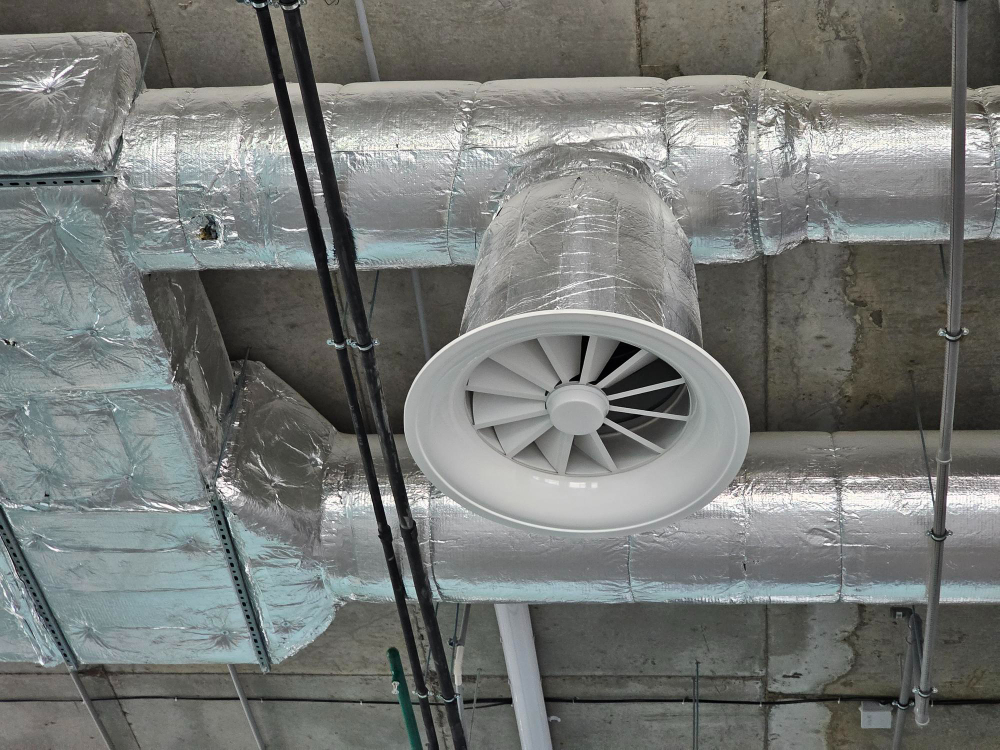
Balanced ventilation systems bring in fresh outdoor air and exhaust stale indoor air simultaneously, at roughly equal rates. This avoids the pressure imbalances that exhaust-only and supply-only systems create. The most advanced versions, energy recovery ventilators (ERVs) and heat recovery ventilators (HRVs), go further by transferring energy between the outgoing and incoming air streams.
An ERV transfers both heat and moisture between the two airstreams. In summer, it precools and partially dehumidifies the incoming outdoor air using the energy from the cooler, drier exhaust air leaving the home. In winter, it preheats the incoming air using the warmth from the exhaust stream. This energy exchange typically recovers 60 to 80 percent of the energy that would otherwise be lost, depending on the model and conditions.
An HRV transfers heat but not moisture. It is the better choice in cold, dry climates where winter indoor humidity needs to be preserved. In Maryland's humid summers, an ERV is generally the stronger option because it manages both sensible heat and latent moisture in the incoming air, reducing the dehumidification load on the air conditioner.
- ERVs transfer both heat and moisture, making them ideal for Maryland's humid summers
- HRVs transfer heat only and are better suited for cold, dry climates
- Both systems balance intake and exhaust airflow, avoiding pressure imbalances
- Typical energy recovery rates range from 60 to 80 percent, significantly reducing the conditioning load for incoming air
The ASHRAE 62.2 standard, the primary residential ventilation standard in the United States, defines the minimum requirements for mechanical ventilation to achieve acceptable indoor air quality. It is referenced in 19 state codes and by the CDC, the EPA's Indoor AirPlus program, and the U.S. Surgeon General's Call to Action to Promote Healthy Homes. A properly sized ERV or HRV meets these requirements while minimizing energy penalty.
Terra Insulation installs whole house ventilation systems using ERVs or HRVs sized to each home's layout, occupancy, and ventilation needs. The system integrates with your existing HVAC for seamless operation and comfort.
The specific benefits for air quality, moisture, and HVAC performance
Whole house ventilation is not a single-purpose upgrade. It produces a cascade of benefits that touch indoor air quality, moisture management, and the performance of every other system in your home. Understanding these benefits helps you see why ventilation is not an optional add-on but a functional part of any well-sealed home.
The benefits are especially pronounced in Maryland, where the climate creates sustained challenges for both moisture and air quality.
Continuous dilution of indoor pollutants
The primary purpose of mechanical ventilation is to replace stale indoor air with fresh outdoor air at a controlled rate. A properly sized system for a typical Maryland home might exchange indoor air at 60 to 100 CFM continuously, depending on square footage and occupancy.
That continuous exchange prevents pollutant concentrations from building over time. Carbon dioxide levels in bedrooms drop. VOC levels from cleaning and cooking dissipate faster. Particulate matter from cooking, which the National Institute of Environmental Health Sciences identifies as a significant contributor to indoor pollution, gets exhausted rather than recirculated. The result is indoor air that stays fresher throughout the day without requiring you to open windows and compromise your energy performance.
For Maryland homeowners with allergies, asthma, or other respiratory sensitivities, the air quality improvement from whole house ventilation can be significant. The incoming air passes through a filter before entering the living space, which means outdoor pollen, dust, and particulate matter are reduced in the supply air. The system provides fresh air without the unfiltered infiltration that opening windows allows.
Humidity control that your AC was not designed to handle alone
Your air conditioner dehumidifies as a byproduct of cooling. When warm, humid air passes over the cold evaporator coil, moisture condenses and drains away. But the AC only dehumidifies when it is actively cooling, and in Maryland's shoulder seasons, spring and fall, outdoor temperatures may be mild enough that the AC does not run, even while humidity remains high.
An ERV addresses this gap. By continuously exhausting humid indoor air and replacing it with outdoor air that has been partially dehumidified through the energy exchange process, the ERV keeps indoor humidity levels more consistent year-round. This is especially important in homes with crawl space encapsulation or spray foam insulation, where the tight envelope can trap moisture generated from daily activities like cooking, showering, and even breathing.
Sustained indoor humidity above 60 percent creates conditions for mold growth on surfaces, inside wall cavities, and in attic spaces. The Consumer Product Safety Commission and EPA's joint guide to indoor air quality identifies moisture and biological pollutants as primary indoor air quality concerns, and recommends maintaining relative humidity between 30 and 50 percent. A whole house ventilation system with energy recovery helps maintain that range without relying solely on the air conditioner.
- Continuous air exchange prevents humidity from building up during low-cooling-demand periods
- ERVs partially dehumidify incoming air in summer, reducing the load on the AC system
- Consistent humidity control protects insulation, framing, and other building materials from moisture damage
- The recommended indoor relative humidity range of 30 to 50 percent is easier to maintain with balanced ventilation
Reduced strain on your HVAC system
When your home's air quality is managed by mechanical ventilation, your HVAC system can focus on what it does best: maintaining temperature. Without ventilation, the HVAC system is indirectly responsible for managing moisture, diluting pollutants, and compensating for pressure imbalances created by exhaust fans in kitchens and bathrooms.
A balanced ventilation system takes those tasks off the HVAC system's plate. The ERV handles air exchange and energy recovery. The HVAC system delivers heating and cooling. The two systems work in parallel rather than one trying to compensate for the other's absence.
For homes with ductwork in the attic, the benefit compounds. When indoor humidity is controlled by the ventilation system, the duct system stays drier, condensation on duct surfaces is reduced, and the insulation around the ducts maintains its performance longer. Each system supports the others.
- Ventilation removes the air quality burden from the HVAC system
- The HVAC system runs more efficiently when it only needs to manage temperature
- Lower indoor humidity reduces condensation on ductwork and other cold surfaces
- The combined system produces more consistent comfort with less total energy use
Over the life of the equipment, reduced HVAC strain can extend the lifespan of the compressor, blower motor, and evaporator coil. These are expensive components, and anything that reduces their workload pays dividends in avoided repair and replacement costs.
How ventilation fits into insulation, air sealing, and home performance
Whole house ventilation does not work in isolation. It is the third leg of a three-part system: air sealing controls unplanned air movement, insulation controls heat transfer, and ventilation provides planned, controlled air exchange. Remove any one of the three and the other two underperform.
Understanding this relationship helps you invest in the right order and get the most from each upgrade.
Air sealing is the prerequisite
You cannot ventilate a leaky home effectively. If the building envelope has significant air leaks, a mechanical ventilation system competes with uncontrolled infiltration. The system brings in fresh air through the ERV, but stale, humid air is also entering through gaps in the attic floor, around windows, and through unsealed rim joists. The result is unpredictable airflow patterns and ventilation rates that do not match the system's design.
Air sealing tightens the envelope so that the ventilation system becomes the primary path for air exchange. Once the home is sealed, the ERV or HRV controls when, where, and how much air enters and leaves. That control is what makes the system effective.
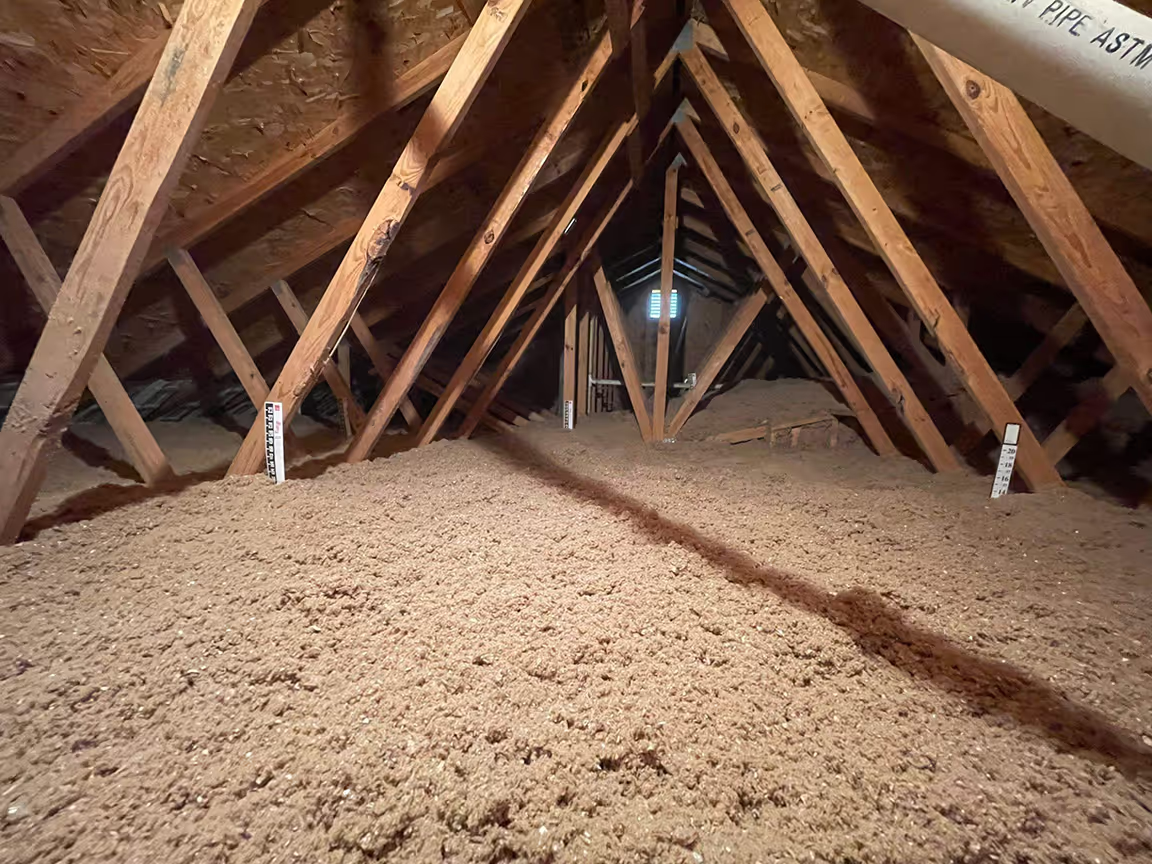
For Maryland homes built before 2000, the attic, rim joists, and crawl space are the three most common areas with significant air leaks. A home energy audit with blower-door testing quantifies the total leakage and identifies the specific locations where sealing will have the greatest impact.
Insulation and ventilation work as a team
Insulation slows heat transfer through the building envelope. Ventilation manages air exchange. Together, they create an indoor environment where temperature and air quality are both controlled.
Without insulation, the ventilation system has to condition large volumes of outdoor air to maintain comfort. Without ventilation, the insulation traps pollutants and moisture inside the home. The two upgrades complement each other in the same way that a thermos keeps your coffee hot while the opening lets you drink it.
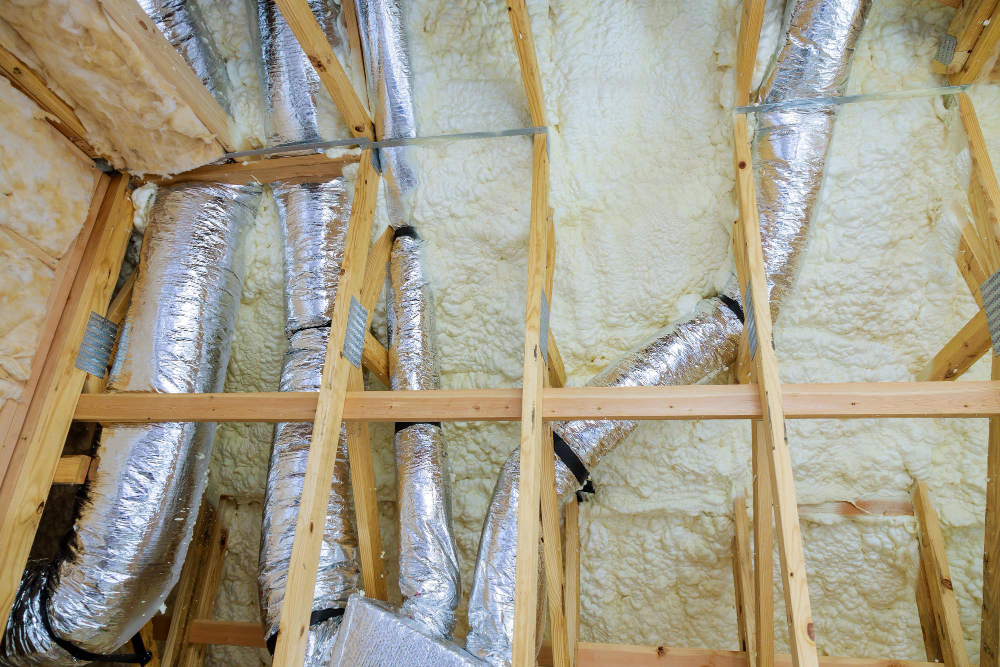
For Maryland homeowners who have recently upgraded their attic insulation or added spray foam insulation, whole house ventilation is the natural next step. The tighter envelope your insulation upgrade created needs a controlled ventilation path to maintain the air quality and moisture balance that the old leaky construction used to provide passively.
- Seal the building envelope first to eliminate uncontrolled air leaks
- Insulate to reduce heat transfer and create a stable thermal boundary
- Add ventilation to provide controlled fresh air exchange and moisture management
- The three systems together deliver comfort, efficiency, and healthy air quality
What this looks like in a real Maryland home
A typical whole house ventilation project in a Maryland home involves a few coordinated steps. The energy advisor evaluates the home's current air leakage rate, insulation levels, and existing ventilation (including bathroom exhaust fans and range hoods). Based on the home's square footage, number of bedrooms, and occupancy, the advisor sizes the ventilation system using the ASHRAE 62.2 formula.
The ERV or HRV is then installed with dedicated supply and exhaust ducts. The supply side typically delivers fresh air to bedrooms and living areas, while the exhaust side draws stale air from kitchens, bathrooms, and laundry rooms. The system runs continuously at a low, quiet speed and requires only periodic filter changes for maintenance.
- The home's air leakage is measured with a blower-door test
- Ventilation rate is calculated based on square footage, bedrooms, and occupancy per ASHRAE 62.2
- An ERV or HRV is installed with dedicated ductwork for supply and exhaust
- The system integrates with existing HVAC for seamless conditioning of incoming air
- Bathroom exhaust fans are verified to vent outdoors, not into the attic
The result is a home that breathes on schedule rather than by accident, with every cubic foot of air exchange recovering energy and filtering pollutants.
What Maryland homeowners should consider before installing a system
A whole house ventilation system is a long-term investment in your home's health and performance. A few practical considerations help ensure you get the right system, installed correctly, and supported by the building envelope improvements that make it work.
Knowing what to ask and what to expect makes the decision straightforward.
Sizing matters more than brand
The most important specification is airflow rate. A system that is undersized will not provide enough fresh air to dilute pollutants effectively. A system that is oversized will introduce more outdoor air than the energy recovery can handle efficiently, increasing your conditioning costs.
ASHRAE 62.2 provides a formula based on floor area plus occupancy. For a 2,000-square-foot Maryland home with three bedrooms, the minimum continuous ventilation rate is typically in the range of 60 to 75 CFM. Your installer should calculate this number for your specific home, not estimate it based on general guidelines or manufacturer defaults.
Fan speed, duct sizing, and filter selection all affect real-world performance. An ERV rated at 100 CFM at zero static pressure may only deliver 60 CFM through a real duct system with bends, filters, and termination fittings. The installer needs to account for these losses when sizing the unit.
ERV vs. HRV for Maryland's climate
For most Maryland homes, an ERV is the better choice. Maryland's humid summers mean that incoming outdoor air carries significant moisture. An ERV transfers moisture from the incoming air to the outgoing exhaust stream, precooling and partially dehumidifying the fresh air before it enters the home. This reduces the latent cooling load on the air conditioner and helps maintain indoor humidity below 60 percent.
An HRV transfers heat but not moisture. It is effective in cold, dry climates where you want to retain indoor moisture during winter. In Maryland's summer, an HRV would bring in hot, humid outdoor air and transfer only the heat, not the moisture, to the exhaust stream. The air conditioner would then have to handle the full dehumidification load, which increases energy use and can leave the home feeling clammy.
- ERVs are recommended for Maryland's mixed-humid climate because they manage both heat and moisture
- HRVs are a better fit for dry climates where indoor moisture retention is a priority
- The energy recovery efficiency of the unit affects how much conditioning the HVAC system must add
- Higher-efficiency ERVs (70 to 80 percent recovery) deliver better performance in extreme summer and winter conditions
Rebates and incentive programs
Maryland homeowners served by PEPCO, BGE, or SMECO may qualify for rebates on ventilation and air quality upgrades when they are performed as part of a broader energy efficiency improvement. These programs often bundle ventilation with air sealing, insulation, and duct sealing into a single project, with rebates that can offset a meaningful share of the total cost.
The federal Energy Efficient Home Improvement Credit under Section 25C previously provided up to $150 for home energy audits and credits for qualifying improvements. This credit expired for new installations after December 31, 2025, but Maryland's state and utility programs continue to offer incentives that vary by provider and program year.
Contact Terra Insulation to check current rebate availability and find out whether your home qualifies for bundled incentives that include ventilation alongside insulation and air sealing work.
- Ask about PEPCO, BGE, or SMECO rebate programs for ventilation and air quality upgrades
- Consider bundling ventilation with air sealing and insulation to qualify for higher combined incentives
- Request a home energy audit as the first step to determine your ventilation needs and rebate eligibility
- Keep documentation for all energy improvements in case future incentive programs become available
Conclusion
Whole house ventilation is the upgrade that completes the picture for Maryland homeowners who have invested in air sealing, insulation, and energy efficiency. Without it, a tight home traps pollutants, accumulates moisture, and relies on the HVAC system to manage tasks it was not designed for. With it, indoor air stays fresh, humidity stays controlled, and every other system in the home works the way it was intended to.
The benefits are not abstract. Fewer stuffy rooms, less condensation on windows, more consistent humidity, and air that does not carry the stale smell of a home that has been closed up too long. For homeowners with allergies or respiratory sensitivities, the improvement in daily comfort can be substantial.
Whether your home needs an ERV, an HRV, or a complete attic-to-crawl-space performance upgrade, the right starting point is a professional assessment of your building envelope and ventilation needs. Contact Terra Insulation to schedule a home energy evaluation and find out how whole house ventilation can make your Maryland home healthier, more comfortable, and more efficient.