
Maryland summers are getting more expensive. The average residential electricity rate in the state is roughly 20 percent higher than the national average, and summer bills climb fast when your air conditioner runs all day trying to keep up with heat that radiates down from a superheated attic. If you have been looking for a practical way to cut cooling costs without a major renovation, the solar-powered attic fan benefits in Maryland are worth a close look.
A solar attic fan does one thing well. It pulls hot air out of your attic using a roof-mounted fan powered entirely by sunlight. No electricity from your home, no wiring to the electrical panel, and no operating cost once it is installed. The fan runs hardest during the sunniest, hottest hours of the day, which is exactly when your attic is at its worst and your HVAC system is working the hardest.
For Maryland homeowners dealing with upstairs rooms that never cool down, attic insulation that seems to underperform, or energy bills that spike every June through September, a solar attic fan addresses one of the root causes. It does not replace insulation or air sealing, but it reduces the heat load that those systems have to manage, making everything downstream work more efficiently.
In this article, you will learn about:
- How attic heat builds up in Maryland homes and why it matters for your energy bills
- What a solar attic fan actually does and how it reduces cooling costs
- The measurable benefits for comfort, insulation performance, and roof longevity
- How solar attic fans work alongside insulation and air sealing for the best results
- What Maryland homeowners should know before scheduling an installation
Keep reading to understand exactly how a solar attic fan can change the way your home handles summer heat.
How attic heat builds up in Maryland and why it drives cooling costs
Your attic is the first part of your home to absorb summer heat, and in Maryland it takes that role seriously. On a sunny July afternoon, the dark shingles on your roof absorb solar energy all day, and that heat transfers through the roof deck into the attic space. Without an effective way to move that hot air out, attic temperatures climb to extreme levels, and the consequences ripple down through every floor of the house.
Understanding how this cycle works makes it easier to see why a solar attic fan is such a practical intervention, and why the effect is especially pronounced in Maryland's climate.
What happens inside a Maryland attic on a summer day
When outdoor temperatures reach the mid-90s, which is typical for a Maryland summer afternoon from late June through early September, attic temperatures can climb to 130 degrees or higher. In homes with dark-colored shingles and limited ventilation, attic temperatures of 140 to 150 degrees are common during peak sun hours.
That trapped heat does not stay in the attic. It radiates downward through the attic floor, through your ceiling insulation, and into your living space. Even well-insulated ceilings cannot fully block the transfer when the temperature differential is 60 or 70 degrees between the attic and the rooms below. The result is second-floor rooms that feel warmer than the thermostat setting, an HVAC system that runs extended cycles, and electricity bills that climb all summer.
According to the U.S. Department of Energy, a dry and well-ventilated attic helps avoid moisture problems and lowers heating and cooling costs. The agency emphasizes that attic moisture intrusion and improper ventilation are closely linked, and that addressing both is key to a durable, energy-efficient attic.
Why Maryland's humidity makes the problem worse
Maryland sits in IECC Climate Zone 4A, classified as mixed-humid. That means summers bring not just heat but sustained humidity, with outdoor relative humidity routinely exceeding 70 percent. High humidity compounds the attic heat problem in two ways.
First, humid air holds more thermal energy than dry air at the same temperature. A humid 135-degree attic transfers heat more aggressively than a dry one at the same reading. Second, when that hot, moist attic air contacts cooler surfaces like ductwork or the top side of ceiling insulation, condensation forms. Over time, that moisture degrades insulation performance, encourages mold growth, and can damage roof sheathing from the inside.
A solar attic fan addresses both heat and moisture. By actively exhausting hot, humid air from the attic and replacing it with cooler outside air drawn through soffit and ridge vents, the fan lowers the temperature and removes moisture before it can accumulate and cause damage.
The cost of doing nothing
The EIA's Short-Term Energy Outlook shows that the average summer electricity bill for homes in the Middle Atlantic region reached approximately $190 per month in 2025, with prices rising year over year. Maryland's residential electricity rate, at roughly 20 to 22 cents per kilowatt-hour, is above the national average, which means every extra hour your HVAC system runs to compensate for attic heat costs more here than in many other states.
When your attic sits at 140 degrees for hours each day, your air conditioner is not just cooling your living space. It is fighting a heat source directly above every ceiling in the house. The system runs longer cycles, consumes more electricity, and ages faster. None of that shows up as a line item on your bill. It just shows up as a bill that keeps climbing.
- An unventilated attic in Maryland can exceed 140 degrees on a typical summer afternoon
- Second-floor rooms often run 5 to 10 degrees warmer than the thermostat setting when attic heat is unmanaged
- The HVAC system compensates by running longer, increasing both electricity consumption and equipment wear
Reducing attic temperature is one of the most direct ways to reduce the workload on your cooling system, and a solar attic fan does it without adding to your electricity demand.
What a solar attic fan actually does and how it lowers your energy bills
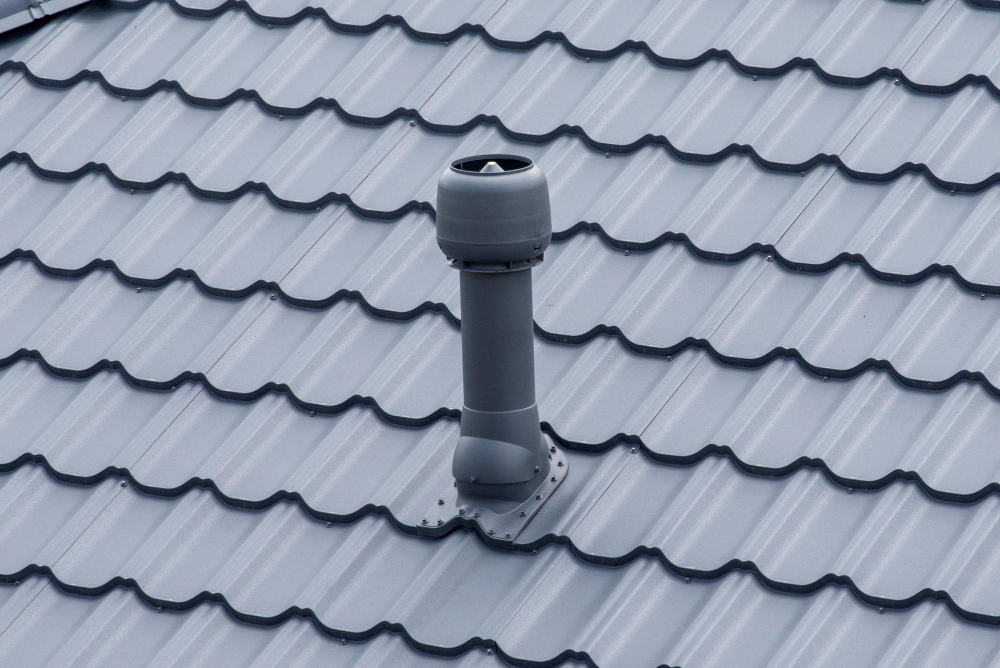
A solar attic fan is a straightforward device. It is a roof-mounted or gable-mounted ventilation fan powered by an attached solar panel. When sunlight hits the panel, the fan runs. When the sun goes down, the fan stops. There are no utility connections, no monthly operating costs, and no wiring to your home's electrical system.
The simplicity is the strength. The fan exhausts hot air from the attic during the exact hours when attic temperatures are highest and your cooling system is under the most strain.
How the fan moves air through your attic
A properly sized solar attic fan exhausts heated attic air through the roof while drawing cooler replacement air in through soffit vents, gable vents, or other intake openings at the lower edges of the attic. This creates a continuous airflow loop that prevents heat from stagnating.
Most residential solar attic fans move between 800 and 1,600 cubic feet per minute (CFM), depending on the size of the fan and the wattage of the solar panel. The general sizing guideline is roughly 1 CFM per square foot of attic floor area. A 1,200-square-foot attic typically needs a fan rated at 1,200 CFM, though homes with steep roof pitches or dark shingles may benefit from slightly higher capacity.
The fan activates automatically when sunlight reaches the panel, and many models include a thermostat that prevents the fan from running when attic temperatures are already moderate. This means the fan runs hardest during peak afternoon heat, which is exactly when attic temperatures are highest and your air conditioner is working the most.
The measurable impact on cooling costs
The Florida Solar Energy Center conducted a field study on solar attic ventilation in a Central Florida home and found that solar attic fans reduced peak attic temperatures by more than 20 degrees and cut measured air conditioning energy use by approximately 6 percent over a summer test period, saving roughly 460 kilowatt-hours.
Six percent may sound modest, but it translates to real dollars. For a Maryland homeowner paying 20 to 22 cents per kilowatt-hour, a 460 kWh reduction represents roughly $90 to $100 in savings over a single cooling season, and that figure comes from a single fan on a single home. Homes with larger attics, darker roofing, or more limited passive ventilation can see greater reductions.
The EPA estimates that homeowners can save an average of 15 percent on heating and cooling costs by air sealing their homes and adding insulation in attics, floors over crawl spaces, and basements. A solar attic fan does not replace those measures, but it amplifies them by reducing the temperature that the insulation has to resist.
- A solar attic fan can lower peak attic temperatures by 20 degrees or more during the hottest hours of the day
- Research shows approximately 6 percent reductions in air conditioning energy use from solar attic fan installation
- At Maryland's electricity rates, that reduction translates to measurable savings every summer
The savings continue compounding over the life of the fan, which typically exceeds 20 years for quality units. Because the fan has no operating cost, every kilowatt-hour saved goes directly to your bottom line.
Why the timing matters
Unlike electric attic fans that run on your home's power, a solar attic fan draws its energy from the sun. That means it runs at full capacity during the peak solar hours of the day, roughly 10 a.m. to 4 p.m., which is also when your attic is hottest and your air conditioner is under the greatest demand.
This alignment between peak attic heat and peak fan performance is one of the main advantages of solar over electric. An electric fan can cool the attic, but it draws power from your home while doing so, partially offsetting the cooling benefit. A solar fan provides the same ventilation benefit at zero electrical cost. It also remains operational during power outages, as long as the sun is shining, which is a practical consideration during Maryland summer storms that can knock out grid power for hours.
Comfort, insulation performance, and roof longevity
Lowering your electricity bill is the most visible benefit of a solar attic fan, but it is not the only one. Active attic ventilation produces a cascade of secondary benefits that affect how comfortable your home feels, how long your insulation performs at its rated R-value, and how many years your roof materials last before they need replacement.
These benefits are especially meaningful in Maryland, where summer heat and humidity create an environment that is hard on both building materials and cooling systems.
Upstairs rooms that actually feel like the thermostat setting
The most immediate change homeowners notice after installing a solar attic fan is that upstairs rooms feel cooler. Not dramatically colder, but noticeably more consistent with the rest of the house. The second floor of a Maryland home with an unventilated attic can easily run 5 to 8 degrees warmer than the thermostat setting during peak afternoon hours.
By reducing attic temperature from 140 degrees down to 110 or 115 degrees during peak hours, the fan cuts the heat that radiates through the ceiling plane. Your insulation still does its job, but it has less work to do. The result is a more even temperature throughout the house and fewer complaints about the bedroom that never cools down.
If your home has ductwork in the attic, the benefit is even more significant. Supply ducts running through a 140-degree attic lose substantial cooling capacity before the air reaches the register. Reducing attic temperature by 20 or more degrees means the cooled air traveling through those ducts arrives closer to its intended temperature, which makes the whole system more effective.
Protecting your insulation investment
Insulation is rated by R-value, which measures its resistance to heat flow under controlled conditions. In the real world, performance can degrade if the insulation gets wet, gets compressed, or operates against extreme temperature differentials that exceed what the R-value was designed to handle.
In a Maryland attic without adequate ventilation, all three of those conditions are common during summer. High humidity encourages moisture accumulation. Settling over time compresses blown-in materials. And temperature differentials of 60 to 80 degrees between the attic and the living space push the insulation harder than lab conditions assume.
According to ENERGY STAR, 9 out of 10 homes in the United States are under-insulated. For homes that have invested in upgrading their attic insulation to current R-49 or R-60 standards, protecting that investment makes financial sense. A solar attic fan keeps the attic drier and cooler, which helps the insulation maintain its rated performance longer.
- Moisture from condensation degrades insulation R-value and can lead to mold in the attic
- Extreme attic temperatures push insulation beyond the conditions it was tested under, reducing effective performance
- Active ventilation from a solar fan lowers both temperature and humidity, preserving insulation integrity
Homeowners who have recently upgraded attic insulation should consider a solar attic fan as a complementary measure that protects the upgrade and maximizes its return.
Extending the life of your roofing materials
Heat does not just affect the inside of the attic. It also affects the roof itself. When attic heat has no way to escape, it heats the roof sheathing from below. Asphalt shingles that are simultaneously baked by the sun from above and heated by trapped attic air from below age faster than shingles on a well-ventilated roof.
Over time, excessive heat causes shingles to dry out, curl, crack, and lose their granule coating prematurely. The difference in lifespan can be significant. Roofing manufacturers commonly require proof of adequate attic ventilation as a condition of their warranty, recognizing that poor ventilation is a leading cause of premature roof failure.
For Maryland homeowners, where a roof replacement can cost $10,000 to $25,000 or more depending on the size and material, extending roof life by even a few years represents substantial savings. A solar attic fan helps by keeping the underside of the roof deck closer to outside ambient temperature, reducing the thermal stress that accelerates material degradation.
How solar attic fans work alongside insulation and air sealing
A solar attic fan is not a standalone solution. It works best as part of a layered approach to attic performance that includes insulation, air sealing, and ventilation. Each component addresses a different part of the problem, and the combined effect is greater than any single measure.
Understanding how these pieces fit together helps you prioritize upgrades and avoid spending money on one measure that underperforms because another piece is missing.
Insulation handles conduction, the fan handles convection
Attic insulation resists heat transfer through the ceiling plane by slowing conduction, which is the movement of heat through materials. The higher the R-value, the more resistance the insulation provides. In Maryland's Climate Zone 4A, the current code standard for attic insulation is R-60 for new construction and major renovations.
But insulation does not remove hot air from the attic. It only slows the rate at which that heat passes through the ceiling. A solar attic fan addresses the other half of the equation by exhausting hot air before it has time to transfer. Think of it this way: insulation is the barrier, and the fan is the release valve. Together they keep the attic cooler and reduce the heat load on your living space more effectively than either one alone.
Homes with older insulation at R-19 or R-30, well below current standards, will see a larger benefit from adding a solar fan because the insulation alone is not enough to block the heat effectively. Homes with R-49 or R-60 attic insulation will see a smaller but still meaningful improvement, especially in reducing moisture and extending material life.
Air sealing prevents the fan from pulling conditioned air
One critical detail that separates a well-installed solar attic fan from a poorly performing one is the condition of the attic floor's air seal. When a fan exhausts air from the attic, replacement air has to come from somewhere. Ideally, that air enters through soffit vents and other designed intake points, drawing outdoor air across the underside of the roof.
But if the attic floor has air leaks, gaps around recessed lights, unsealed plumbing penetrations, or open chases, the fan can pull conditioned air up from the living space into the attic. That means your air conditioner works harder to replace the cooled air that just got sucked out, partially negating the benefit of the fan.
The Building America Solution Center, a resource developed by the U.S. Department of Energy's Pacific Northwest National Laboratory, notes that attic ventilation fans are most effective when the ceiling plane is well-insulated and well-sealed. Without proper air sealing, the fan can create negative pressure that draws conditioned air from the living space rather than outdoor air from intake vents.
- Air sealing the attic floor is a prerequisite for getting full performance from a solar attic fan
- Common leak points include recessed light fixtures, plumbing vents, HVAC chases, and attic hatch openings
- A professional home energy audit can identify specific air leaks that need to be sealed before or alongside fan installation
This is why Terra Insulation evaluates the full attic system, including insulation levels, air sealing, and existing ventilation, before recommending a solar attic fan. The goal is a coordinated upgrade that delivers the full benefit, not a fan working against air leaks.
The order of operations for attic upgrades
If your attic needs multiple improvements, the sequence matters. The recommended approach is to address air sealing first, insulation second, and ventilation (including a solar attic fan) third.
Air sealing stops the exchange of conditioned and unconditioned air through the ceiling plane. Insulation then provides the thermal barrier between the attic and the living space. Finally, the solar attic fan reduces attic temperatures and removes moisture so both the air seal and the insulation can perform at their best.
- Seal air leaks in the attic floor, including penetrations, chases, and the attic access hatch
- Bring insulation up to the recommended R-value for Climate Zone 4A, which is R-49 to R-60 depending on the existing level
- Install a properly sized solar attic fan with adequate soffit ventilation to support the exhaust volume
- Verify that bathroom exhaust fans vent to the outside and not into the attic space, since dumping humid bathroom air into the attic undermines everything else
When all three layers are in place, the attic functions as a system rather than a collection of individual upgrades.
What Maryland homeowners should know before installation
A solar attic fan installation is one of the least disruptive home improvement projects available. Most installations take under two hours, require no electrical wiring, and involve minimal disruption to the roof. But a few practical considerations are worth understanding before you schedule the work.
Knowing what to expect, what to ask, and what to verify helps ensure the fan delivers the performance you are paying for.
Sizing the fan to your attic
The most important technical decision is fan size. An undersized fan will not move enough air to make a meaningful difference, and an oversized fan in a poorly sealed attic can create problems by drawing conditioned air from below.
The standard sizing rule is 1 CFM per square foot of attic floor area, with adjustments for roof pitch and color. A 1,500-square-foot attic with a steep pitch and dark shingles may benefit from a fan rated at 1,600 CFM or higher, while a lighter-colored roof with a moderate pitch may perform well with a 1,200 CFM unit. Larger attics or homes with complex roof geometries may need two fans to provide adequate coverage.
Your installer should measure the attic area, evaluate the existing passive ventilation (soffit vents, ridge vents, gable vents), and confirm that there is enough intake area to support the fan's exhaust volume. A fan that exhausts 1,200 CFM needs at least 4 square feet of net free intake area to work correctly without creating negative pressure.
What happens during installation
A roof-mounted solar attic fan installation follows a predictable process. The installer cuts an opening in the roof, mounts the fan housing with a flashing that integrates into the surrounding shingles, and connects the solar panel. No interior work is required, and no electrical permit is needed because the fan is self-contained.
Gable-mounted units install on the gable wall rather than through the roof. These are sometimes preferred on homes where the roof pitch or layout makes a roof-mount difficult, though roof-mounted units generally perform better because hot air rises and concentrates near the ridge.
- Roof-mount installations take approximately 1 to 2 hours for a single fan
- The solar panel is typically mounted on or near the fan housing, angled to capture maximum sunlight
- Quality installations include proper flashing and sealant to prevent roof leaks around the penetration
- No electrical wiring or connection to your home's panel is required
After installation, the fan runs automatically whenever sunlight is available. Some models include a thermostat that prevents the fan from running when attic temperatures are below a set threshold, which saves unnecessary operation during mild weather.
Rebates and incentives for Maryland homeowners
The federal Residential Clean Energy Credit under Section 25D, which previously provided a 30 percent tax credit for solar attic fan installations, expired for new installations after December 31, 2025. Homeowners who installed qualifying solar equipment before that date may still claim or carry forward unused credits on their tax returns, but new installations in 2026 no longer qualify for the federal solar credit.
On the state and utility side, Maryland homeowners may still benefit from rebate programs offered through PEPCO, BGE, and SMECO. These programs focus on overall home energy performance and often provide incentives for attic insulation, air sealing, and ventilation upgrades when performed as part of a comprehensive energy improvement plan. Eligibility varies by utility provider and program year, so confirming current availability before starting work is worth the call.
Even without the federal credit, the economics of a solar attic fan remain strong. With zero operating cost, a lifespan of 20 years or more, and measurable annual savings on cooling costs, the payback period for most installations is well within the useful life of the equipment.
- Confirm your utility provider and check current rebate availability for attic ventilation and insulation upgrades
- Ask your installer whether a comprehensive approach, combining air sealing, insulation, and the solar fan, qualifies for bundled incentive programs
- Keep installation receipts and documentation in case future incentive programs become available
The best results come from treating the fan as part of a full attic performance upgrade rather than an isolated purchase.
Conclusion
A solar attic fan is one of the most practical upgrades a Maryland homeowner can make before summer heat takes over. It directly reduces attic temperatures during the hottest hours of the day, lowers the workload on your air conditioner, and protects the insulation and roofing materials that keep your home comfortable and efficient. It does all of this at zero operating cost, running on sunlight alone.
The benefits are greatest when the fan works alongside proper attic insulation and air sealing. That combination creates an attic that manages heat and moisture as a system rather than fighting both with brute-force air conditioning. For homes with older insulation, unventilated attics, or second floors that never cool down, the improvement is noticeable from the first week.
Whether you need a solar attic fan, an insulation upgrade, or a full attic performance assessment, the right place to start is understanding what your attic looks like today. Contact Terra Insulation to schedule an evaluation and find out how much cooler, quieter, and more efficient your home can be this summer.