

Living in a busy city means dealing with noise from traffic, neighbors, and street activity. If you're tired of hearing sounds through your walls, soundproof insulation can help make your home quieter and more comfortable.
The best soundproofing insulation materials for walls include mineral wool, fiberglass, cellulose, and spray foam, each working to absorb and block sound waves before they pass through your walls. These materials fit inside your wall cavities and reduce noise transfer between rooms and from outside sources.
Choosing the right soundproof insulation depends on your specific needs, budget, and the type of noise you want to block. Here's what you need to know:
- Why soundproof insulation matters in urban homes
- Types of soundproof insulation for walls
- How soundproof insulation works inside walls
- Factors to consider when choosing insulation
- Professional installation vs DIY soundproofing
Keep reading to learn which materials deliver the best noise reduction for DC homes and how to make the right choice for your walls.
Why soundproof insulation matters in urban homes
Urban living brings neighbors closer together, which means dealing with noise from traffic, footsteps, conversations, and daily activities that pass through shared walls. Acoustic insulation for homes addresses these challenges by reducing unwanted sound and creating a more comfortable living space.
Common noise problems in DC residences
City apartments and townhomes face unique noise challenges. Traffic from busy streets creates constant background noise throughout the day and night. Sirens from emergency vehicles cut through walls at all hours.
Neighbors in adjacent units generate sounds that travel through shared walls. You might hear conversations, televisions, music, or footsteps from the apartment next door. Upstairs neighbors create impact noise when they walk across floors or move furniture.
HVAC systems and building equipment add another layer of noise. Pipes, elevators, and mechanical systems run continuously in many buildings. These sounds transmit through walls and ceilings, making it hard to find quiet moments in your own home.
Impact of poor insulation on comfort and privacy
Thin walls without proper soundproofing affect your daily life in several ways. You can't have private conversations without neighbors overhearing. Phone calls and video meetings become awkward when you worry about sound carrying through walls.
According to the U.S. Environmental Protection Agency, research shows direct links between noise exposure and serious health consequences including stress-related illness, high blood pressure, sleep disruption, and reduced productivity. Your work-from-home productivity suffers when outside sounds break your concentration.
Poor sound insulation works both ways. Just as you hear your neighbors, they hear you. This creates tension and limits how you use your own space. You might avoid playing music, watching movies at normal volumes, or having guests over because the noise bothers others.
Benefits of sound reduction in shared walls
Proper soundproof insulation creates clear boundaries between living spaces. You gain privacy for conversations, entertainment, and daily activities. The insulation blocks sound transmission while also absorbing sound waves that would otherwise bounce through rooms.
Your quality of life improves when noise levels drop. You sleep better, focus more easily, and feel less stressed in your own home. Materials like mineral wool and fiberglass installed in wall cavities reduce sound transfer significantly.
Property value increases with better acoustic insulation for homes. Buyers and renters prioritize quiet spaces, especially in dense urban areas. The investment in soundproofing pays off through improved comfort and marketability of your residence.
Types of soundproof insulation for walls
Different insulation materials block and absorb sound in distinct ways, with each type offering specific benefits for noise control. The three main categories include fiberglass batts, mineral wool products, and foam-based solutions that range from spray applications to rigid panels.
Fiberglass insulation for noise control
Fiberglass insulation consists of fine glass fibers woven together into batts or loose-fill material. You'll find this option in most home improvement stores at affordable prices, typically ranging from $0.50 to $1.50 per square foot.
The porous structure of fiberglass traps sound waves as they pass through the material. This reduces noise transmission between rooms, though it works better for higher frequencies than low-frequency sounds like bass or heavy footsteps.
Standard fiberglass batts offer Sound Transmission Class (STC) ratings between 39 and 43 when installed in typical wall cavities. You can install these batts yourself by fitting them between wall studs before hanging drywall.
Key characteristics:
- Lightweight and easy to handle
- Fire-resistant properties
- Available in pre-cut sizes for standard stud spacing
- Less effective at blocking low-frequency noise compared to denser materials
You should wear protective gear when working with fiberglass because the fine particles can irritate your skin and lungs.
Mineral wool for higher sound absorption
Mineral wool, also called rockwool or stone wool, is made from molten rock spun into dense fibers. This material provides better soundproofing performance than fiberglass due to its higher density, typically weighing 6 to 8 pounds per cubic foot.
According to the U.S. Department of Energy, mineral wool contains an average of 75% post-industrial recycled content, does not require additional chemicals to achieve fire resistance, and is commonly available as blanket batts and rolls for wall applications. Products like Rockwool Safe'n'Sound deliver STC ratings up to 52 in standard wall assemblies. The tight fiber structure absorbs both high and low frequencies more effectively than fiberglass, making it the top choice for serious noise reduction insulation projects.
Performance advantages:
- Superior sound absorption across all frequencies
- Better fire resistance than most alternatives
- Does not compress or settle over time
- Water-resistant and mold-resistant
You'll pay more for mineral wool, with costs ranging from $1.50 to $3.00 per square foot. The material cuts easily with a serrated knife and fits snugly between studs without requiring fasteners.
Mineral wool works particularly well for walls between bedrooms, home theaters, or music rooms where you need maximum noise control.
Foam-based acoustic insulation options
Foam insulation for soundproofing comes in three main forms: spray foam, rigid foam panels, and specialized acoustic foam. Each type serves different applications in wall soundproofing projects.
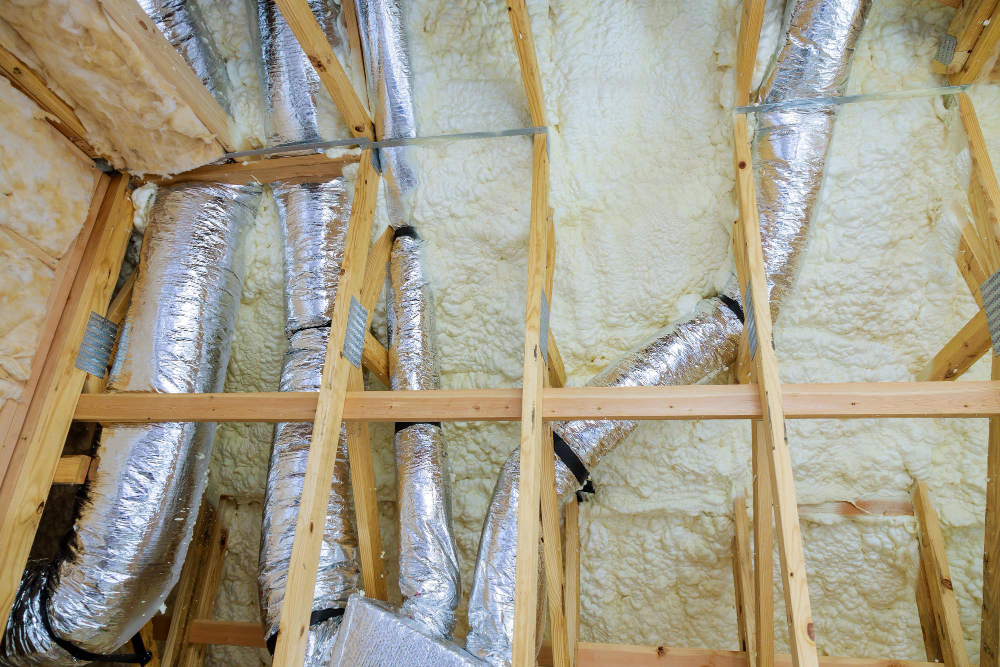
Spray foam expands to fill gaps and cracks in wall cavities, creating an airtight seal that blocks sound pathways. Closed-cell spray foam adds mass to your walls and can achieve STC ratings of 37 to 39, though it costs $2.00 to $4.00 per square foot installed.
Rigid foam panels like polyiso or XPS boards add minimal soundproofing value on their own but work well when combined with other materials. You can attach these panels to existing walls before adding a second layer of drywall.
Acoustic foam is different from standard insulation foam. It features open-cell structures designed specifically for sound absorption rather than thermal insulation. However, you typically use acoustic foam as a surface treatment rather than inside wall cavities.
Foam-based solutions seal air gaps better than fibrous insulation, which helps because sound travels easily through any opening in your walls. Spray foam benefits in cold weather extend beyond acoustics, making it a dual-purpose upgrade for DC homes.
How soundproof insulation works inside walls
Soundproof insulation reduces noise by absorbing sound waves, dampening vibrations, and creating physical barriers that prevent sound from traveling through walls. The material's density, thickness, and how it layers with other wall components determine how much noise it blocks.
Reducing vibration and sound transmission
Sound travels through walls as vibrations that move from one side to the other. When noise hits a wall without insulation, the wall studs and drywall vibrate freely and transmit sound easily. Soundproof insulation breaks this path by filling the empty space between studs with material that absorbs these vibrations.
Materials like mineral wool and fiberglass trap sound waves within their fibers. As sound energy enters the insulation, it converts into small amounts of heat through friction. This process stops the sound from reaching the other side of your wall at full strength.
The insulation also prevents air movement between rooms. Since sound waves travel through air, blocking air flow automatically reduces noise transmission. This is why attic air sealing and wall sealing follow the same core principle: eliminate pathways for both air and sound to travel through your home's envelope.
Density and thickness factors explained
Denser insulation blocks more sound than lightweight options. A material's density determines how much mass it adds to your wall, which directly affects its ability to stop sound waves. Heavier, denser materials like mineral wool perform better than standard fiberglass batts.
Thickness matters because sound waves need more material to travel through. Standard 3.5-inch insulation for 2x4 walls provides basic noise reduction. Using 5.5-inch insulation in 2x6 walls gives you better results. The extra thickness creates more friction points where sound energy gets absorbed.
You can measure performance using STC ratings (Sound Transmission Class). Higher numbers mean better soundproofing. Most residential insulation services use STC ratings to help homeowners compare options before committing to a material.
Role of wall layering in noise reduction
A complete soundproof wall system uses multiple layers that each block different frequencies. The insulation sits between two layers of drywall, creating a sandwich that handles low, mid, and high-frequency sounds.
Each layer serves a specific purpose:
- Outer drywall: Reflects some sound waves back
- Insulation core: Absorbs sound that penetrates the first layer
- Inner drywall: Blocks remaining sound from entering the room
Adding more drywall layers or using specialized acoustic drywall improves results. Some builders install resilient channels or sound isolation clips between the studs and drywall. These metal pieces reduce direct contact points where vibrations transfer.
The air gaps within this layered system also help. When insulation fills the cavity completely without compression, it maintains air pockets that trap sound waves. Compressed insulation loses effectiveness because it reduces these beneficial air spaces. This is also why understanding what type of insulation is best for your specific wall assembly matters before you buy.
Factors to consider when choosing insulation
The right soundproof insulation depends on the noise levels you need to block, how your walls are built, and what you can spend. Different materials work better for different situations.
Level of noise reduction needed (STC ratings)
STC ratings tell you how well insulation blocks sound between rooms. The higher the number, the better it blocks noise.
An STC rating of 38-42 reduces normal conversation to a murmur. This works for most homes where you want privacy between bedrooms or living spaces.
For insulation in soundproof rooms like home studios or home theaters, you need STC ratings of 50 or higher. At this level, you can barely hear loud music or television from the next room.
According to the U.S. EPA, indoor residential areas should not exceed 45 decibels on average to protect against activity interference, annoyance, and disruption of sleep and daily routines. That target makes a case for taking STC ratings seriously in any DC home near busy streets.
Common STC rating ranges:
- 25-30: Poor soundproofing, most sounds pass through clearly
- 35-42: Good for typical residential needs
- 45-50: Excellent for blocking most household noise
- 50+: Professional-grade soundproofing
Fiberglass batts typically achieve STC ratings of 39-43 when installed in standard walls. Mineral wool performs slightly better at 42-52. Mass-loaded vinyl adds 5-10 points to your existing wall's STC rating.
Wall type and existing structure
Your wall construction determines which insulation materials you can use. Open stud walls during new construction give you the most options.
You can fill open cavities with fiberglass batts, mineral wool, or spray foam. These materials fit between studs before you install drywall.
Existing walls with limited access require different approaches. Blown-in insulation or injection foam works through small holes drilled from the outside. You can also add mass-loaded vinyl or additional drywall layers without removing existing walls.
Concrete or masonry walls need surface-mounted solutions. Rigid foam boards or resilient channels with new drywall layers attach directly to the hard surface.
Wall types and compatible insulation:
- Open stud walls: Any insulation type
- Finished walls: Blown-in materials or surface additions
- Concrete/masonry: Surface-mounted panels or boards
Budget and installation complexity
Fiberglass batts cost $0.50-$1.50 per square foot and you can install them yourself. They work well for basic noise reduction on a tight budget.
Mineral wool runs $1.50-$3.00 per square foot but offers better soundproofing performance. Installation is similar to fiberglass and doesn't require special tools.
Mass-loaded vinyl costs $2.00-$5.00 per square foot. It's heavy and awkward to handle, but dramatically improves sound blocking when combined with other materials.
Professional installation adds $1.00-$3.00 per square foot to your total cost. Complex projects like spray foam insulation for crawl spaces or blown-in materials require professional equipment and expertise.
Your installation timeline matters too. Batts and rigid boards install quickly in a weekend. Spray foam needs professionals and proper ventilation time before you can occupy the space.
Professional installation vs DIY soundproofing
Professional installation typically costs $1,000 to $5,000 for a single room but delivers higher noise reduction, while DIY methods range from $200 to $800 and work well for moderate sound control needs. Your choice depends on your budget, the noise level you need to block, and whether your project requires structural changes to walls.
Benefits of expert installation
Professional installers bring specialized tools and experience that ensure proper soundproofing performance. They use decibel meters to measure noise levels before and after installation, which helps verify that your investment actually works. Most professionals also understand building codes and can handle permits if your project needs them.
Experts know how to identify weak points in your walls that leak sound. They check electrical outlets, light switches, and gaps around baseboards that DIY projects often miss. A local insulation contractor can also match the right materials to your specific noise problem, whether you need to block low-frequency bass or high-pitched voices.
The installation quality matters for long-term results. Professionals cut acoustic materials precisely and seal every gap with acoustic caulk. If you hire the right basement insulation contractor or wall insulation specialist, most offer warranties that cover both materials and labor for 1 to 5 years.
Common mistakes in DIY insulation
Many people skip acoustic caulk when installing soundproof insulation, which leaves tiny gaps that let sound pass through. Sound travels through the smallest openings, so even a 1/8-inch crack around the edge of your insulation can reduce its effectiveness by 30%.
Common DIY errors include:
- Installing regular fiberglass insulation instead of dense acoustic materials
- Forgetting to seal electrical boxes and outlets
- Leaving gaps between insulation batts
- Using the wrong thickness for the wall cavity
- Not adding mass to thin walls
Another frequent mistake is stopping at the insulation step. Soundproofing needs multiple layers to work well. You need dense insulation inside the wall plus mass loaded vinyl or extra drywall on the surface. Some DIYers also compress insulation too tightly, which actually reduces its ability to absorb sound. Understanding whether you can over-insulate helps you avoid this common error.
Long-term performance considerations
Professional installations maintain their soundproofing performance for 15 to 20 years when done correctly. The materials stay in place and continue blocking sound because they were installed with proper support and sealing techniques. DIY projects can last just as long if you follow installation guidelines carefully, but mistakes often show up within the first year.
Temperature and humidity affect soundproofing materials over time. Professionals use moisture-resistant insulation and vapor barriers in the right locations to prevent moisture damage to acoustic insulation. Without proper moisture control, your insulation can compress, sag, or develop mold that reduces its sound-blocking ability.
Your walls may settle or shift slightly over the years. Professional installations account for this movement by using flexible acoustic caulk at joints and seams. Rigid connections can crack and create new sound leaks. You should inspect your soundproofing every 2 to 3 years and reseal any gaps that appear, regardless of who installed it. Knowing how long insulation lasts helps you plan maintenance and replacement timelines proactively.
Conclusion
Adding soundproof insulation to your walls reduces noise between rooms and creates a more peaceful living space. Materials like mineral wool, fiberglass, and foam work by absorbing sound waves before they travel through walls.
You'll notice the biggest improvements in bedrooms, home offices, and shared walls with neighbors. The insulation blocks everyday sounds like conversations, TV noise, and footsteps.
The type of insulation you choose depends on your budget and noise control needs. Mineral wool offers the best sound blocking but costs more than fiberglass or cellulose. Spray foam vs fiberglass is a common comparison worth reviewing before you commit to a material.
Soundproofing works best when you combine insulation with other methods. Seal gaps around doors and windows. Add mass to walls with extra drywall layers. Treat joints where walls meet floors and ceilings.
Your home becomes more comfortable when you control unwanted noise. Better sleep quality, increased focus during work, and improved privacy all result from proper soundproof insulation. An investment in energy efficient home insulation pays off on multiple fronts, lowering both noise levels and utility bills at the same time.
Contact Terra Insulation today to schedule a consultation and find the right soundproofing solution for your DC home.