
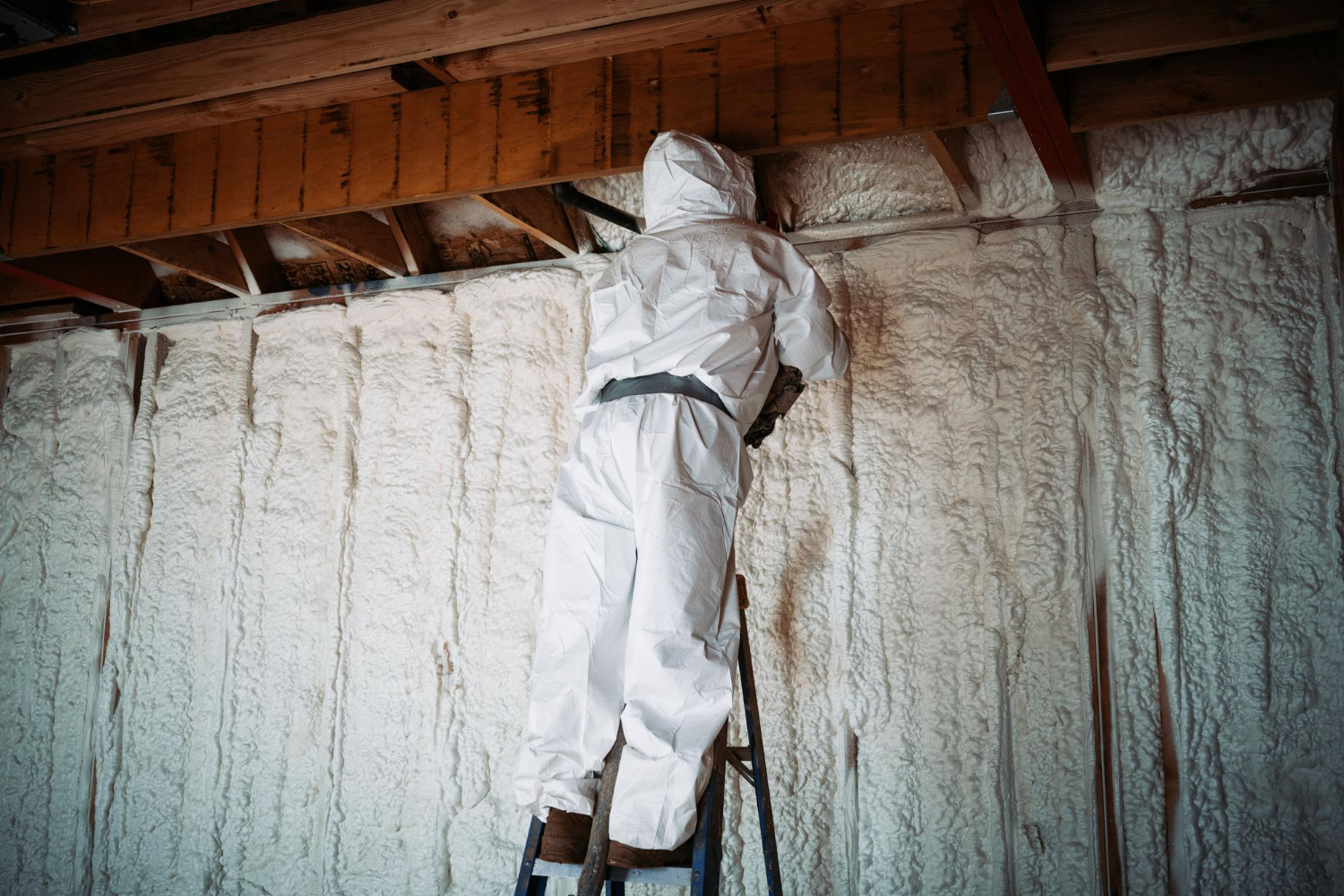
Improving home comfort with rim joist insulation in Virginia is one of the fastest and most direct upgrades a homeowner can make to the building envelope. The rim joist runs the entire perimeter of your home at the foundation line, where the wood floor framing meets the top of the foundation wall. It is exposed to outdoor temperatures on its outward face, riddled with gaps where concrete meets wood and where utilities penetrate the framing, and in most Virginia homes it has no meaningful insulation at all.
That combination makes it one of the highest-impact zones in the building envelope. The U.S. Department of Energy notes that walls and rim joists together make up more than 40 percent of a home's total envelope area, and air leakage concentrated in the rim joist zone drives drafts, cold floors, and HVAC inefficiency across both heating and cooling seasons. Sealing and insulating the rim joist in one project addresses all of those problems at once.
Virginia's climate puts rim joist performance under pressure from both directions. Northern Virginia winters are cold enough to turn an uninsulated rim joist into a continuous cold-air intake running the length of the house. Virginia summers, especially in the Tidewater and Piedmont regions, bring heat and humidity that infiltrate through the same gaps and drive up cooling loads.
A properly sealed rim joist works for you in July and January alike. Many homeowners who investigate poor home insulation signs discover the rim joist is the primary source of the cold floors and drafts they have been living with for years.
In this article, you will learn about:
- What the rim joist is and why it causes such outsized energy loss in Virginia homes
- The comfort improvements Virginia homeowners experience after the upgrade
- How Virginia's climate zones shape the performance requirements
- Why spray foam outperforms other materials at this specific location
- How rim joist insulation fits within a complete home performance plan
Keep reading to understand why this often-overlooked strip of foundation-level framing has such a disproportionate effect on how comfortable and efficient your Virginia home actually is.
What the rim joist is and why it causes outsized energy loss in Virginia homes
Most Virginia homeowners have never thought about the rim joist by name, but they have felt its effects every winter when first-floor rooms run cold, baseboard drafts appear along exterior walls, and the furnace runs longer than it should. The rim joist sits on top of the sill plate, which rests directly on the foundation wall. Its outward face is separated from outdoor temperatures only by sheathing and siding, with no insulation layer between the wood framing and the outside air in most pre-2000 homes.
What makes the rim joist so leaky is not any single gap but the convergence of several different construction interfaces in one narrow zone.
Where air infiltration concentrates at the rim joist
The junction between a concrete foundation wall and a wood sill plate is inherently imperfect. Concrete is rarely perfectly flat across its full perimeter, wood shrinks and swells with seasonal moisture changes, and the connection between the two accumulates small gaps over decades of thermal cycling. Layer onto that the penetrations for plumbing, electrical conduit, and mechanical lines, and the rim joist perimeter of a typical Virginia home has dozens of air leakage pathways.
According to the U.S. Department of Energy, air leaks at the rim joist and sill plate can account for up to 25 percent of a home's total air infiltration. That is a large share of energy loss concentrated in a zone that takes a few hours to seal. Building Science Corporation identifies the rim joist as a particularly troublesome detail precisely because the sill plate, rim board, and subfloor above all need to be connected as a continuous air barrier, and that workmanship-sensitive connection was rarely achieved correctly in original construction.
The stack effect pulls air through rim joist gaps
Air leakage at the rim joist does not operate in isolation from the rest of the building. The stack effect drives warm air upward through the house and out through gaps at the ceiling and attic level, and as it exits it creates negative pressure in the lower levels that actively draws cold outdoor air in through the rim joist to replace it.
This pressure-driven exchange runs continuously whenever there is a temperature difference between inside and outside, which in Virginia means it runs every day of the heating season without stopping. Sealing the rim joist interrupts the bottom of this loop. The attic air sealing work that addresses the top of the stack-effect pathway is most effective when the rim joist is addressed at the same time. Together the two upgrades eliminate the pressure gradient that makes infiltration so persistent in older Virginia homes.
Thermal bridging compounds the air leakage problem
Beyond air leakage, the rim joist is a solid piece of lumber running continuously around the building perimeter, connecting the cold exterior to the interior space through direct wood-to-wood heat conduction. That thermal bridge creates cold surfaces along the base of exterior walls even in sections where there are no visible air gaps.
Fine Homebuilding notes that rim joists are above grade and should be insulated to the same standard as above-grade walls, with a minimum R-13 recommended for Virginia's Climate Zones 3 and 4, and R-20 for the northern parts of the state in Zone 5. Most Virginia homes built before 1990 have nothing close to those values at the rim joist, which is why the cold-floor and perimeter-draft complaints show up so consistently in home performance assessments across the DMV region.
The comfort improvements Virginia homeowners see after the upgrade
The improvements from a properly sealed and insulated rim joist show up across multiple dimensions at once. Virginia homeowners typically notice the first-floor temperature change within the first heating or cooling season, but the benefits extend beyond thermal comfort to moisture management, energy bills, and pest control.
Warmer first-floor temperatures and fewer cold spots
The most immediate result is warmer floors and a reduction in the perimeter cold that Virginia homeowners in older homes accept as normal. Cold outdoor air that was entering through the rim joist and rising through the subfloor is cut off. First-floor surface temperatures increase, and the chill along the base of exterior walls disappears.
These comfort improvements are not gradual. Homeowners report noticing the change within days of the upgrade because the cold-air intake that was driving the symptom has been physically sealed. Rooms along exterior walls that previously required space heaters in January begin holding temperature consistently with the rest of the house. The HVAC system cycles less, and the thermostat becomes meaningful in those rooms for the first time.
The most common comfort complaints that rim joist insulation resolves in Virginia homes are:
- First-floor floors that feel cold even when the heat is running
- Drafts near baseboards and electrical outlets on exterior walls
- Basement spaces that are consistently colder than the living floors above
- Temperature swings between interior and exterior rooms on the same floor
- A furnace that runs near-continuously during cold stretches without fully warming the lower level
Lower utility bills across both seasons
The EPA estimates that homeowners can save an average of 15 percent on heating and cooling costs by air sealing and adding insulation to attics, floors over crawl spaces, and accessible basement rim joists. That estimate reflects how significant the rim joist's contribution to total energy loss actually is, and in Virginia homes where the rim joist has never been addressed, the savings potential sits toward the higher end of that range.
The energy reduction works in both directions across Virginia's climate. In winter, sealing the rim joist stops the pressure-driven cold-air exchange that forces the heating system to work harder and longer. In summer, the same sealed perimeter prevents hot, humid outdoor air from entering through the foundation framing and raising the cooling load. Understanding how insulation cools your house makes clear why an unsealed perimeter undermines the AC's efforts just as much in July as an unsealed attic does.
The utility bill reductions Virginia homeowners report after rim joist insulation follow a consistent pattern:
- Lower heating bills during January and February cold stretches when infiltration through the rim joist had been running the furnace into overtime
- Reduced cooling costs in summer as the sealed perimeter stops humid outdoor air from entering at the foundation line
- Less supplemental space heater use in basement rooms and first-floor perimeter spaces
- More predictable thermostat performance throughout the house
Protection from moisture damage in Virginia's humid climate
Virginia's summers bring genuinely high humidity across all three climate zones. When warm, humid indoor air leaks into the rim joist cavity and contacts the cold wood surface in winter, condensation forms directly on the structural framing. That process repeats every cold night across an entire heating season, and the accumulated moisture drives wood deterioration over time.
Fine Homebuilding confirms that fiberglass-insulated rim joists in cold-climate homes can develop significant dampness or rot within a few years, particularly on north-facing sides where the wood stays cold the longest. Virginia's mixed climate, with hot humid summers and genuinely cold winters, creates conditions where this moisture risk runs in the shoulder seasons as well as winter.
The moisture damage progression in an unaddressed Virginia rim joist follows predictable stages:
- Early: minor discoloration on the rim board and sill plate wood, some surface moisture on cold mornings
- Progressing: insulation batts absorb moisture and compress, mold begins appearing on wood surfaces
- Advanced: rot develops in the rim joist and sill plate, structural integrity of the foundation-to-framing connection deteriorates and may require carpentry repair before insulation work can proceed
Catching this at stage one during a routine assessment is far less expensive than discovering it at stage three. Moisture control insulation installed correctly at the rim joist eliminates the conditions under which condensation forms, protecting the framing for the life of the home.
Reduced pest entry and better indoor air quality
The same gaps that allow air and moisture infiltration at the rim joist provide entry points for insects, spiders, and rodents. Virginia homes near wooded lots and suburban tree lines are under higher pest pressure than most homeowners realize, and the rim joist perimeter is one of the primary entry routes. Sealing these points with foam closes the entry pathways at the same time it addresses thermal and moisture performance.
Mold-resistant insulation applied to a properly prepared rim joist also eliminates the organic material and moisture conditions that mold spores need to establish. Virginia homeowners who have dealt with recurring musty basement odors, or who have tested positive for elevated basement mold counts, frequently find that the rim joist is one of the primary sources. Sealing it removes the pathway through which humid outdoor air enters and condenses on cold wood surfaces, which is the mechanism that drives mold growth in basement framing.
How Virginia's climate zones shape rim joist performance requirements
Virginia spans three climate zones, and the rim joist's performance requirements differ meaningfully across them. Northern Virginia in Zone 5 faces colder winters where rim joist heat loss is the primary driver. Central Virginia's Zone 4 is a mixed humid climate where both seasonal extremes matter. Southern Virginia in Zone 3 deals with hot, humid summers where the moisture infiltration side of the rim joist problem is the dominant concern.
Northern Virginia: the cold-winter driver
Northern Virginia homeowners in Fairfax, Arlington, Prince William, and Loudoun counties experience winters cold enough to make uninsulated rim joists a significant and continuous heat loss pathway. Zone 5 minimum code requirements call for R-20 at the rim joist, a target that most homes built before 2000 fall far short of. The stack effect in two-story Northern Virginia colonials and split-levels draws outdoor air through the foundation perimeter with enough force that homeowners can feel the cold air movement at floor level on windy January days.
The thermal insulation contractors in Virginia who work across the Northern Virginia market consistently identify the rim joist alongside the attic as the two zones that produce the most energy waste per dollar invested to fix. Completing both in the same project scope closes both ends of the stack-effect loop and produces the most measurable energy bill reduction of any envelope upgrade combination available to Northern Virginia homeowners.
Central and Tidewater Virginia: the dual-season challenge
Central Virginia in Zone 4 and the Tidewater region face both summer cooling loads and winter heating demands at levels that stress an unsealed rim joist from both directions. Hot, humid summers push moisture into the building envelope through every gap in the foundation framing. Cold winters pull heat out through the same points and create the condensation risk that drives wood deterioration.
This dual-season pressure is what makes the rim joist upgrade particularly high-return in these markets. Addressing it once solves a year-round problem rather than a single-season issue, and the cost-effective insulation approach for central Virginia homeowners consistently points to the rim joist as one of the first priorities after the attic. The University of Maryland Extension, covering climate conditions directly applicable to Virginia's Zone 4 markets, notes that properly installed insulation slows heat flow in both directions, and the rim joist is one of the zones where that bidirectional heat flow is most concentrated.
Older Virginia homes face additional retrofit considerations
A significant portion of Virginia's housing stock dates from before 1980, and these homes present rim joist conditions that differ from newer construction. Common findings during assessments of pre-1980 Virginia homes include:
- Original fiberglass batts stuffed into the rim joist bays, which have absorbed moisture, compressed, and lost their insulating value
- Knob-and-tube wiring penetrations through the rim joist that must be addressed before foam can be applied
- Missing or deteriorated sill seal between the mudsill and the foundation, creating capillary moisture pathways that contribute to wood damage
- Utility penetrations sealed with deteriorated caulk or left completely open
- Rim joist lumber showing staining or early rot that must be treated before new insulation is installed
Understanding whether existing material needs to come out before new insulation goes in is an important part of scoping the project correctly. The real cost of insulation removal in advance of a rim joist upgrade prevents budget surprises and ensures the new material is installed over clean, dry framing rather than over damaged substrate that will continue to deteriorate beneath the foam.
Why spray foam outperforms other materials at the rim joist
The rim joist was insulated with fiberglass batts for decades, and many Virginia homes still have that original material in place. Fiberglass has a fundamental limitation at this specific location: it slows conductive heat transfer through the material, but it does not air-seal. Hot, humid indoor air passes through it freely and contacts the cold wood surface behind it.
The problem with fiberglass batts at the rim joist
Air-permeable insulation at the rim joist allows warm indoor air to reach the cold rim board, where it condenses and deposits moisture directly on the structural wood. Virginia's mixed climate means this condensation cycle runs not just in winter but also during fall and spring shoulder seasons when attic temperatures are cold and basement air is still carrying summer humidity.
Fine Homebuilding is direct on this point: fiberglass at the rim joist in cold-climate houses can lead to serious moisture accumulation within a few years. Homeowners who pull original fiberglass batts from Virginia rim joists during an upgrade commonly find wet, compressed material with mold on both the insulation and the wood behind it. The fiberglass looked like it was doing its job from the basement side, but behind it the rim joist was deteriorating. This is why insulation removal services are sometimes the necessary first step before a rim joist upgrade can proceed.
Closed-cell spray foam: the preferred solution
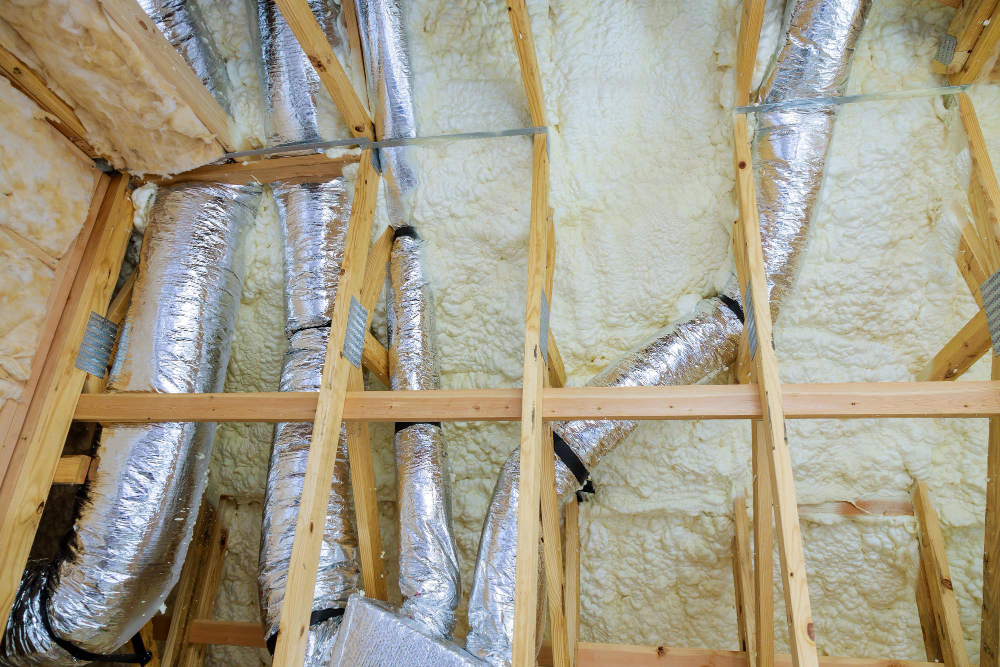
Closed-cell spray foam solves the air leakage problem and the thermal bridging problem simultaneously in a single application. It expands to fill all gaps, cracks, and irregular spaces around utility penetrations, adheres directly to both wood and concrete, and cures to an air-impermeable layer that stops humid indoor air from reaching the cold rim board surface.
The material properties that make it the right choice for this specific location are:
- R-value of approximately R-6 to R-7 per inch, reaching the R-13 minimum for Virginia's Zones 3 and 4 in about 2 inches and R-20 for Zone 5 in 3 inches
- Complete air impermeability after curing, the property fiberglass cannot provide and which is essential for preventing condensation at the cold rim board surface
- Moisture resistance that protects the structural framing from Virginia's summer humidity
- Adhesion to both wood framing and concrete foundation, bridging the sill plate-to-foundation joint where air infiltration is most concentrated
For Virginia homeowners comparing material options, spray foam versus fiberglass insulation shows a clear advantage for foam specifically at the rim joist, even where fiberglass is a perfectly appropriate choice for other parts of the building envelope. The spray foam for crawl spaces application uses the same closed-cell approach for the same reasons, and homes where both the rim joist and crawl space are unaddressed often benefit from treating both in the same project visit.
Rigid foam as an alternative for accessible basements
In Virginia basements with good headroom and clean, accessible joist bays, rigid foam boards cut to fit each bay and sealed at the perimeter with canned spray foam is an effective alternative approach. The cut-and-cobble method uses extruded polystyrene or polyisocyanurate boards cut snugly against the rim board in each joist bay, with the gaps around each piece sealed to create a continuous air barrier.
The key distinction is that the edge sealing must be complete. A rigid foam piece that fits tightly at the center of the bay but leaves a gap at the corner or around a pipe penetration still passes conditioned air to the cold rim board surface. Professional installation eliminates this risk through consistent coverage and edge sealing. Homeowners comparing the two approaches as part of a blown-in versus spray foam attic options decision often find that the rim joist portion of the project defaults to spray foam regardless of what the attic floor receives, because the air-sealing requirement at the rim joist is more demanding than at other locations.
How rim joist insulation fits within a complete home performance plan
Rim joist insulation delivers meaningful benefits on its own. Its impact is greatest, however, when it is part of a whole-building approach that closes every significant leakage and thermal bridging point in the correct sequence.
Starting with a home energy audit
A home energy audit establishes the baseline for every upgrade decision. The audit includes a blower door test that quantifies total building air leakage, a room-by-room inspection that identifies comfort problems and their likely sources, and a full insulation assessment covering the attic, walls, rim joist, and crawl space. In Virginia homes where the rim joist has never been addressed, it almost always appears in the audit report alongside the attic as a high-priority upgrade.
Knowing the current condition before scheduling any work protects the investment in new material. A rim joist that has underlying moisture damage or deteriorated existing insulation needs to be cleaned and prepared before new foam goes in. The audit surfaces this before the upgrade begins rather than after.
The sequencing that produces the best results
The best practices for attic sealing and insulation and rim joist work are often scheduled in the same project phase because they address both ends of the stack-effect loop simultaneously. Completing the two together produces energy bill reductions that are meaningfully larger than either upgrade delivers in isolation.
The correct sequence for a whole-building envelope upgrade in a Virginia home is:
- Attic air sealing followed by insulation to the R-60 target (closes the top of the stack effect pathway)
- Rim joist sealing and insulation to the zone-appropriate R-value minimum (closes the base of the pathway)
- Crawl space or basement wall insulation where applicable, including spray foam for crawl spaces in unconditioned spaces
- Rim joist insulation in Virginia homes also frequently pairs with crawl space insulation because both zones address below-grade moisture and air infiltration at the same foundation level
Following this sequence ensures each upgrade builds on the one before it. Insulating the rim joist before the attic is sealed, for example, reduces the rim joist's impact because the stack effect driving air exchange continues to operate through the unsealed ceiling above.
Connecting rim joist work to Virginia rebates and incentives
Virginia homeowners have access to utility rebates and federal incentives for qualifying insulation and air sealing improvements. Dominion Energy Virginia offers home performance rebates, and the federal Inflation Reduction Act extended tax credit eligibility for building envelope upgrades including insulation and air sealing through 2032. The attic insulation tax rebate programs that cover attic work in the DMV region typically also cover rim joist sealing as part of the qualifying envelope improvement scope.
Starting with the home energy audit is the correct first step because it generates the documentation utilities and tax programs require and confirms that the project scope is designed to qualify for the highest available incentive tier. For Virginia homeowners evaluating the full economics of a building envelope upgrade, the combination of energy bill savings from insulating with available rebates typically reduces the out-of-pocket cost significantly. The residential insulation services that handle the full project scope from audit through installation and rebate application remove the administrative complexity and ensure the documentation is in order for maximum incentive capture.
What to expect from the upgrade itself
A rim joist insulation project in an accessible Virginia basement is typically completed in a single visit. The process follows a consistent set of steps regardless of which material is used:
- Assessment of the rim joist perimeter for existing insulation condition, moisture damage, and utility penetrations
- Removal of any deteriorated or moisture-damaged existing batts
- Treatment of any visible mold or staining on the wood framing before new insulation is applied
- Application of spray foam or installation of rigid foam boards in each joist bay around the full perimeter
- Sealing of all penetrations, corners, and edge gaps to complete the air barrier
The work is clean, contained, and does not require disturbing finished basement spaces. Seasonal insulation checkup processes that follow the initial upgrade give Virginia homeowners a framework for confirming the rim joist continues to perform correctly over time and for catching any new penetrations that contractors may have introduced through subsequent plumbing or electrical work.
Conclusion
Rim joist insulation in Virginia delivers year-round comfort improvements that most homeowners notice immediately and that compound in value across every heating and cooling season that follows. The upgrade stops the cold-floor complaints that have been standard in older Virginia homes, cuts the utility bills that reflect decades of unaddressed air infiltration at the foundation line, and protects the structural framing from the moisture damage that Virginia's humid climate drives through every unsealed gap in the rim joist perimeter.
The project is focused in scope, fast to complete, and one of the highest-return investments in the Virginia home performance market. Pairing it with attic air sealing and insulation in the same project phase produces the most measurable energy and comfort results of any envelope upgrade combination available to homeowners across Northern Virginia, the Piedmont, and the Tidewater region.
When you are ready to stop losing comfort and energy through the base of your Virginia home's framing, Terra Insulation is ready to help.