

Basement walls are one of the most overlooked sources of heat loss in Maryland homes, and addressing them can have a measurable impact on both comfort and energy costs. Basement wall insulation contractors specialize in sealing these areas to improve energy efficiency, prevent moisture problems, and create a more usable space in your home. These professionals understand which insulation types work best for below-ground conditions and how to install them correctly.
Maryland homes face unique challenges with basement insulation due to the region's humidity and temperature changes throughout the year. Professional contractors know how to handle these local conditions and can recommend solutions that protect your home from moisture damage while keeping it warm in winter and cool in summer.
Finding the right contractor means understanding what services they offer and how proper insulation can benefit your specific situation. Here's what you need to know:
- Why basement wall insulation is essential for Maryland homes
- Types of basement wall insulation solutions contractors offer
- Signs you need basement insulation services
- What professional basement wall insulation contractors do
- Benefits of hiring local MD insulation contractors
Keep reading to understand exactly what separates a properly insulated Maryland basement from one that wastes energy and invites moisture damage year-round.
Why basement wall insulation is essential for Maryland homes
Maryland's climate creates unique challenges for basements, with cold winters and humid summers that can lead to significant energy loss and moisture problems. Proper basement wall insulation addresses heat loss, prevents moisture damage, and improves your home's overall efficiency.
How basements lose heat and energy
Your basement loses heat through multiple pathways that directly affect your energy bills. Uninsulated basement walls allow heat to transfer from your living space into the cold ground surrounding your foundation. This process works both ways: in winter, warm air escapes, and in summer, heat enters your home.
The rim joist area is a major source of heat loss. This space where your foundation meets the floor framing often has gaps and lacks insulation.
According to the U.S. Department of Energy, heat loss through uninsulated basement walls can account for up to one-third of the total heat loss from an average home. The ground around your basement provides minimal natural insulation value, making added insulation critical for energy efficient basement insulation performance.
Your HVAC system works harder to compensate for this constant heat loss. This increased strain leads to higher monthly utility bills and more frequent system maintenance.
Moisture and mold risks in uninsulated walls
Maryland's humidity creates serious moisture problems in uninsulated basements. Cold basement walls cause condensation when warm, humid air contacts their surface. This moisture accumulates on walls and can seep into building materials.
Persistent moisture creates ideal conditions for mold growth. According to the U.S. Environmental Protection Agency, mold can trigger allergic reactions, asthma attacks, and respiratory irritation in sensitive individuals, making moisture control in below-grade spaces a direct indoor air quality concern. Mold can spread quickly across walls, floor joists, and stored items.
Uninsulated walls also allow groundwater vapor to pass through foundation materials. This vapor transmission adds to indoor humidity levels and increases moisture damage risk.
Common moisture problems in uninsulated basements:
- Condensation on walls and pipes
- Musty odors from mold and mildew
- Damaged wood framing and stored belongings
- Efflorescence (white mineral deposits) on concrete
- Peeling paint and deteriorating drywall
Proper mold-resistant insulation with moisture management features helps control these issues and protects your indoor air quality.
Impact on overall home comfort and efficiency
Basement insulation affects comfort levels throughout your entire home. Cold basement walls and floors make first-floor rooms uncomfortable, especially during Maryland winters. Heat naturally flows toward cooler areas, so your heating system constantly battles this downward heat loss.
Temperature differences between floors create drafts and uneven heating. Your thermostat may read one temperature while different rooms feel significantly warmer or cooler.
Energy efficient basement insulation reduces this temperature stratification. According to the U.S. Environmental Protection Agency's ENERGY STAR program, homeowners can save an average of 15% on heating and cooling costs by air sealing and adding insulation to basement rim joists and other key areas.
Insulated basement walls also reduce noise transmission from outside and between floors. This creates a quieter indoor environment for living spaces and finished basements.
Your home's resale value benefits from proper basement insulation. Buyers increasingly prioritize energy efficiency and moisture control when evaluating properties.
Types of basement wall insulation solutions contractors offer
Contractors typically install three main insulation systems for basement walls, each designed to address specific moisture and energy efficiency needs. The choice depends on your basement's moisture levels, budget, and whether you plan to finish the space.
Rigid foam board insulation systems
Rigid foam boards are one of the most popular options contractors install on basement walls. These panels come in materials like extruded polystyrene (XPS), expanded polystyrene (EPS), and polyisocyanurate. Contractors attach them directly to concrete or masonry walls using adhesive or mechanical fasteners.
The boards create a continuous layer of insulation that blocks thermal bridging. Most rigid foam options resist moisture naturally, making them ideal for below-grade applications. XPS boards typically offer R-5 per inch, while polyisocyanurate provides R-6 to R-6.5 per inch.
Contractors often recommend rigid foam for its ability to handle basement moisture without losing effectiveness. The boards won't support mold growth and maintain their insulating properties even in damp conditions. You can finish the walls with drywall installed directly over the foam boards using furring strips.
Spray foam insulation for moisture control
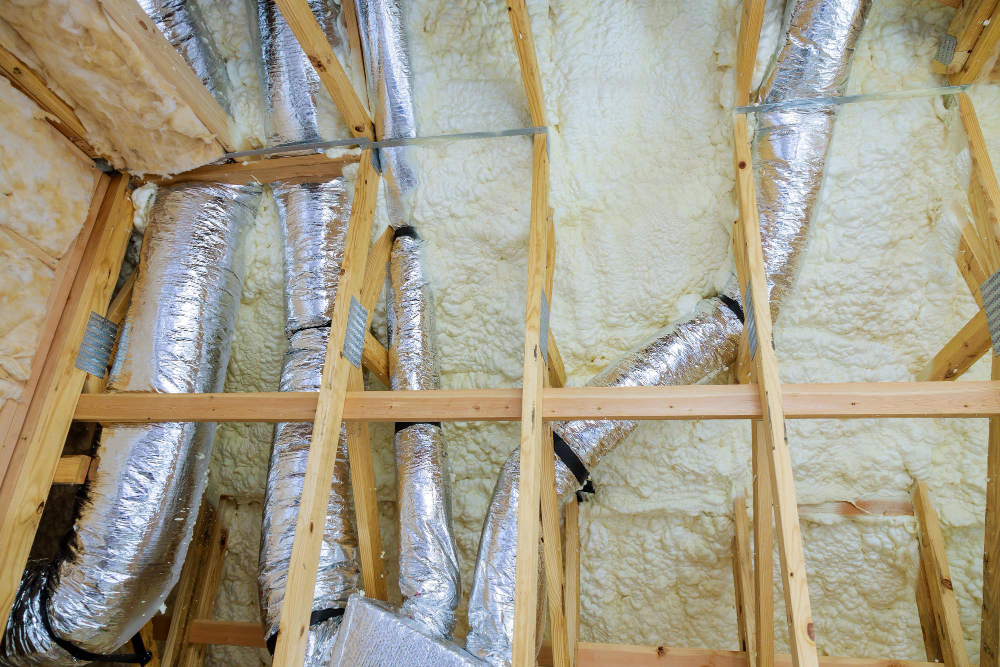
Spray foam creates an airtight seal that blocks both air movement and moisture penetration. Contractors apply it as a liquid that expands to fill gaps and cracks in your basement walls. The two types are closed-cell and open-cell foam, with closed-cell being the preferred choice for basements.
Closed-cell spray foam acts as both insulation and a vapor barrier. It provides around R-6 to R-7 per inch and stops water vapor from passing through your walls. This makes it highly effective for basement moisture insulation in homes with persistent dampness issues.
The foam bonds directly to concrete and creates a seamless barrier. Contractors can apply it to uneven surfaces and around obstacles like pipes and electrical boxes. While spray foam costs more upfront than other options, it delivers superior moisture protection and energy savings.
Fiberglass insulation with vapor barriers
Contractors install fiberglass batts or rolls between wood or metal framing attached to basement walls. This method requires building a stud wall several inches from the concrete surface. The fiberglass fits snugly between the studs, providing thermal resistance.
Fiberglass alone absorbs moisture and loses effectiveness when wet. That's why contractors always pair it with a vapor barrier, typically a plastic sheeting installed between the insulation and drywall. The barrier prevents warm, moist indoor air from reaching the cold concrete walls where condensation forms.
This system costs less than foam options but takes up more interior space. The framing also creates thermal bridges that reduce overall efficiency. You need proper basement moisture control before installation, as fiberglass can grow mold if it gets wet from foundation leaks or high humidity.
Signs you need basement insulation services
Your basement shows clear warning signs when it needs professional insulation. Cold temperatures, moisture problems, and increasing energy costs all point to inadequate insulation that requires expert attention.
Cold basement temperatures year-round
A properly insulated basement maintains consistent temperatures throughout the year. If your basement feels cold even during summer months, your insulation is likely failing or missing entirely.
Cold floors above the basement are another telltale sign. When the room directly above your basement has noticeably colder floors than other areas of your home, heat is escaping through poorly insulated basement ceilings.
Temperature differences between your basement and the rest of your home shouldn't exceed 10-15 degrees. Larger gaps indicate serious insulation problems that waste energy and reduce comfort.
Professional basement insulation services can install materials with R-values between R-15 and R-19 for walls. These values provide enough thermal resistance to keep your basement comfortable year-round.
Damp walls or visible moisture issues
Moisture on basement walls signals both poor insulation and potential air sealing problems. Condensation forms when warm, humid air meets cold surfaces that lack proper insulation.
Common moisture indicators include:
- Water droplets on walls or pipes
- Musty or moldy odors
- Dark spots or stains on walls
- Peeling paint or efflorescence
High humidity levels above 60% create perfect conditions for mold growth. Basement insulation services in MD and other humid regions often combine waterproofing with insulation installation to address both issues simultaneously.
Damp insulation loses its effectiveness and can harbor mold. If you notice any dampness, replacement becomes necessary rather than optional.
Rising energy bills from heat loss
Your heating and cooling systems work harder when basement insulation fails. Energy bills that climb without explanation often trace back to uninsulated or poorly insulated basements.
Basements account for significant heat loss in homes. Up to 20% of your home's total heat can escape through an uninsulated basement, forcing your HVAC system to run longer cycles.
Compare your current bills to previous years during the same season. Increases of 15% or more without changes in usage patterns suggest insulation deterioration.
Basement insulation services can reduce your energy bills by creating a thermal barrier. Most homeowners see noticeable savings within the first year after professional installation.
What professional basement wall insulation contractors do
Professional insulation contractors handle the complete process of insulating your basement walls, from evaluating moisture problems to selecting materials and installing them correctly to create an effective thermal barrier.
Inspection and moisture assessment
Professional contractors start by examining your basement walls for existing moisture problems and potential water entry points. They check for cracks, leaks, and signs of water damage that could compromise insulation performance.
Your contractor will test humidity levels and look for mold or mildew growth. They also evaluate your foundation type and existing wall conditions. This assessment determines which insulation methods will work best in your specific basement.
Most contractors use moisture meters and thermal imaging cameras to find hidden problems. They identify cold spots where heat escapes and moisture accumulates. These tools help them create a complete picture of your basement's current state before any work begins.
Selecting the right insulation method
Based on the inspection results, contractors recommend the best insulation type for your basement walls. Common options include spray foam, rigid foam board, fiberglass batts, or mineral wool.
Spray foam creates a moisture barrier while insulating. Rigid foam boards resist moisture and provide solid R-value. Fiberglass batts work well in dry basements with finished wall frames.
Your contractor considers your budget, moisture levels, and energy efficiency goals. They explain the R-value you need for your climate zone and local building codes. Professional contractors know which products meet code requirements and will pass inspections in your area.
Proper installation and sealing techniques
Contractors install insulation using proven methods that prevent gaps and thermal bridging. They seal all edges, seams, and penetrations to stop air leakage. This attention to detail makes the difference between adequate and excellent insulation performance.
For spray foam installations, professionals use specialized equipment to apply the material at the correct thickness and density. They protect your belongings and HVAC systems during application.
When installing board insulation, contractors cut pieces precisely and use proper adhesives or fasteners. They tape seams and seal around electrical boxes, pipes, and other obstacles. Licensed contractors also ensure proper ventilation where needed and install vapor barriers on the correct side of the wall assembly based on your climate.
Benefits of hiring local MD insulation contractors
Working with Maryland-based insulation contractors gives you access to professionals who understand the state's specific climate challenges and building requirements. These local experts provide better service through their knowledge of regional conditions and proximity to your project.
Compliance with local building conditions
Maryland contractors know the exact R-values your basement walls need to meet state energy codes. They understand how Baltimore's cold winters and humid summers affect insulation performance. Your contractor will select materials that handle Maryland's specific moisture levels and temperature swings.
Local insulation contractors stay current with building codes in Maryland, DC, and Virginia. They work directly with local inspectors and understand what passes inspection the first time. This knowledge saves you time and prevents costly mistakes that can happen when out-of-state contractors miss regional requirements.
Maryland insulation experts know which permits your basement project needs. They handle the paperwork and scheduling with local building departments. Their established relationships with inspectors help your project move forward without delays.
Improved energy efficiency and comfort
Professional basement wall insulation reduces your heating and cooling costs year-round. Maryland contractors select materials that create the best thermal barrier for your specific home design. Spray foam, rigid foam, and fiberglass batts each serve different purposes based on your basement's conditions.
Your energy bills drop when basement walls stop letting conditioned air escape. Proper insulation keeps your basement warmer in winter and cooler in summer. This improvement spreads throughout your home as your HVAC system works less to maintain comfortable temperatures.
While basement wall insulation cost varies by material and square footage, local contractors provide accurate estimates based on Maryland pricing. They know local supplier costs and can source materials efficiently. Most homeowners see returns on their investment through lower energy bills within a few years.
Long-term protection against structural damage
Maryland's climate creates moisture problems that damage unprotected basements. Local contractors install vapor barriers and select moisture-resistant insulation materials that resist mold growth. They know which products work best in below-grade environments where moisture naturally accumulates.
Professional installation prevents condensation between your basement walls and insulation. This protection stops mold, rot, and structural damage before it starts. Your contractor ensures proper ventilation alongside insulation to maintain healthy air quality.
Experienced Maryland insulators identify existing moisture issues during installation. They address these problems before adding insulation to prevent trapped moisture. This attention to detail protects your home's foundation and maintains your property value over time.
Conclusion
Working with a professional basement wall insulation contractor makes the difference between a job done right and costly problems down the road. These specialists bring the right tools, materials, and expertise to handle your specific basement conditions.
A qualified contractor can assess your basement's unique needs. They will choose the appropriate insulation materials for your foundation walls and rim joists. They also ensure the work meets local building codes and industry standards.
Your basement insulation project is an investment in your home's comfort and value. The right contractor will transform your basement into a dry, comfortable space while reducing your energy costs. They handle everything from initial assessment through final cleanup.
Take time to research local contractors. Check their credentials, insurance coverage, and customer reviews. Ask about their experience with different insulation types like spray foam and rigid foam boards.
Getting multiple quotes helps you understand fair pricing for your project. Make sure each contractor provides a detailed estimate that covers materials, labor, and any necessary preparation work. Your basement deserves quality insulation installed by someone who knows what they're doing.
Contact Terra Insulation today to schedule an assessment and get expert basement wall insulation installed the right way.