

If your second floor turns into an oven every July, or your air conditioner never seems to catch up with the afternoon heat, you have probably wondered whether an attic fan would help.
It is one of the most common questions Virginia homeowners ask when summer electricity bills climb and upstairs rooms refuse to cool down. The answer to whether attic fans are worth it in Virginia depends on a few factors that are specific to your home, your attic, and how the rest of your building envelope performs.
Virginia sits in IECC Climate Zone 4A, a mixed-humid region where summer design temperatures reach 91 degrees Fahrenheit and actual attic temperatures can soar past 140 degrees on a sunny afternoon.
That kind of heat does not stay in the attic. It radiates downward through the ceiling, pushes your HVAC system harder, and drives up your electricity bill every hour it persists. An attic fan moves that trapped heat out, and when the conditions are right, the improvement is noticeable.
But an attic fan is not a magic fix. Its effectiveness depends heavily on the condition of your insulation, the quality of your attic floor's air seal, and whether your soffit and intake vents can supply enough replacement air.
In the right home, an attic fan can meaningfully reduce cooling costs and make the whole house more comfortable. In the wrong home, it can pull conditioned air out of your living space and make things worse.
In this article, you will learn about:
- How attic heat affects Virginia homes and what an attic fan actually does about it
- The real differences between solar, electric, and passive attic ventilation
- When an attic fan genuinely helps and when it does not
- What insulation and air sealing have to do with whether a fan pays off
- How to decide if an attic fan is the right next step for your home
Keep reading to get a clear, honest answer about whether an attic fan belongs in your upgrade plan this summer.
How attic heat affects Virginia homes and what an attic fan does about it
Before you can answer whether an attic fan is worth it, you need to understand the problem it is designed to solve. Virginia's summer heat creates a specific set of conditions inside your attic that directly affect your comfort, your energy bills, and the lifespan of your building materials.
The mechanics are simple, but the consequences are real and measurable.
What happens above your ceiling on a Virginia summer afternoon
Dark asphalt shingles absorb solar radiation all day. That energy transfers through the roof deck and into the attic space. Without a way to exhaust the heated air, the attic acts like a heat trap. On a day when outdoor temperatures reach the low to mid-90s in Northern Virginia, attic temperatures commonly climb to 130 to 150 degrees.
That heat does not stay up there. It radiates downward through the attic floor, passes through whatever insulation is present, and enters your living space as additional cooling load. The higher the temperature differential between the attic and the conditioned rooms below, the faster and more aggressively that heat transfers. At a 70-degree differential, even R-49 insulation cannot fully stop the flow. It slows it down, but the heat still arrives.
According to the EIA's 2020 Residential Energy Consumption Survey, 88 percent of U.S. households use air conditioning, and 93 percent of households in the South Census Region rely on it. Virginia's combination of sustained summer heat and high humidity makes air conditioning not just a comfort choice but a practical necessity. When your attic is adding heat to the cooling load, your system runs longer, consumes more electricity, and wears out faster.
What an attic fan does
An attic fan exhausts hot air from the attic and draws in cooler replacement air through soffit vents, gable vents, or other intake openings. The result is a continuous exchange that prevents heat from stagnating and building up to extreme levels.
There are two main types of attic fans for residential use.
- Solar-powered attic fans use a roof-mounted solar panel to run the fan motor. They operate at zero electricity cost, run hardest during the sunniest hours (which are also the hottest), and require no wiring to your home's electrical system.
- Electric attic fans are wired into your home's electrical panel and typically controlled by a thermostat. They can move more air than most solar models, but they consume electricity while doing so, which partially offsets the cooling benefit.
Both types share the same basic function: lower the attic temperature by moving hot air out and pulling cooler air in. The difference is in operating cost, capacity, and how each interacts with your home's energy balance.
A well-sized attic fan can reduce peak attic temperatures by 20 degrees or more during the hottest hours of the day. That reduction means less heat radiating into your living space, shorter HVAC run cycles, and lower electricity consumption during the hours when demand, and often rates, are highest.
The ceiling your HVAC system is fighting against
Your air conditioner does not know or care what is happening in the attic. It reads the thermostat in your living space and runs until the temperature matches the setpoint. But when attic heat is pouring through the ceiling, the system has to overcome that additional load before it can bring the room temperature down.
The U.S. Department of Energy estimates that heating and cooling account for roughly half of a typical home's total energy use. In Virginia, where summer cooling demand is sustained from June through September, even a modest reduction in the attic's contribution to cooling load can translate to meaningful savings over the season. At Virginia's residential electricity rate of roughly 15 to 17 cents per kilowatt-hour, every extra hour your compressor runs adds up.
If your attic is dumping heat into the house faster than your insulation can resist it, your HVAC system runs longer to compensate. An attic fan reduces the source of that heat at its origin, before it ever reaches the insulation layer.
Solar, electric, and passive ventilation compared
Not all attic ventilation is the same. The type of ventilation you choose, or already have, affects how much cooling benefit you get, what it costs to operate, and whether it creates any unintended problems. Understanding the practical differences helps you match the right approach to your home's actual needs.
Virginia homeowners generally have three options: passive ventilation, solar-powered fans, and electric-powered fans. Each has a role, and none is universally the best choice.
Passive ventilation is the baseline
Passive attic ventilation uses natural convection and wind to move air through the attic without any mechanical help. Ridge vents along the roofline allow hot air to escape, while soffit vents at the eaves draw in cooler replacement air from below. Some homes also have gable vents at the ends of the attic.
When properly designed and installed, passive ventilation works continuously, costs nothing to operate, and requires no maintenance. The International Residential Code requires a minimum of 1 square foot of net free ventilation area for every 150 square feet of attic floor area, and a balanced split between intake and exhaust. Many Virginia homes meet this minimum on paper but underperform in practice because of blocked soffit vents, insufficient ridge vent length, or poor intake-to-exhaust balance.
Passive ventilation is effective at preventing the worst extremes of heat buildup, but it has limits. On calm, hot days with high humidity, natural convection slows down. Without wind to assist the air exchange, the temperature differential between the attic and the outdoors may not generate enough airflow to keep the attic within 10 to 15 degrees of outside temperature.
Solar attic fans add active exhaust at zero operating cost
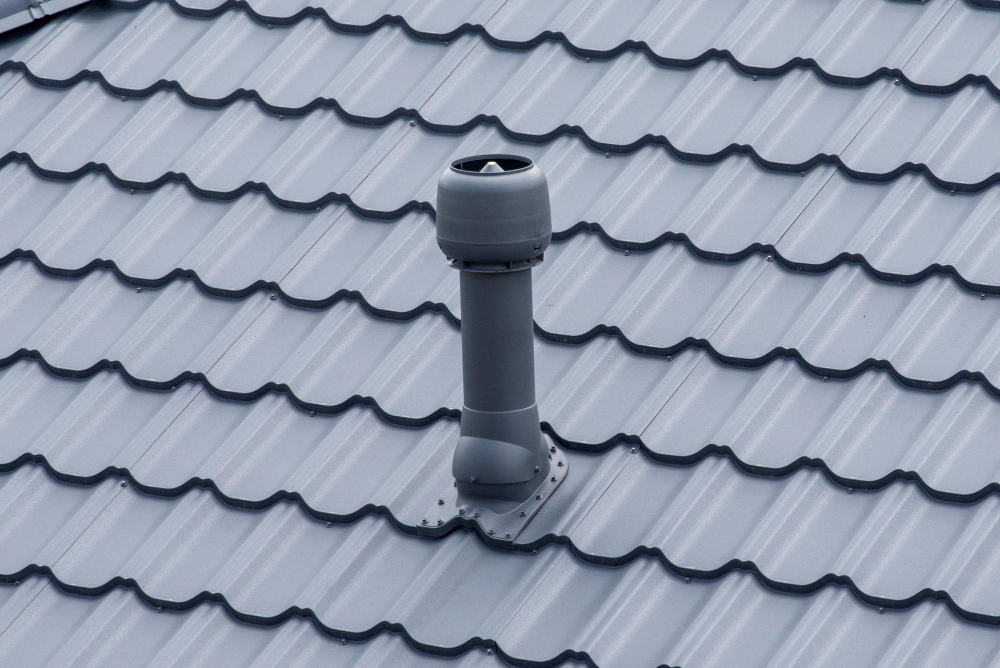
A solar attic fan uses a photovoltaic panel to power a roof-mounted or gable-mounted exhaust fan. The fan turns on automatically when sunlight hits the panel and runs faster as solar intensity increases. Most residential models move between 800 and 1,600 CFM.
The key advantage is alignment. The fan runs hardest during the exact hours when the attic is hottest and your cooling system is under the most strain. And because the fan draws no electricity from your home, every degree of attic temperature reduction translates directly into cooling savings without an offsetting increase in fan energy cost.
A field study conducted by the Florida Solar Energy Center found that solar attic fans reduced peak attic temperatures by more than 20 degrees Fahrenheit and cut measured air conditioning energy use by approximately 6 percent over a summer test period, saving roughly 460 kilowatt-hours.
- Zero operating cost after installation
- No electrical wiring or permits required
- Runs at peak capacity during peak heat hours
- Typical residential models move 800 to 1,600 CFM
- Installation usually takes under two hours
Solar fans are a strong fit for Virginia homes with moderate-to-good passive ventilation that need an additional boost during peak summer conditions, especially when the attic floor is well-insulated and well-sealed.
Electric attic fans offer higher capacity with a tradeoff
Electric attic fans are hardwired into your home's electrical system and controlled by a thermostat, typically set to activate at 90 to 100 degrees. They can move significantly more air than most solar models, with some residential units rated at 1,600 to 2,000 CFM or higher.
The tradeoff is operating cost. An electric fan running at full speed draws 300 to 400 watts, which adds to your electricity bill while the fan is running. Over a Virginia summer, that can amount to $30 to $60 or more in additional electricity, depending on how many hours per day the fan operates. If the fan saves $80 to $100 in air conditioning energy but costs $40 to $60 to run, the net savings are smaller than they appear.
Electric fans also introduce a more serious concern. The Building America Solution Center, a resource developed for the U.S. Department of Energy by Pacific Northwest National Laboratory, notes that attic ventilation fans can draw conditioned air from the living space into the attic through ceiling leaks. If your attic floor is not well-sealed, the negative pressure created by the fan can pull cooled air upward through recessed light fixtures, plumbing penetrations, and other gaps. Your air conditioner then has to replace that lost conditioned air, partially or fully negating the benefit.
This concern applies to solar fans as well, but it is more pronounced with electric fans because their higher airflow creates stronger negative pressure. The research specifically notes that passive ventilation is generally recommended over powered attic ventilators due to these potential issues, especially when the ceiling plane is not well-sealed.
- Electric fans can move more air per minute than most solar models
- They consume electricity, which reduces net savings
- Higher airflow creates stronger negative pressure, increasing the risk of pulling conditioned air from below
- A well-sealed attic floor is even more critical with electric fans than with solar models
For Virginia homes with significant air leaks in the attic floor, an electric fan can actually increase total energy use rather than decrease it. The order of operations matters: seal the attic floor first, then consider powered ventilation.
When an attic fan genuinely helps and when it does not
This is the section that answers the headline question. An attic fan is not universally worth it or universally a waste of money. It depends on your home's specific conditions. Being honest about when it helps and when it does not saves you from spending money on the wrong upgrade.
The clearest way to think about it is in terms of prerequisites. When those prerequisites are met, a fan delivers real value. When they are missing, the fan underperforms or creates new problems.
The conditions where an attic fan pays off
An attic fan delivers measurable benefit when all of the following are true.
Your attic floor is well-sealed. This is the single most important prerequisite. If the ceiling plane has minimal air leaks, the fan exhausts attic air and replaces it with outdoor air drawn through the intake vents. Your conditioned living space stays pressurized and unaffected. If the ceiling is leaky, the fan pulls your cooled air upward and wastes it.
Your attic is reasonably well-insulated. A fan reduces attic temperature, which reduces the temperature differential the insulation has to resist. But if the insulation is thin, degraded, or missing in areas, the benefit of lowering attic temperature from 140 to 115 degrees may be modest because the insulation was not doing its job at either temperature. According to the EPA's ENERGY STAR program, homeowners can save an average of 15 percent on heating and cooling costs by air sealing and adding insulation in attics, floors over crawl spaces, and basements. Addressing insulation first ensures that the fan's benefit stacks on top of a solid baseline.
Your passive ventilation provides adequate intake. A fan that exhausts 1,200 CFM needs at least 4 square feet of net free intake area at the soffits or lower eaves. Without enough intake, the fan cannot pull in replacement air efficiently. Instead, it depressurizes the attic and draws air from wherever it can, including through ceiling leaks.
- Sealed attic floor with minimal penetrations and leaks
- Insulation at or near the recommended R-49 to R-60 for Virginia's Climate Zone 4A
- Adequate soffit or gable intake vents to support the fan's exhaust volume
- Ductwork in the attic that would benefit from reduced ambient temperatures
When these conditions are met, a solar attic fan is one of the most cost-effective summer comfort upgrades available to Virginia homeowners. The fan reduces attic heat, the insulation resists the remaining heat more effectively, and the HVAC system runs shorter cycles because it has less load to overcome.
When it does not make sense
An attic fan is unlikely to deliver meaningful benefit, and may make things worse, in the following scenarios.
Your attic floor has significant air leaks. Recessed light cans, open plumbing chases, unsealed wiring penetrations, and attic hatches without weatherstripping all create pathways for the fan to pull conditioned air from below. A thorough attic inspection is the right way to identify these leaks before you invest in ventilation equipment.
Your insulation is severely inadequate. If your attic has R-11 or R-19 of old fiberglass batts, the attic temperature is only one part of the problem. Heat is transferring through the ceiling almost as fast as the fan can remove it. The right investment in this situation is insulation first, followed by air sealing, and then ventilation.
Your ductwork is not in the attic. One of the largest benefits of an attic fan is reducing the heat that ductwork absorbs while carrying cooled air to the registers. If your ducts run through conditioned space (inside walls, between floors), the thermal benefit of cooling the attic is smaller because the duct system is already protected.
- Do not install a fan over a leaky ceiling plane without sealing first
- Do not expect a fan to compensate for missing or degraded insulation
- Do not invest in powered ventilation if passive vents are blocked or insufficient, as fixing the passive system may solve the problem on its own
The honest answer for many Virginia homes is that the attic fan is the third step, not the first. Air sealing comes first, insulation comes second, and ventilation, whether passive or powered, comes third. Skipping the first two steps and jumping to a fan is the most common reason homeowners feel that attic fans "don't work."
How insulation and air sealing determine whether a fan pays off
An attic fan does not operate in isolation. Its performance is directly tied to the thermal and air barrier performance of the attic floor. This relationship is why some homeowners see real results from an attic fan and others feel like they wasted their money.
Understanding how these systems interact helps you invest in the right order and avoid upgrades that underperform because a prerequisite is missing.
The insulation layer sets the thermal baseline
Insulation resists heat transfer through the ceiling plane by slowing conduction. The higher the R-value, the slower heat moves from the attic into your living space. Virginia's current code requires R-49 for attic insulation in new construction, and R-60 is recommended for best performance in Climate Zone 4A.
When attic insulation is at or near R-49, reducing the attic temperature from 140 degrees to 115 degrees makes a measurable difference in how much heat passes through. The insulation is working within a manageable range, and the reduced temperature differential lets it perform closer to its rated capacity.
When insulation is at R-19 or below, the ceiling transfers heat quickly regardless of attic temperature. Lowering the attic by 20 degrees helps, but the insulation layer is so thin that heat still pours through. The fan delivers some benefit, but the larger opportunity is upgrading the insulation itself.
The U.S. Department of Energy recommends that homeowners insulate attics to the levels specified in their climate zone's IECC requirements. For Virginia, that means R-49 as the code minimum and R-60 as the performance target. Homes that fall significantly short of these levels should prioritize insulation before adding powered ventilation.
The air seal determines where the replacement air comes from
This is the factor that trips up the most homeowners. When an attic fan exhausts air, replacement air enters the attic through available openings. Ideally, that air comes through the soffit vents and other designed intake points, drawing outdoor air across the underside of the roof deck.
But if the attic floor has air leaks, the path of least resistance may be upward through the ceiling. Warm, conditioned air from your living space gets pulled into the attic, and your air conditioner has to generate more cooled air to replace what was lost.
Common air leak points in Virginia homes include recessed light fixtures without IC-rated housings, unsealed plumbing vent penetrations, wiring holes, HVAC chases, dropped soffits over kitchen cabinets, and attic access hatches without weatherstripping. A professional attic inspection can identify and map these leaks.
- Air sealing the attic floor is the most important prerequisite for any powered attic ventilation
- Common leak points include recessed lights, plumbing penetrations, wiring holes, and the attic hatch
- Without sealing, a fan can increase total energy use by pulling conditioned air from below
- Sealing before insulating is the standard sequence because insulation alone cannot stop air movement
Once the floor is sealed and the insulation is adequate, a solar attic fan adds a third layer of performance by reducing the heat that the sealed, insulated ceiling has to resist. The three layers, air seal, insulation, and ventilation, work as a system.
The combined return on investment
When all three layers are in place, the combined savings exceed what any single measure delivers alone. Air sealing stops energy loss from air leakage. Insulation slows heat transfer through the ceiling. The fan reduces the temperature that the insulation has to manage.
According to ENERGY STAR, sealing air leaks and adding insulation can provide up to 10 percent savings on annual energy bills. Adding ventilation on top of a properly sealed and insulated attic can push cooling-season savings higher by reducing the heat that reaches the ductwork and the ceiling plane during peak hours.
For Virginia homeowners weighing the cost of a solar attic fan (typically $300 to $700 installed, depending on model and roof complexity) against the potential savings, the payback math works when the attic is already well-sealed and insulated. In that scenario, the fan pays for itself within a few years and continues delivering free cooling improvement for 20 or more years of useful life.
- Air sealing provides the largest single improvement to attic performance
- Insulation provides the thermal barrier that makes the fan's benefit meaningful
- The fan reduces heat at the source, amplifying the performance of both air sealing and insulation
- The combined approach delivers the best comfort and the strongest return on investment
If your home has not been evaluated for air leaks and insulation levels, an energy audit is the most efficient first step. It tells you exactly where you stand and what sequence of upgrades will deliver the best results.
How to decide if an attic fan is the right next step for your home
At this point, you have the information to make an informed decision. An attic fan is worth it in Virginia when the conditions are right, and it is not worth it when the prerequisites are missing. The practical question is: where does your home fall?
The answer comes from knowing what your attic looks like today, not from guessing or hoping.
Start with what you can see
Before scheduling any professional assessment, there are a few things you can check yourself. These observations will not give you a complete picture, but they will tell you whether a deeper evaluation is warranted.
Walk upstairs during a hot afternoon and notice how the second floor compares to the first. If it is consistently 5 or more degrees warmer, your attic is contributing excess heat to the cooling load. Check your energy bills from June through September and compare them to winter months. A sharp seasonal spike that exceeds what you would expect from air conditioning alone can point to attic-related inefficiency.
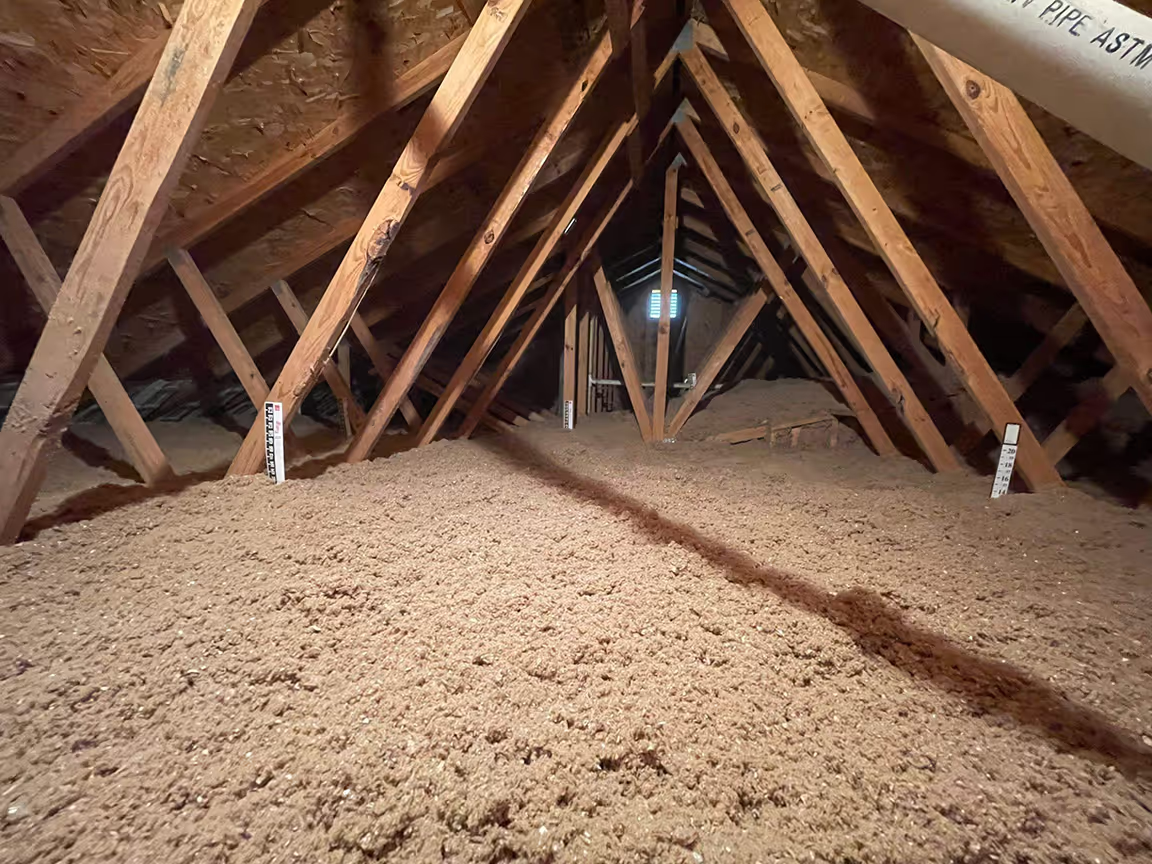
If you can safely access your attic, look at the insulation. Can you see the tops of the ceiling joists? If so, the insulation is likely below the recommended R-49 for Virginia's climate zone. Look at the condition of any insulation that is present. Compressed, water-stained, or missing insulation is a clear signal that the attic needs attention before a fan would make sense.
- Second-floor rooms consistently warmer than the thermostat setting suggest attic heat is reaching the living space
- Visible ceiling joists in the attic indicate insulation is below recommended levels
- Water staining on insulation or roof sheathing indicates moisture problems that need to be addressed
- Blocked or painted-over soffit vents mean passive ventilation is not working as designed
These observations help you prioritize. If the insulation is thin and the soffits are blocked, fixing those issues first will deliver more improvement than adding a fan.
When to bring in a professional
A comprehensive home energy audit is the most efficient way to answer the question definitively. An audit includes a blower-door test that measures total air leakage, thermal imaging that shows where heat is entering through the ceiling, an insulation depth assessment, and a review of existing ventilation.
With that data, you can make informed decisions about the right sequence of upgrades. Maybe you need air sealing and insulation first, with a solar fan added later. Maybe your attic is already well-insulated but poorly ventilated, in which case a fan delivers immediate value. Maybe passive ventilation is sufficient and the issue is elsewhere entirely.
The audit removes the guesswork. It is especially valuable for Virginia homes built before 2000, where insulation levels often fall short of current standards and air sealing was not a construction priority at the time.
The bottom line for Virginia homeowners
An attic fan is worth installing in a Virginia home when the attic floor is sealed, the insulation is adequate, and the intake ventilation can support the fan's airflow. A solar-powered model is the strongest choice for most homeowners because it runs at zero operating cost, activates during peak heat hours, and avoids the negative-pressure risks associated with high-capacity electric fans.
If your attic is not sealed or insulated to reasonable levels, start there. The fan is the finishing touch, not the foundation.
- Evaluate your insulation levels and check for visible air leak points in the attic
- Schedule an energy audit if you suspect the attic is underperforming
- Address air sealing and insulation before investing in a powered fan
- Choose a solar model for the best long-term return with zero operating cost
The best attic upgrade is the one that addresses the weakest link first. Sometimes that is a fan. More often, it is what comes before the fan.
Conclusion
Whether an attic fan is worth it in Virginia comes down to what the rest of your attic is doing. In a home where the attic floor is sealed, the insulation meets current standards, and the intake vents are open and functioning, a solar attic fan is one of the most practical and cost-effective comfort upgrades available. It reduces peak attic temperatures during the hours when your cooling system works hardest, extends the life of your roofing materials and insulation, and does it all at zero operating cost.
In a home where the attic is poorly insulated, the ceiling is full of air leaks, or the passive vents are blocked, a fan alone will not solve the problem. The right approach is to start with the foundation, seal the air leaks, upgrade the insulation, and then add ventilation that takes full advantage of the improvements underneath.
Every Virginia home is different, and the fastest way to find out where yours stands is to get a professional assessment. Contact Terra Insulation to schedule a home energy audit and learn exactly which upgrades will make the biggest difference for your comfort and your energy bills this summer.